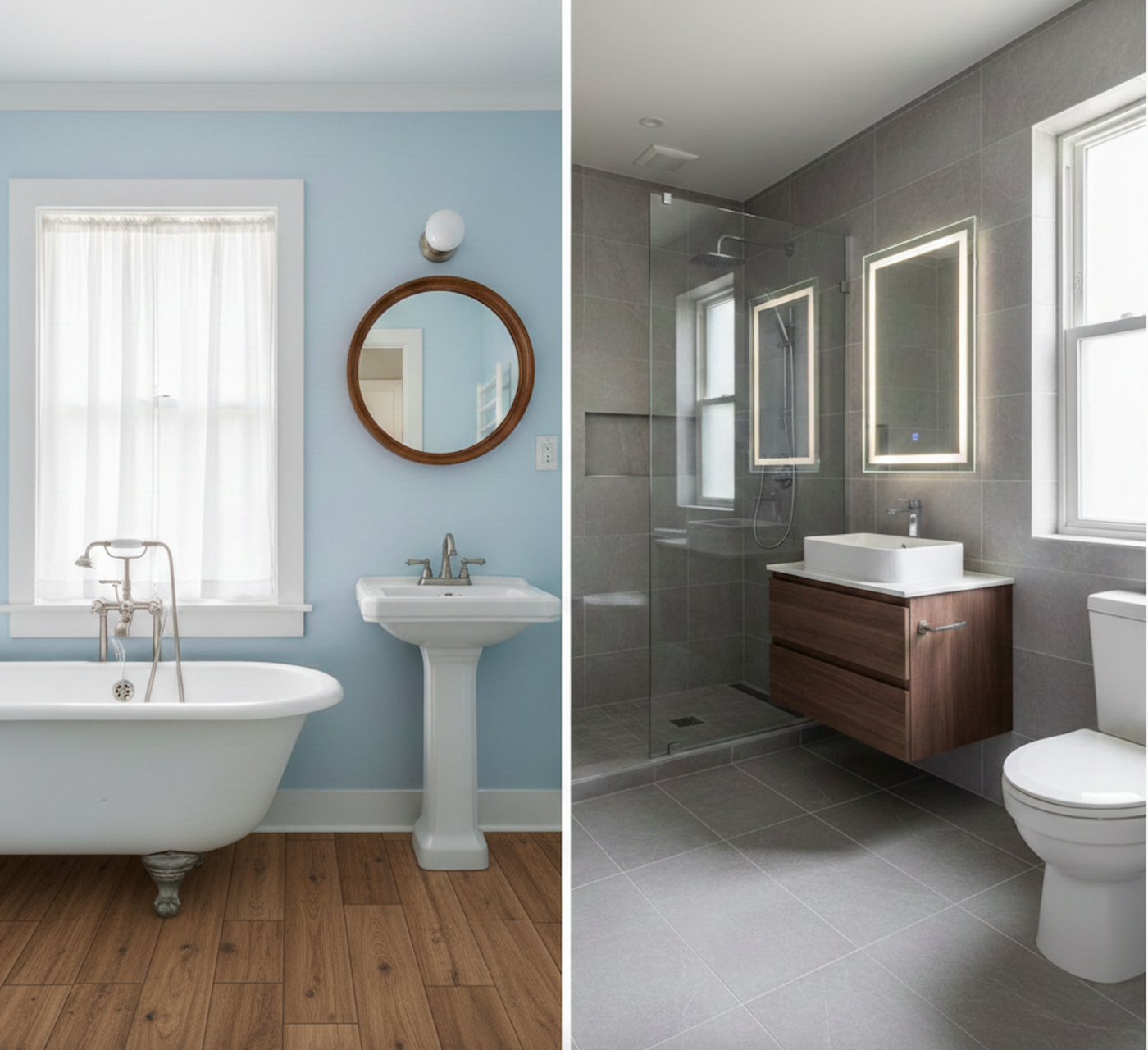
Compare ceramic tile vs vinyl flooring for bathrooms in Canada. Learn about durability, waterproofing, cost, comfort, installation, and which option performs best in Canadian homes. Enjoy Ceramic Tile vs Vinyl Flooring: Which Is Better for Bathrooms in Canada...
TL;DR
For most Canadian bathrooms, vinyl flooring offers better comfort, easier installation, and simpler waterproofing, while ceramic tile provides longer lifespan and superior performance with radiant floor heating. The best choice depends on budget, comfort preferences, and long-term plans.
Ceramic tile and vinyl flooring are two of the most popular bathroom flooring options in Canada. Both materials offer water resistance, durability, and design flexibility, but they perform differently in key areas such as comfort, cost, installation complexity, and long-term maintenance.
Choosing between ceramic tile and vinyl flooring depends on your priorities, whether that’s lifetime durability, upfront budget, ease of installation, or underfoot comfort. In Canadian bathrooms, factors like cold winters, moisture control, condo noise transfer, and long-term maintenance often play a bigger role than they do in other rooms of the home.
This guide compares both materials in practical terms to help you make an informed decision based on your specific bathroom needs.

Ceramic Tile vs Vinyl Flooring: At-a-Glance Comparison
| Feature | Ceramic Tile | Vinyl Flooring |
|---|---|---|
| Waterproofing | Water-resistant surface; grout requires sealing | Fully waterproof (WPC/SPC cores) |
| Lifespan | 30 to 50+ years | 20 to 30 years (high-quality products) |
| Comfort | Hard and cold without radiant heat | Softer and warmer underfoot |
| Installation | Complex; professional installation recommended | Easier; DIY or professional |
| Upfront Cost (Installed) | $10 to $30 per sq. ft. | $4 to $12 per sq. ft. |
| Maintenance | Grout cleaning and sealing required | Low maintenance; no grout |
| Radiant Heating | Excellent compatibility | Compatible with temperature limits |
| Condo Suitability | Can amplify sound | Better sound absorption |
What Is Ceramic Tile?
Ceramic tile is made from natural clay and minerals that are shaped, glazed, and fired at high temperatures. The glazed surface creates a hard, water-resistant barrier, making ceramic tile a long-standing choice for bathrooms, kitchens, and other wet areas.
Ceramic tile is available in a wide range of sizes, colours, and textures. When properly installed and maintained, it can last 30 to 50 years or more, making it one of the most durable bathroom flooring options available.
What Is Vinyl Flooring?
Vinyl flooring is a synthetic flooring material composed of multiple layers, including a waterproof core, a design layer that can replicate wood, stone, or tile, and a protective wear layer on top. Modern vinyl flooring includes luxury vinyl plank (LVP), luxury vinyl tile (LVT), WPC vinyl, and SPC vinyl.
Vinyl flooring is designed to resist moisture, provide comfort underfoot, and simplify installation. Depending on product quality and wear layer thickness, vinyl flooring typically lasts 20 to 30 years.

Ceramic Tile vs Vinyl Flooring: Water Resistance
Ceramic Tile
Ceramic tile is water-resistant due to its glazed surface, but overall performance depends on grout quality and sealing. Grout lines can absorb moisture if not sealed properly, which may lead to mould, mildew, or deterioration over time.
Proper installation and regular grout maintenance are essential to maintain ceramic tile’s water resistance in bathrooms.
Vinyl Flooring
Vinyl flooring is fully waterproof when installed correctly. Unlike ceramic tile, vinyl does not rely on grout, eliminating one of the most common moisture-related failure points in bathrooms. WPC and SPC vinyl products resist water at the core level, not just on the surface.
Winner: Vinyl flooring offers simpler, more reliable waterproofing for bathroom flooring.
Ceramic Tile vs Vinyl Flooring: Durability and Lifespan
Ceramic Tile
Ceramic tile is one of the most durable flooring materials available. When properly installed and maintained, it can last 30 to 50 years or more. It resists scratches, heat, and moisture effectively.
However, ceramic tile can crack or chip if heavy objects are dropped. Repairs often require replacing individual tiles, which can be difficult if matching tiles are no longer available.
Vinyl Flooring
High-quality vinyl flooring typically lasts 20 to 30 years. Thicker wear layers improve durability, but vinyl is more susceptible to damage from sharp objects, excessive heat, or heavy impact.
Luxury vinyl with a wear layer of 20 mil or higher performs better in high-traffic bathrooms and busy households.
Winner: Ceramic tile offers superior longevity, while vinyl provides sufficient durability for most Canadian residential bathrooms.
Ceramic Tile vs Vinyl Flooring: Comfort and Warmth
Ceramic Tile
Ceramic tile feels hard and cold underfoot, particularly during Canadian winters. Radiant floor heating can significantly improve comfort, but it adds to overall project cost.
Tile also reflects sound, which can increase echo and noise transfer in multi-level homes and condominiums.
Vinyl Flooring
Vinyl flooring feels warmer and softer underfoot. Its cushioned structure reduces foot fatigue and absorbs sound, making it a more comfortable option for everyday use.
In colder climates, vinyl maintains a warmer surface temperature than ceramic tile, even without radiant heating.
Winner: Vinyl flooring offers better comfort and warmth in colder Canadian climates.
Ceramic Tile vs Vinyl Flooring: Installation
Ceramic Tile
Ceramic tile installation requires precise subfloor preparation, mortar application, grouting, and sealing. The process is labour-intensive and usually requires professional installers.
In Canada, ceramic tile installation labour commonly ranges from $8 to $15 per square foot. Bathroom installations often cost more due to tight spaces and detailed cuts around fixtures.
Vinyl Flooring
Vinyl flooring is significantly easier to install. Click-lock systems can often be installed by experienced DIYers, while professional installation is fast and efficient.
Labour costs in Canada typically range from $2 to $5 per square foot, depending on the product and subfloor conditions.
Winner: Vinyl flooring is easier, faster, and less expensive to install.

Ceramic Tile vs Vinyl Flooring: Cost Comparison
Ceramic tile materials typically cost $2 to $9 per square foot in Canada. When labour and setting materials are included, total installed costs often range from $10 to $30 per square foot.
Vinyl flooring materials generally cost $2 to $9 per square foot, with installed costs typically ranging from $4 to $12 per square foot.
Winner: Vinyl flooring is more budget-friendly upfront, while ceramic tile may offer better long-term value in permanent homes.
Ceramic Tile vs Vinyl Flooring: Maintenance
Ceramic tile requires regular grout cleaning and periodic sealing to prevent staining, mould, and mildew. While the tile surface itself is easy to clean, grout maintenance can be time-consuming.
Vinyl flooring requires only basic sweeping and damp mopping. It does not require sealing, and damaged planks can often be replaced individually.
Winner: Vinyl flooring requires less ongoing maintenance.
Ceramic Tile vs Vinyl Flooring: Underfloor Heating Compatibility
Ceramic tile conducts heat efficiently and performs exceptionally well with radiant floor heating systems.
Vinyl flooring can also be used with radiant heating, but temperature limits must be followed carefully. Not all vinyl products are rated for radiant systems, so manufacturer guidelines should always be reviewed.
Winner: Ceramic tile performs better with radiant floor heating.
Ceramic Tile vs Vinyl Flooring: Environmental Considerations
Ceramic tile is made from natural materials and does not emit VOCs, supporting good indoor air quality. However, it requires high energy input during manufacturing and is not recyclable.
Vinyl flooring is made from synthetic materials such as PVC. Many vinyl products sold in Canada are certified low-VOC through programs like FloorScore or GREENGUARD Gold. We believe that FloorScore is safe for Canada homes, and GreenGuard Gold is very safe for Canadian homes... greenGuard Gold certified vinyl is so strict it is allowed to be installed in medical facilities, nursing homes and daycares. Vinyl is difficult to recycle, but its lighter weight can reduce transportation-related emissions vs disposing of tile.
Both materials have environmental trade-offs, with longevity favouring tile and production efficiency favouring vinyl. If looking for the safest (lowest possible emissions), look for GreenGuard Gold certified vinyl.
When Ceramic Tile Makes Sense for Bathrooms
Ceramic tile is often the better choice when:
-
You want flooring that can last 30 to 50 years or more
-
You plan to install radiant floor heating
-
You prefer a traditional or high-end aesthetic
-
You are renovating a long-term or resale-focused home
When Vinyl Flooring Makes Sense for Bathrooms
Vinyl flooring is often the better choice when:
-
You want a lower upfront cost
-
You prefer a warmer, softer surface underfoot
-
You want faster, easier installation
-
You want to avoid grout maintenance
-
You are renovating a condo, rental, or budget-conscious project
Final Thoughts: Ceramic Tile vs Vinyl Flooring
Both ceramic tile and vinyl flooring perform well in Canadian bathrooms, but they serve different needs. Ceramic tile excels in longevity and radiant heating performance, while vinyl flooring delivers comfort, affordability, and low maintenance.
The right choice depends on your budget, comfort expectations, installation timeline, and how long you plan to stay in your home.
Frequently Asked Questions
Is ceramic tile or vinyl flooring better for bathrooms in Canada?
Both options work well. Ceramic tile lasts longer and performs better with radiant heating, while vinyl flooring is more comfortable, easier to install, and lower maintenance.
How long does ceramic tile last compared to vinyl flooring?
Ceramic tile can last 30 to 50 years or more. High-quality vinyl flooring typically lasts 20 to 30 years. Lets be honest, you will likely get bored of the look of both products long before these dates, so lets not be too worried about anything past 20 years!!
Is vinyl flooring fully waterproof?
Yes. Most modern vinyl flooring, especially WPC and SPC products, is fully waterproof when installed correctly.
Can you install ceramic tile or vinyl flooring yourself?
Vinyl flooring is often suitable for DIY installation. Ceramic tile generally requires professional installation.
Is vinyl flooring allowed in Canadian condo bathrooms?
Yes, but condo boards may require minimum sound ratings or specific underlayments. Always review building bylaws before installation.
To explore waterproof vinyl flooring options suitable for Canadian bathrooms, find a Caledon Floors dealer near you.