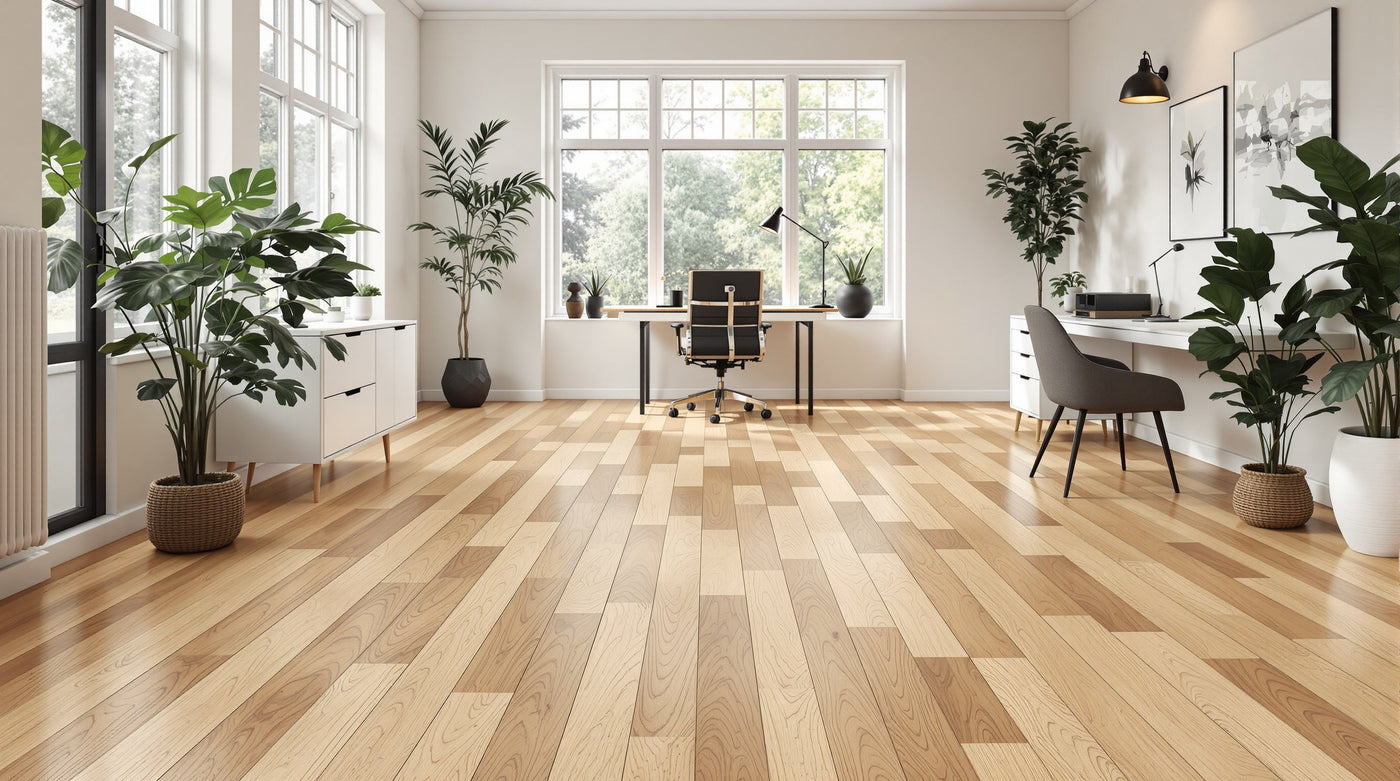
There is no single best flooring for every home office, because the room's biggest physical demand can point in one direction while comfort and camera-ready looks point in another. A desk chair used for hours every day concentrates a person's full weight onto a small point of contact, and a denser, harder core generally resists denting under that kind of sustained pressure best. A hard plastic chair mat, a low-pile area rug, or felt furniture protectors under the chair are mandatory regardless of which floor you choose, since sustained chair contact will damage any floor over time without one.
Home offices have become a permanent part of how people work. The floor in that room earns its keep differently than a living room or bedroom, and the demands are specific enough that a deliberate choice pays off every day you sit down to work.
What Does a Home Office Floor Actually Need?
Five performance categories separate a good home office floor from a great one.
Comfort underfoot comes first. A floor that takes several hours of barefoot walking and standing each day needs to be comfortable underfoot. Floating WPC vinyl planks with a comfort pad attached to the back address this at the product level without requiring a separate underlay purchase.
Quiet is the second factor. A floor that reflects sound creates more echo in a room, which is noticeable on video calls and harder to think through during a focused afternoon. Floors with meaningful IIC (Impact Insulation Class) ratings absorb impact noise from footsteps and chair movement. In a multi-storey home, this also matters for the people below.
Resistance to denting under concentrated weight is the third factor. WPC is a durable rigid core that is comfortable underfoot, and normal furniture is not a denting concern, but the sustained, concentrated pressure a desk chair applies for hours every day is the one scenario where a denser, harder core pulls ahead. A denser, more rigid core, such as SPC vinyl or a laminate with an AC4 or AC5 wear rating over an HDF solid core, generally holds its shape better under that specific kind of pressure than WPC vinyl or engineered hardwood.
Chair protection is the fourth factor and the most often overlooked, regardless of which core is chosen. A desk chair rolls back and forth across the same stretch of floor dozens of times a day, and that repeated contact will damage any flooring over time without something underneath it. It is not a question of if, only when. A hard plastic chair mat or a low-pile area rug under the chair is mandatory. A stationary chair used for hours every day needs felt furniture protectors under the legs for the same reason.
The fifth factor is visual finish. The floor visible on a video call contributes to how considered your space looks. A warmer, more deliberate choice reads better on camera than whatever happened to be installed.

Is a Harder Core, Like SPC Vinyl or Laminate, a Better Choice for a Home Office?
For a home office where a heavy chair is used for hours every day, a denser and more rigid core is often the more durable choice against denting. SPC (stone plastic composite) vinyl uses a denser, more rigid core than WPC, and that rigidity generally resists denting under that specific concentrated weight better than WPC does. A quality laminate with an AC4 or AC5 wear rating, built on an HDF (high-density fiberboard) solid core, is another strong option for the same reason: a dense, rigid core resists sustained point pressure better.
The trade-off runs the other way: a harder core is generally firmer and colder underfoot over a long day and typically will not offer the same level of acoustic dampening as a WPC construction with an attached comfort pad. For a room where the desk chair sees years of heavy daily use and resistance to denting is the top priority, that trade-off is often worth making.
This is worth stating plainly: SPC and current laminate sit outside our current product lineup. If durability against a heavy daily-use chair is what matters most in your home office, they deserve genuine consideration anyway. For a full breakdown of how SPC and WPC vinyl compare, see SPC vs WPC Vinyl Flooring: What is the Difference and Which Is Better?. A chair mat, rug, or furniture protector is still worth using under a heavy daily-use chair regardless of core, since even a rigid core benefits from reduced direct contact over years of use.
WPC Vinyl Flooring for a Home Office: Strengths and Trade-offs
WPC vinyl flooring brings genuine strengths to a home office: comfort underfoot, quiet, and a fully waterproof core. The composite core construction also makes it dimensionally stable across the seasonal temperature swings a sealed home experiences over the year.
The attached cushion pad built into quality WPC vinyl does real work in a home office. It adds underfoot comfort and contributes to the floor's acoustic absorption without any additional product. Premium WPC formats with IIC ratings in the low-to-mid 70s reduce impact noise transmission meaningfully, which makes a difference both for calls and for the household.
The desk chair is the one place the core matters. WPC is a durable rigid core, but under the sustained, concentrated weight a desk chair applies for hours every day, a denser, harder core such as SPC resists denting better. Wear layer thickness relates to general scuff and scratch resistance, not to how well the underlying core resists denting under concentrated pressure. A chair mat, rug, or furniture protector is required regardless and reduces this risk considerably, but the core itself is a real factor worth knowing about if a heavy daily-use chair is central to how the room gets used.
WPC vinyl is also fully waterproof flooring, which is a genuine convenience in a home office: spilled coffee or an overflowing planter near a desk are not a concern the way they would be on an unprotected wood floor.
Engineered Hardwood for a Home Office: Strengths and Trade-offs
Engineered hardwood brings genuine warmth and real wood character to a home office, and the layered construction keeps it more dimensionally stable than solid hardwood through seasonal humidity changes.
The visual payoff is real. A wide-plank engineered hardwood floor reads as warm and deliberate on a video call in a way that synthetic surfaces do not fully replicate. For home offices that double as client-facing spaces, or for anyone whose backdrop is part of their professional presentation, real wood adds a layer of intent that shows.
The trade-off is that a real wood veneer, even a premium 4mm veneer, is a natural material, and natural materials are generally more prone to denting under sustained, concentrated weight than a dense, purpose-built rigid core. Veneer thickness (the market ranges from about 1.2mm at the entry level to 4mm at the premium tier) affects how the floor looks and how substantial it feels underfoot, but it does not change this basic property of real wood. A chair mat, rug, or furniture protector is mandatory here too, and if a heavy daily-use desk chair is the main consideration in the room, that trade-off is worth weighing honestly against the aesthetic appeal.
How Do You Protect a Home Office Floor From a Desk Chair?
A desk chair used for hours every day, rolling or not, will damage a home office floor over time without protection underneath it. This is not a maybe. Hard plastic casters moving repeatedly across the same stretch of floor wear down a finish faster than almost anything else in a home, and it is a matter of when the wear shows, not if.
The mandatory fix for a rolling chair is a hard plastic chair mat or a low-pile area rug placed under the full range of the chair's movement. Either option works across every flooring category. This is not a style preference or an optional upgrade. It is the one step that protects the floor regardless of which product is underneath it.
A stationary chair without wheels is not exempt. If the same chair is used for hours every day, felt furniture protector pads under each leg are also mandatory. Sustained weight concentrated in one spot for hours at a time, day after day, has the same cumulative effect on a floor as rolling contact.
Wear layer thickness on WPC vinyl and finish hardness on engineered hardwood are real specs, but they describe how a floor holds up to everyday household wear in general, not how it withstands sustained, concentrated chair contact. Neither spec is a substitute for a mat, a rug, or furniture protectors. Caster type is a secondary consideration worth knowing regardless of flooring choice: rubber or soft polyurethane casters are gentler than hard plastic ones, but softer casters still do not remove the need for a mat or rug underneath.
For a detailed look at how vinyl floors handle scratching and surface wear over time, Is Vinyl Flooring Really Scratch Resistant? covers the realistic picture by wear layer thickness and use type.

Which Floor Looks Best on Video Calls?
Wide-plank, warm-toned floors read best on camera. Longer and wider boards fill a video frame with a cleaner visual than narrow-strip flooring or tile grids. Lighter tones (blonde oaks, warm sandy naturals, soft greys with warm undertones) reflect light upward into the room, which helps with the overall brightness of a video frame. Darker tones create a more formal, moody environment, which suits some professional contexts and not others.
The floor does not have to be the primary design statement in a home office, but a floor that looks considered makes the whole room read more intentional. This is one area where the aesthetic choice pays a return that has nothing to do with technical specs.
If the visual impact of flooring on a room's overall presentation is a priority, What Flooring Makes a Home Look More Expensive? breaks down the factors that change how a space reads on camera and in person.
WPC Vinyl vs Engineered Hardwood for a Home Office
Both categories work well in a home office. The differences are real but not dramatic.
| Factor | WPC Vinyl Flooring | Engineered Hardwood |
|---|---|---|
| Comfort underfoot | Built-in comfort pad, warm and quiet underfoot | Firmer, depends on subfloor |
| Acoustic absorption | Attached pad absorbs impact noise | Better than solid wood, less than WPC |
| General surface durability | Thicker wear layer, higher end of the category | Aluminum oxide finish, resists surface scratching |
| Resistance to denting under concentrated weight | Good; durable rigid core, with a denser core like SPC the stronger option only under this room's sustained desk-chair load | Weaker; real wood veneer has a genuine, distinct vulnerability to marking under the same sustained pressure |
| Visual character | Wide planks, realistic embossed grain | Real wood grain, warm and premium on camera |
| Best fit | Busy home offices, high-traffic or multi-use rooms | Client-facing or prestige home offices where real wood matters |
For a complete comparison of these two flooring categories, including how they each perform through the seasons, WPC Vinyl or Engineered Hardwood: Which Is Right for Your Home? covers the full picture. If resistance to denting under a heavy, daily-use chair is the top priority in the room, a denser core such as SPC vinyl or a quality AC4 or AC5 laminate is worth considering as well, even though these categories are outside what we currently offer.

Frequently Asked Questions
Both WPC vinyl and engineered hardwood come up in home office flooring searches regularly. Here are the questions that come up most often.
Does a home office need a harder, more rigid floor because of the desk chair?
It depends on the room's priorities. A rolling or stationary chair used for hours every day concentrates weight on a small area, and a denser, more rigid core, such as SPC vinyl or a laminate with an AC4 or AC5 wear rating over an HDF solid core, generally resists denting under that kind of pressure better than WPC vinyl or engineered hardwood. A chair mat, rug, or furniture protector is mandatory regardless of which core is chosen, since it meaningfully reduces this risk no matter what is underneath it.
What is the best way to protect a home office floor from a desk chair?
A hard plastic chair mat or a low-pile area rug under the chair is mandatory for any rolling desk chair used regularly, regardless of which floor is underneath it. Without one, the floor will show wear over time. This is not optional. A stationary chair used for hours every day needs felt furniture protector pads under the legs for the same reason. Wear layer thickness on WPC vinyl and finish hardness on engineered hardwood are worth knowing for general durability, but neither is a substitute for a mat, a rug, or furniture protectors under a desk chair.
Does the floor affect noise on video calls?
The floor does not transmit the airborne sound that microphones pick up, but it affects room acoustics. Harder floors reflect more sound, which creates a slightly more echoey environment on calls. A WPC floor with an attached cushion pad, combined with a rug and soft furniture in the room, absorbs enough reflected sound to make the acoustic environment noticeably better for both callers and for focused work.
Can I use the same flooring in my home office as the rest of the main floor?
Yes, and it often reads better when you do. A consistent floor throughout an open-plan space creates a visual flow that makes rooms feel larger and more deliberate. Transition strips in a doorway can feel awkward when a home office opens directly onto a living room or hallway. For home offices off an open main floor, choosing the same product and colour as the adjacent space is the simpler and more polished outcome. Should You Use the Same Flooring Throughout the House? covers when it works and when a change makes sense.
There is no single best flooring category for every home office. WPC vinyl flooring and engineered hardwood both offer real strengths, comfort, quiet, and a premium look on camera, and they work well in a home office when a chair mat, rug, or furniture protector is used consistently under the desk chair. If resistance to denting under a heavy, daily-use chair is the top priority, a denser core such as SPC vinyl or a quality AC4 or AC5 laminate is worth serious consideration too, even though it is a category we do not currently carry. A hard plastic chair mat or a low-pile area rug under a rolling chair, and felt furniture protectors under the legs of a stationary chair used for hours every day, are mandatory no matter which floor you choose.
Have questions about finding the right flooring for your home office? Contact Caledon Floors and we will be glad to help you find the right fit.
To find waterproof vinyl flooring, click here for a Caledon Floors dealer near you.