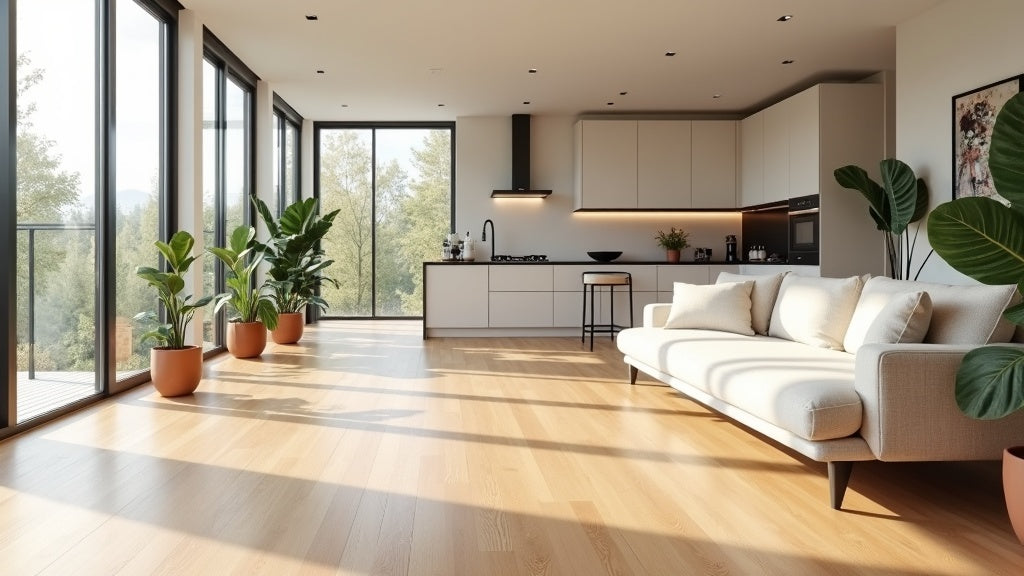
Wood species is one of the most underrated decisions in engineered hardwood flooring. Choose the right one and a room feels like it was always meant to have that floor. Choose the wrong one and the floor fights the space, even in a well-designed home.
Oak, hickory, and maple are the three most common species found in engineered hardwood. Each one has a genuinely distinct character: a different grain structure, a different range of natural tones, and a different relationship with colour, light, and finish. Understanding what each wood species actually does to a room makes the decision much clearer.

What Does "Wood Species" Actually Mean in Engineered Hardwood?
In engineered hardwood, the species you are choosing is the top veneer layer. That veneer is real wood, sliced from the parent log and bonded to a stable multi-ply core. Because it is real wood, it carries all the natural variation of that species: the grain lines, the knot patterns, the mineral streaks, the tonal range from board to board.
That variation is the point. A thicker veneer (4mm is considered premium versus the 1.2mm to 3mm common in many competing products) also allows the species character to come through more fully, because there is simply more real wood on the surface.
Species does not change with a stain or finish. The finish changes the tone, but the grain structure underneath stays true to the tree it came from. Oak will always read as oak, even under a deep charcoal stain. That is both the beauty and the commitment of choosing real wood flooring.
What Does Oak Look Like in Engineered Hardwood?
Oak is the most widely used species in engineered hardwood, and for good reason. It is highly versatile and works across a genuinely wide range of rooms and design directions.
White oak and red oak are the two primary types. White oak has a tighter, straighter grain with a silvery, cool undertone when unfinished. Red oak is warmer, with a slightly more open grain and a pink-to-amber cast. Most engineered hardwood labelled simply as "oak" is one of these two, and it is worth knowing which.
The grain on oak is moderate: present enough to read clearly as real wood, but consistent enough not to overwhelm. In wider plank formats, oak reads as clean and sophisticated. In narrower formats, it becomes more traditional and quiet.
Oak accepts a wide range of stains and finishes. Light washes, natural oils, dark ebony, fumed grey: all work well because the grain holds colour evenly. This makes oak a reliable choice when you are not entirely certain about your final colour direction. It gives you room to move.
What Does Hickory Look Like in Engineered Hardwood?
Hickory is the most visually dramatic of the three species. The grain is bold, with pronounced light-to-dark contrasts within individual boards. A single plank might move from pale cream to rich brown within a few centimetres. That contrast is the signature of hickory, and it is not for every space.
Hickory makes a strong visual statement. In large, open-concept rooms with high ceilings, the variation gives the floor energy and depth. In tighter rooms or corridors, the same boldness can feel busy. Hickory tends to earn its best reviews in spaces where the scale gives it room to breathe.
Because hickory's natural tonal range is already high-contrast, it works best with finishes that complement the variation rather than flatten it. Clear or lightly tinted finishes let the character breathe. Very dark saturated stains can reduce some of the contrast, though the grain lines still show through.
Hickory is a genuinely hard species, among the hardest domestic hardwoods used in flooring. When you see it used in premium engineered hardwood, it is often paired with wider planks specifically to showcase the character of each board at full scale.
What Does Maple Look Like in Engineered Hardwood?
Maple sits at the opposite end of the spectrum from hickory. The grain is tight, fine, and remarkably consistent. Between boards, variation is minimal. The overall effect is calm, clean, and almost understated.
That subtlety is exactly what some rooms need. A home office, a primary bedroom, a contemporary kitchen with flat-front cabinetry: maple works beautifully in spaces where the design intent is minimalist and the floor should serve as a backdrop rather than a focal point.
Maple's closed grain also holds light differently from oak or hickory. The surface reads smoothly, and in wider plank formats, the effect is expansive and serene. Light finishes, natural oils, and soft blonde tones suit maple particularly well, as they let the fine grain show without forcing contrast.
One note on grade and finish: because maple's grain is tight and closed, it resists stain penetration unevenly, and very dark stains can look blotchy or uneven rather than rich. Any mineral streaks or tonal shifts within maple boards also tend to be more visible than in oak, since there is less grain movement to hide them. In Select and Better grade maple, boards are chosen for clean, consistent grain, and the floor feels almost seamless. In character grades, more of that natural variation shows through.

How Does Wood Species Change the Feeling of a Room?
This is where the decision really lives. Choosing a species is not just choosing a colour. It is choosing the visual rhythm of the entire floor.
Hickory creates movement. The boards have their own internal drama, and that energy rises in a room. Spaces that want character, warmth, and personality respond well to hickory, particularly in homes with an organic, rustic-contemporary, or artisan design direction.
Oak creates flow. The grain is present enough to read as genuine wood, but even enough not to compete with the rest of the room. It moves with most design styles: transitional, contemporary, farmhouse, classic. Oak is the species that works almost everywhere.
Maple creates stillness. Tight grain and tonal consistency make maple floors read as serene. In spaces that are already visually busy, with rich cabinetry, strong art, or active wallcovering, maple quiets the floor and keeps the room in balance.
Oak vs. Hickory vs. Maple: A Quick Comparison
| Species | Grain Character | Natural Tonal Range | Room Feel | Styles It Suits | Finish Flexibility |
|---|---|---|---|---|---|
| Oak (white) | Moderate, straight | Silvery-cool to medium | Balanced, versatile | Contemporary, transitional, farmhouse, classic | High: accepts nearly any stain |
| Oak (red) | Moderate, slightly open | Warm amber to pink-tan | Warm, approachable | Traditional, cottage, warm-contemporary | High: wide range works |
| Hickory | Bold, high-contrast | Pale cream to deep brown within one board | Dramatic, energetic | Open-concept, cabin, rustic-contemporary, artisan | Moderate: clear or light finishes best |
| Maple | Fine, tight, consistent | Creamy to soft blonde | Calm, clean, minimal | Scandinavian, minimalist, contemporary, bedrooms | Moderate: light finishes natural; very dark stains can look heavy |
How Does Wood Species Interact with Colour and Finish?
Species sets the foundation for how a stain reads on the finished floor. The same colour applied over oak, hickory, and maple will look three different ways, because the grain structure absorbs and reflects light differently.
On oak, most stain colours settle evenly and with good depth. The moderate grain holds colour without streaking or blotching.
On hickory, the natural contrast in the wood shows through most stains. The pale parts of a board absorb more stain; the darker parts absorb less. The result is a layered, complex look where the finish and the wood work together.
On maple, stain behaviour is different from the other two. The tight, closed grain does not absorb colour as readily as oak. Very dark stains on maple can look heavy or even slightly artificial because the colour sits on the surface rather than penetrating deeply. Light oils and natural finishes tend to work more naturally with maple.
For a deeper look at how to choose stain tone, wood undertones, and light direction, the post on how to choose the best engineered hardwood colour for your home covers the topic in full.
Does Species Matter Alongside Plank Width and Grade?
Species, width, and grade work together to create the final look of a floor. A wide-plank hickory in Select and Better grade is a very different floor from a narrow-strip hickory in a character grade, even though both are hickory.
Width affects how much of each board's grain is visible at once. Wider planks let hickory's full drama play out at scale. Narrower strips make even hickory read more traditionally and quietly.
Grade determines how much natural variation, including knots, mineral streaks, and tonal shifts, is present across the floor. Select and Better is the cleanest, most consistent grade in the industry. Character grades intentionally include more of the wood's natural story.
Understanding how species, width, and grade interact gives you the complete picture of engineered hardwood aesthetics. The companion post on how engineered hardwood grade changes the look of a floor covers the grade dimension in detail. For width and length, how plank width and length change the look of an engineered hardwood floor is worth reading before you decide.
Does Species Affect How Well a Floor Can Be Refinished?
For engineered hardwood, the ability to refinish depends more on veneer thickness than on species. A thicker veneer has more real wood above the core, which is what gives it the depth to be sanded and refinished. Species affects how the wood looks after refinishing (the grain and natural tones return to the surface), but the number of times a floor can be sanded is a veneer-depth question, not a species question.
When evaluating engineered hardwood for long-term ownership, look at veneer thickness alongside species. The two together determine the floor's longevity as a refinishable surface. The post on whether engineered hardwood can be refinished covers what to look for.

Frequently Asked Questions
A few more questions that come up when choosing between oak, hickory, and maple for engineered hardwood.
Which Wood Species Is Most Popular for Engineered Hardwood?
Oak is the most widely used species in engineered hardwood. It suits the broadest range of home styles and stain directions, which explains its dominance in the category. White oak in particular has become increasingly common in contemporary homes, where its cool, silvery grain works well with neutral palettes and modern cabinetry.
Is Hickory Too Bold for a Smaller Room?
Hickory's natural contrast can feel visually busy in tight spaces. It tends to read best in larger, open-concept rooms where the variation has room to play out. In a small bedroom or a narrow hallway, the drama can feel like a lot. That said, the right grade and a clear or light finish can soften hickory considerably, bringing it into spaces where you might not expect it to work.
Can I Get the Look of a Wood Species in WPC Vinyl Flooring or Waterproof Flooring?
Yes. WPC vinyl flooring and waterproof flooring products are available in a wide range of printed designs inspired by oak, hickory, and maple. The printed layer creates a consistent, repeating pattern rather than the natural board-to-board variation you get with real veneer. Many homeowners use WPC vinyl flooring in spaces where engineered hardwood is not practical (basements, bathrooms, laundry rooms) and pair it with engineered hardwood in living areas and bedrooms for a cohesive look across the home.
Does One Species Show Marks More Than Another?
The finish protects all species similarly. What tends to differ is how any marks read against the background. On hickory, the high natural contrast means small scratches can be harder to see because the grain already has so much movement. On maple, the clean surface can make any disruption more visible. The finish and wear layer on any quality engineered hardwood product are what determine scratch resistance in practical use.
Have questions about choosing engineered hardwood for your home? Contact Caledon Floors and our team can help connect you with the right specialist.
To find waterproof vinyl flooring, click here for a Caledon Floors dealer near you.