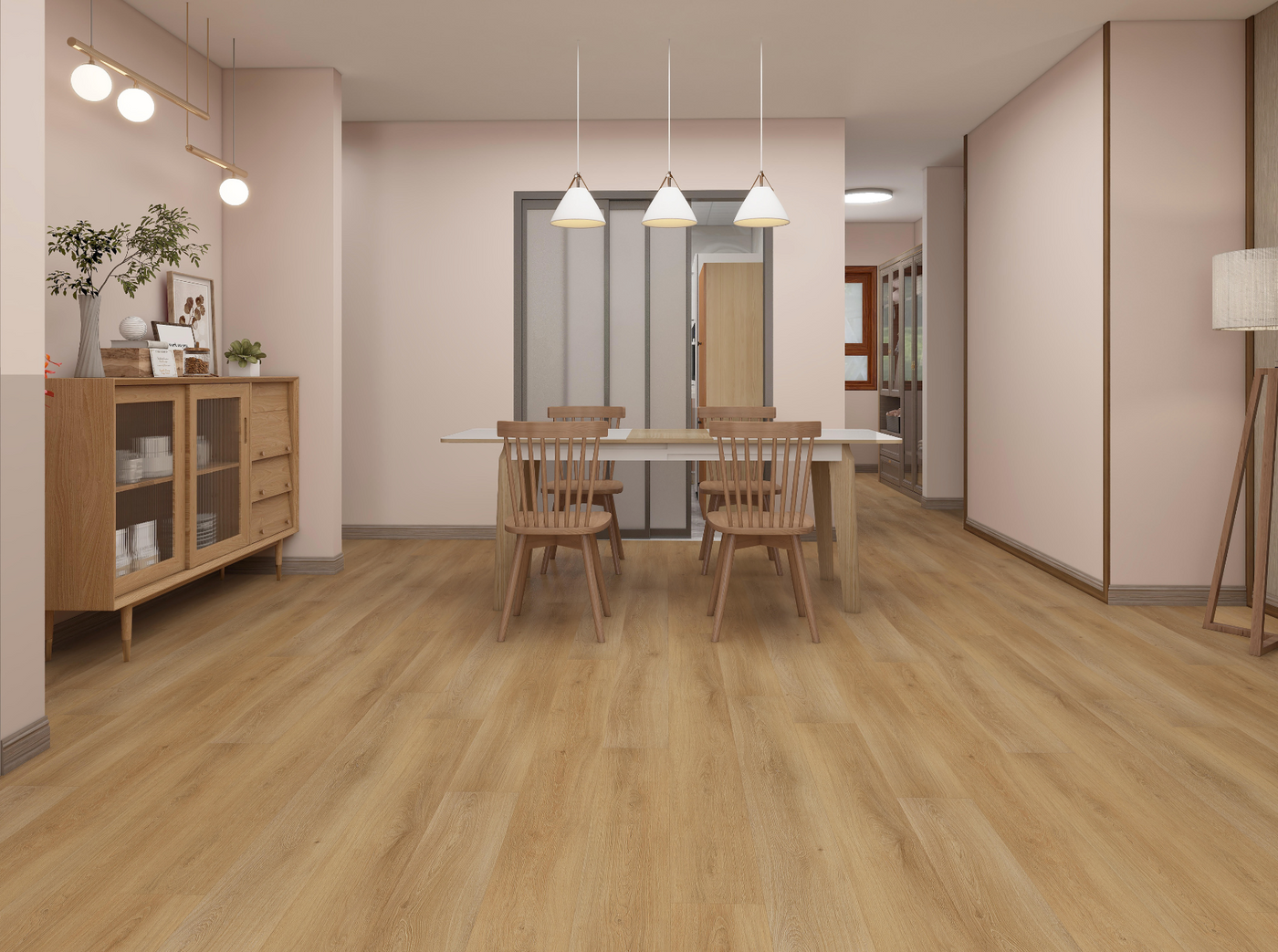
Last updated: July 2026.
If you are planning a renovation or comparing flooring options, you have probably run into the term WPC vinyl flooring. This guide answers the foundational question directly: what WPC actually is, how it is built layer by layer, and how it stacks up against SPC, standard LVP, and laminate. No sales pitch, just a straightforward technical breakdown so you can judge for yourself whether it fits your project.
What Does "WPC" Stand For?
WPC stands for Wood Plastic Composite. It refers to the core of the vinyl plank.
A WPC core creates a plank that is:
- Fully waterproof
- More dimensionally stable through humidity and temperature changes
- Comfortable and warm underfoot
- Softer and quieter than other rigid flooring types, such as SPC
The name is widely recognized as a distinct, premium category of vinyl flooring.

How Is WPC Vinyl Flooring Constructed?
WPC vinyl flooring typically includes four main layers, and understanding them is the fastest way to judge quality between products.
- Wear layer: a clear, protective topcoat that resists scratches, scuffs, and everyday wear. Common ratings are 12 mil and 20 mil. A 20 mil (0.5mm) wear layer is the thicker, more durable option.
- Luxury vinyl print layer: the realistic image layer, typically designed to mimic wood or stone.
- WPC core: the rigid, waterproof core made from a polymer composite.
- Attached underpad: a built-in foam backing, usually IXPE or EVA, that adds comfort and reduces noise.
This layered structure is what makes WPC vinyl flooring feel noticeably more premium underfoot than standard vinyl or laminate.
Benefits of WPC Vinyl Flooring
WPC flooring is particularly well-suited to homes that deal with seasonal moisture, cold floors, and temperature swings. Here is why.
1. Fully waterproof
A strong fit for basements, kitchens, and mudrooms, anywhere water is a real concern. WPC does not swell or warp the way wood-based flooring can.
2. Warm and comfortable
Cold winters are tough on bare feet. WPC gives you a warmer, more comfortable surface compared with tile, laminate, or even SPC.
3. Durable enough for busy households
With a strong wear layer, especially 20 mil, WPC resists scratches from pets, furniture, and everyday life.
4. DIY-friendly click-lock installation
Many WPC floors use a floating click-lock system, which makes them more approachable for a handy homeowner to install without a professional crew.
5. Quieter underfoot
The thicker core and built-in underpad reduce sound transmission, a genuine advantage in multi-level homes, rentals, or busy family spaces.
What Makes WPC Different from Other Vinyl Flooring?
WPC gets confused with other vinyl categories often enough that a direct, side-by-side comparison is worth having on hand.
| Feature | WPC Vinyl | SPC Vinyl | Standard LVP | Laminate |
|---|---|---|---|---|
| Core | Waterproof polymer composite | Stone plastic core | Flexible PVC | HDF wood core |
| Waterproof | Yes | Yes | Often | No, unless labelled |
| Comfort | Softer | Firmer | Varies | Varies |
| Noise | Quieter | Louder | Depends on underlay | Loud |
| Best for | Everyday living spaces, basements | Rentals, high-traffic areas | Budget spaces | Budget, dry areas only |
WPC generally sits at the intersection of durability, comfort, and waterproof protection among these four categories. Once you know what you are shopping for, our WPC vinyl buyer's checklist walks through exactly what to check before you commit to a product.
Where Can You Install WPC Vinyl Flooring?
One of the best things about WPC vinyl flooring is its versatility. It can be installed in:
- Basements, including over concrete
- Main floors: living rooms, dining rooms, hallways
- Bedrooms, for a quiet, cozy feel
- Kitchens, since it is easy to clean and fully waterproof
- Condos and rentals, where noise reduction matters to neighbours
Whichever room you choose, confirm the subfloor is level, dry, and clean first. Most WPC products can go over concrete, plywood, or select existing flooring, but a level subfloor is the single biggest factor in a successful installation.

Things to Consider Before You Buy
No flooring is perfect. Here are a few honest trade-offs to weigh before choosing WPC.
- It costs more than entry-level SPC or laminate
- Very heavy stationary furniture, such as a piano, is best protected with pads or a mat
- It is not ideal for spaces with extreme, uncontrolled temperature swings, such as an uninsulated seasonal cottage
- It is very durable but not as scratch-resistant as AC4-rated laminate
If your biggest priorities are waterproofing and comfort, WPC is usually the right fit. If scratch resistance or a tighter budget matters more, it is worth comparing against SPC and laminate directly.
How Does WPC Perform in Cold, Humid Climates?
Very well, and it is worth explaining why. Homes in a Canadian climate deal with:
- Seasonal humidity swings
- Dry indoor air from winter heating
- Concrete basement slabs
- Occasional leaks or wet floors
WPC vinyl flooring handles all of these well. Its waterproof composite core is built to resist expansion and contraction, which is exactly the stress a floor experiences through a full change of seasons.

Final Thoughts: Should You Choose WPC Vinyl Flooring?
If you want a floor that is waterproof, comfortable underfoot, stylish, and durable enough for pets, kids, and busy households, WPC vinyl flooring is worth serious consideration. It is not the cheapest option on the shelf, but it is strong value for buyers who want performance and comfort together, and in many cases it can outperform laminate, standard LVP, or even engineered wood on day-to-day livability.
Ready to compare specific products? Our WPC vinyl buyer's checklist covers thickness, locking systems, and certifications to look for, and our SPC vs. WPC comparison goes deeper on how the two cores actually differ. For the full buying framework across every vinyl core type, wear layer, and certification, see our complete vinyl plank flooring buyer's guide.
Contact us and we will connect you with a Caledon Floors dealer in your region.
To find WPC vinyl flooring, click here for a Caledon Floors dealer near you.