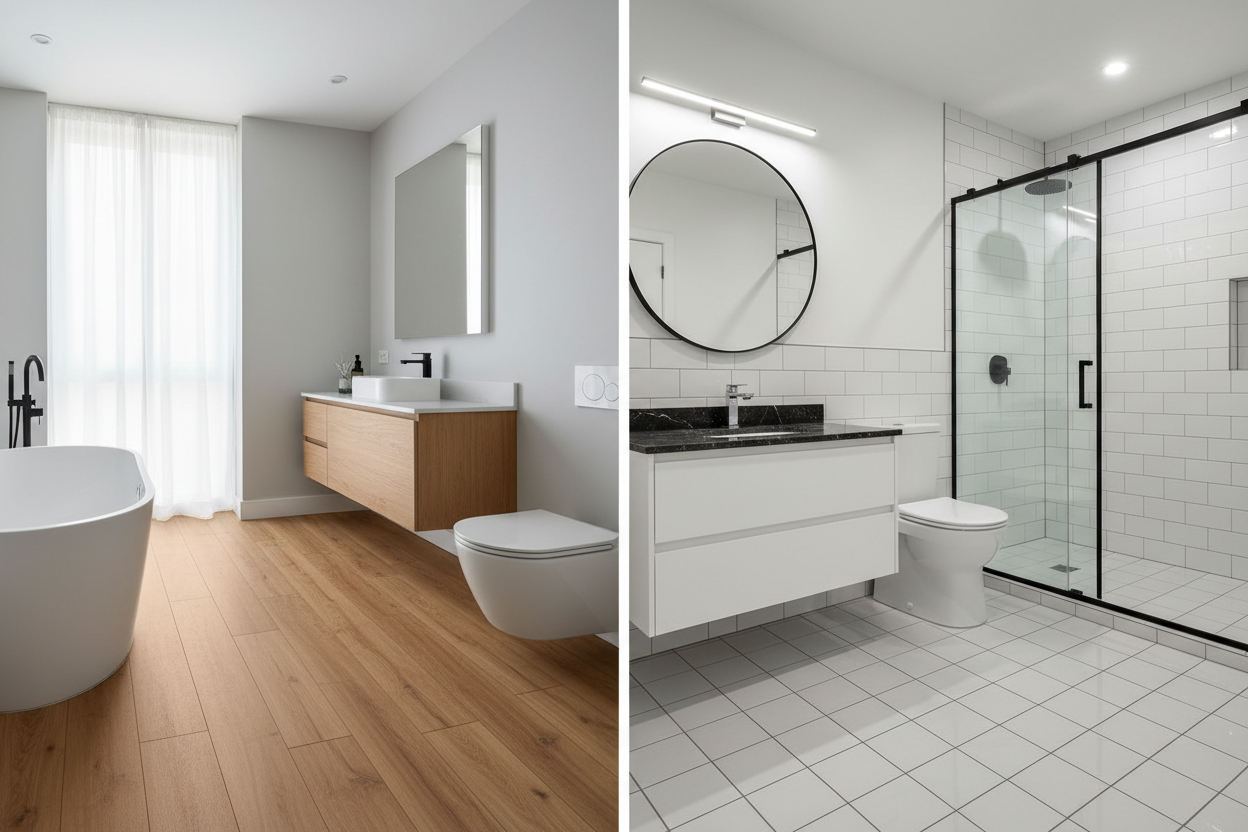
For most Canadian bathrooms, ceramic or porcelain tile still wins for ultimate longevity and radiant floor heating, while modern vinyl and laminate options often deliver better comfort, easier installation, and lower upfront cost for everyday homes and rentals. The best choice depends on moisture levels, budget, how cold the room feels in winter, and how long you plan to stay in the home.

TL;DR: Quick Comparison
| Feature | Ceramic/Porcelain Tile | Vinyl (LVP/LVT, WPC, SPC) | Laminate (water-resistant types) |
|---|---|---|---|
| Water resistance | Surface waterproof; grout needs sealing | Fully waterproof core (WPC/SPC) when installed correctly | Water-resistant only; vulnerable to standing water |
| Comfort and warmth | Hard and cold without radiant heat | Softer, warmer, quieter underfoot | Warmer than tile; similar feel to vinyl underfoot |
| Lifespan | 30 to 50+ years with proper installation and care | 20 to 30 years for quality products | 15 to 25 years in typical residential use |
| Installation | Complex; usually professional | Easier click-lock; DIY-friendly or fast professional installs | Floating click systems; similar to vinyl |
| Upfront installed cost (approx.) | Highest | Mid-range | Often lowest upfront |
| Radiant floor heating | Excellent | Possible with temperature limits; product-dependent | More limited; check product ratings |
| Condo noise and sound | Harder, can transmit impact sound | Better sound absorption with underlayment | Similar to vinyl with proper underlayment |
What Matters Most in a Canadian Bathroom
Bathroom floors in Canada deal with three big realities: water, temperature swings, and tight spaces. Before choosing a material, it helps to be clear about your priorities.
Key questions to ask yourself:
-
How cold does this room feel in winter, and will you use radiant floor heating?
-
Is this a primary home, rental, or condo where noise and bylaws matter?
-
Do you want a “install it once for decades” solution or “great look and performance for the next 10 years”?
Once you know your priorities, you can weigh tile, vinyl, and laminate based on how they actually behave under real bathroom conditions in Canada.
Tile in Canadian Bathrooms: Where It Truly Shines
Ceramic and porcelain tile remain the benchmark for bathroom durability and water exposure. Properly installed tile with sealed grout can handle decades of showers, splashes, and steam with minimal structural risk.
Tile makes the most sense when:
-
You want a 30 to 50+ year solution and are comfortable with a higher upfront budget.
-
You are installing or already have radiant floor heating, where tile conducts heat efficiently and feels fantastic.
-
You prefer a classic or high-end aesthetic and do not mind some grout maintenance over time.
Where tile is less ideal:
-
Cold bathrooms without radiant heat, where the surface can feel uncomfortably hard and chilly.
-
Condos or multi-level homes where impact noise from hard tile can be an issue without extra soundproofing.
Vinyl Bathroom Flooring: Comfort and Waterproofing Without the Cold
Modern vinyl flooring (LVP, LVT, WPC, SPC) is designed for wet, busy spaces like kitchens and bathrooms. The core is fully waterproof, and the surface layer can mimic wood, stone, or tile without the cold feel.
Where vinyl works especially well:
-
Family bathrooms where comfort, warmth, and slip resistance matter day-to-day.
-
Condos and multi-level homes where sound absorption and lighter weight are advantages.
-
Projects where you want simpler installation and lower labour costs than full tile work.
Important nuances:
-
Vinyl itself is waterproof, but click-lock floating systems can still trap water underneath if a major leak is not cleaned up quickly. The flooring is waterproof, but the subfloor beneath it isn't
-
For radiant heat, you need to follow product-specific temperature limits and installation requirements.
Laminate in Bathrooms: Where It Fits (and Where It Doesn’t)
Water-resistant laminates have improved, but they are still not on the same level as tile or WPC/SPC vinyl for heavy bathroom moisture. They can be a solution for specific cases, with careful expectations.
Laminate may be appropriate when:
-
You are renovating a half-bath or powder room with very little standing water risk.
-
You like the feel and look of laminate, and the bathroom is well-ventilated with quick cleanup habits.
-
You are working within a tight budget but still want a floating plank system.
Limitations to keep in mind:
-
Even “water-resistant” laminate can swell or damage if water sits on seams for extended periods.
-
Not all laminate products are rated for full bathrooms (many are not); you should always check the manufacturer’s specific bathroom guidance.
How to Choose: Three Common Canadian Scenarios
-
Long-term “forever home” with radiant heat
-
Best fit: Tile (with good grout work and regular sealing).
-
Why: Maximum lifespan, top-tier performance with radiant heating, and strong resale appeal in higher-end renovations.
-
-
Family bathroom in a typical Canadian home (no radiant heat)
-
Best fit: Quality WPC or SPC vinyl plank.
-
Why: Warmer underfoot, fully waterproof core, easier and less expensive to install than tile, and more forgiving for kids and day-to-day use.
-
-
Condo or rental bathroom
-
Best fit: Vinyl, sometimes laminate in low-moisture setups.
-
Why: Lighter weight, better sound control with underlayments, easier replacement, and friendlier for strata noise rules.
-
Limitations and Real-World Considerations
No bathroom floor is perfect; each option involves trade-offs. Tile is outstanding for water and heat but can be cold, hard, and more expensive up front. Vinyl is comfortable and waterproof but depends on correct installation and leak management to avoid trapped moisture under floating planks.
Laminate can work in specific bathroom contexts but remains the most sensitive to standing water and should be chosen carefully with realistic expectations.
Frequently Asked Questions
What is the most waterproof bathroom flooring?
Ceramic and porcelain tile are effectively waterproof on the surface, and vinyl planks with WPC or SPC cores are fully waterproof as a material when installed correctly.
Which bathroom flooring feels warmest underfoot without radiant heat?
Vinyl usually feels warmer and softer than tile and many laminates, especially during Canadian winters.
Is laminate flooring a good idea for full bathrooms?
It can work in some cases, but even water-resistant laminates are more vulnerable to standing water than tile or vinyl and need more cautious use.
Is tile always the best bathroom floor in Canada?
Tile is best for longevity and radiant heating, but for many homes, vinyl offers a more comfortable, budget-friendly balance of warmth, waterproofing, and installation cost.
Can you install vinyl or laminate over existing tile?
In many cases, yes, if the existing tile and subfloor are sound, flat, and within thickness limits, but it is important to follow manufacturer instructions for underlayment and transitions.
To explore waterproof vinyl options that work well alongside traditional tile in Canadian bathrooms, you can contact a Caledon Floors dealer near you.