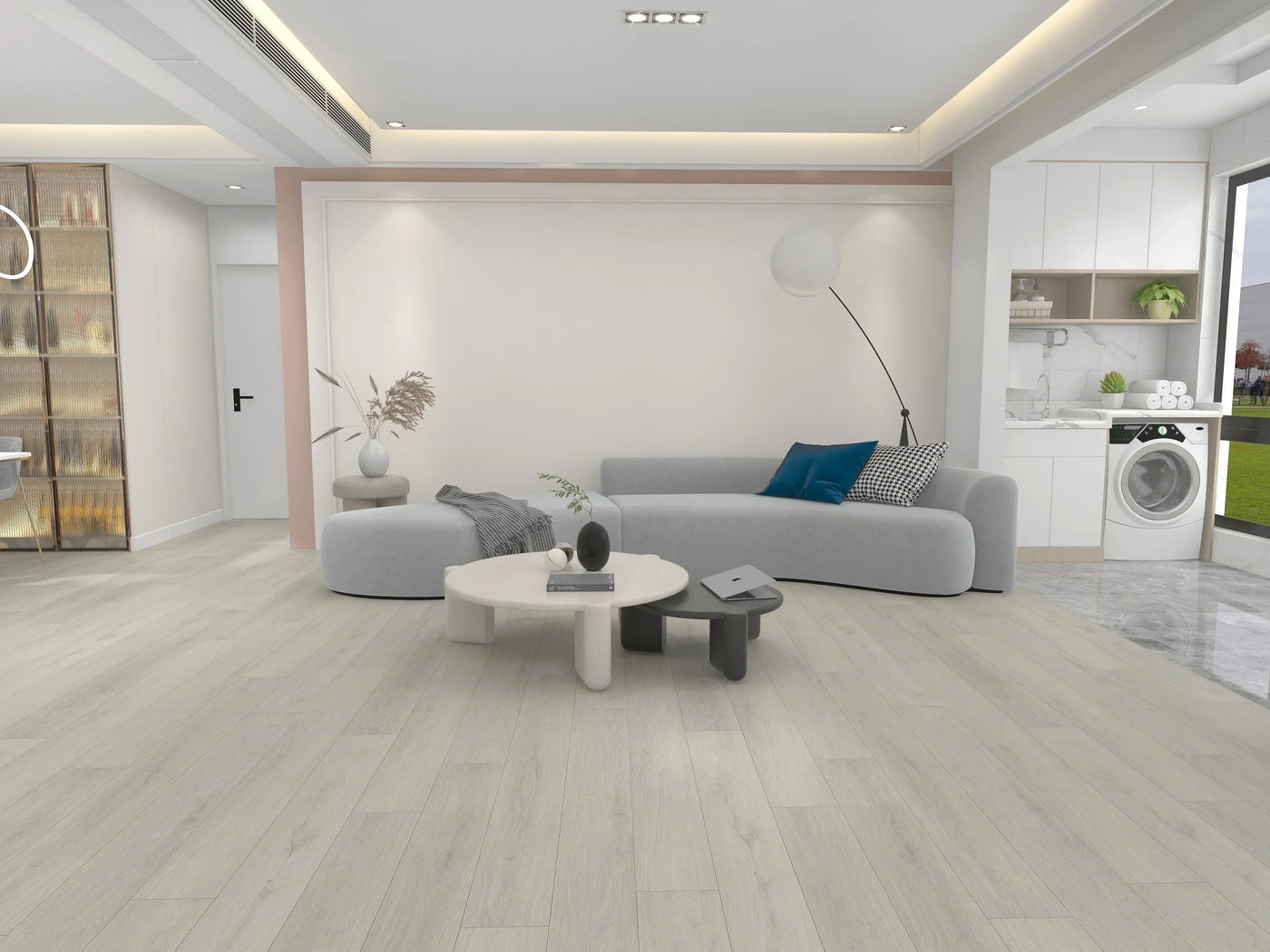
We are proud of this cornerstone hub content on all thing vinyl flooring in Canada: The Complete Guide to Types, Costs, Waterproofing, and Best Uses!
TL;DR
Vinyl flooring is one of the most practical flooring choices for Canadian homes because it can be waterproof at the product level, works in bathrooms and basements, and is generally easier to maintain than many alternatives. The right vinyl floor depends on the room, the subfloor (especially concrete), sound requirements (often critical in condos), and choosing the right construction and wear layer for your household.
Vinyl Flooring at a Glance
| Feature | Vinyl Flooring |
|---|---|
| Waterproof | Often yes at the product level; installation details still matter |
| Comfort | Moderate to high depending on core type and underfoot construction |
| Lifespan | Often 15 to 30 years depending on quality, use, and installation |
| Best Rooms | Bathrooms, basements, kitchens, condos, living areas |
| Installed Cost (Canada) | Commonly ranges from about $4 to $12 per sq. ft. depending on prep and product |
| Maintenance | Low; regular sweeping and damp mopping |
| Sound | Typically better than tile; can be improved further with acoustic underlay |
| Biggest Risk | Poor subfloor preparation and choosing the wrong product for moisture or sound constraints |
What Vinyl Flooring Means Today
When most Canadians say “vinyl flooring,” they’re usually talking about modern products like luxury vinyl plank and luxury vinyl tile, not the thin sheet vinyl many people remember from older kitchens and bathrooms.
Modern vinyl flooring usually falls into three broad formats:
-
Luxury vinyl plank (LVP), designed to mimic hardwood
-
Luxury vinyl tile (LVT), designed to mimic tile or stone
-
Sheet vinyl, installed in continuous sheets (still used, but less common in many renovations)
Within those formats, there are two major installation methods:
-
Floating click-lock floors that lock together and “float” over the subfloor
-
Glue-down floors that are adhered to the subfloor
A key point that many homeowners miss: two products can look similar on the surface but perform very differently because of what’s inside (core type, thickness, locking system, backing, and wear layer).

Why Vinyl Flooring Is Popular in Canada
Canadian homes present a few common flooring challenges that vinyl handles well:
-
Basements are often built on concrete slabs that can transmit moisture vapour.
-
Winters make cold floors feel much colder, especially in bathrooms and entryways.
-
Condos and multi-family homes often have sound requirements and neighbours below.
-
Busy households need floors that handle spills, grit, and daily cleaning without constant upkeep.
Vinyl flooring isn’t perfect, but it can be a strong “balance” choice: practical water performance, comfortable enough for daily life, and typically easier to live with than more demanding materials.
Vinyl Flooring Types
Luxury Vinyl Plank (LVP)
Luxury vinyl plank is the most common “vinyl flooring” people mean today. It’s made in plank shapes and typically aims to replicate hardwood visuals.
LVP is often used in:
-
Kitchens
-
Living areas and bedrooms
-
Basements
-
Condos
It’s chosen because it can deliver a wood look with less worry about occasional spills and less ongoing maintenance than real hardwood.
Luxury Vinyl Tile (LVT)
Luxury vinyl tile comes in tile-like formats (squares or rectangles) and is designed to mimic ceramic tile or stone visuals.
LVT is often used in:
-
Bathrooms
-
Laundry rooms
-
Entryways and mudrooms
-
Condo renovations where tile look is desired but comfort and noise matter
Some LVT includes bevels or printed grout visuals. It won’t behave exactly like real grout and tile, but it can deliver a similar style with a warmer feel underfoot.
Sheet Vinyl
Sheet vinyl is installed in large continuous sheets. It can still be a practical choice in some scenarios because it has fewer seams. That said, in many modern renovations it’s less common because:
-
It’s harder to repair invisibly in the middle of a room
-
It offers less “modular” replacement than planks or tiles
-
Some homeowners prefer the look and feel of LVP/LVT
Sheet vinyl can make sense in small bathrooms, laundry rooms, or budget-focused projects where seam reduction is a top priority.

Click-Lock vs Glue-Down Vinyl
A major decision is whether you want a floating click-lock system or glue-down installation. This choice affects moisture behaviour, sound, feel, and repair options.
Click-Lock Vinyl Flooring
Click-lock vinyl locks together and floats over the subfloor. It’s popular because it can be faster to install and can be easier to replace later.
Typical strengths:
-
Faster installation in many homes
-
Easier removal or replacement than glue-down
-
Often more DIY-friendly (depending on the room and subfloor)
Common limitations:
-
Requires a flatter subfloor than many people expect
-
Can feel “hollower” if subfloor prep is poor
-
Water can travel beneath a floating floor if it gets past edges or fixtures
Glue-Down Vinyl Flooring
Glue-down vinyl is adhered directly to the subfloor. It’s common in commercial settings and in some residential bathrooms or condos.
Typical strengths:
-
Less movement
-
Can feel more solid underfoot
-
Often performs well in challenging moisture environments when installed properly
Common limitations:
-
Subfloor preparation standards are strict
-
Professional installation is usually recommended
-
Removal and replacement can be more labour-intensive
SPC vs WPC: What’s Inside Matters
Modern vinyl plank and tile often use a rigid core. The two most common categories you’ll hear are SPC and WPC. These are broad categories and there is variation within each, but they’re helpful for understanding trade-offs.
SPC vs WPC Comparison Table
| Feature | SPC Vinyl Flooring | WPC Vinyl Flooring |
|---|---|---|
| Core feel | Very rigid | Rigid, often warmer and quieter underfoot |
| Comfort underfoot | Firmer | Softer and warmer-feeling |
| Sound absorption | Moderate | Often better |
| Performance over concrete slabs | Strong | Can be good, but more sensitive to conditions |
| Best match for basements | Often a top choice | Sometimes, but depends on basement conditions |
| Best match for condos | Often preferred for stability | Often chosen for comfort and noise reduction |
| Sensitivity to uneven subfloors | Lower tolerance for bumps telegraphing through joints; still needs flatness | Can be more sensitive if the slab isn’t properly prepared |
How to Choose Between SPC and WPC in Canada
SPC is often chosen when:
-
The subfloor is concrete (basements, many condos)
-
Stability is the priority
-
You want a floor that handles temperature swings well
WPC is often chosen when:
-
Comfort and warmth underfoot matter more
-
Noise reduction is a priority
-
The subfloor is well-prepared and conditions are controlled
A practical way to think about it: SPC tends to be the “stable workhorse,” while WPC tends to be the “comfort upgrade,” assuming the installation conditions support it.
Internal link: SPC vs WPC Vinyl

Is Vinyl Flooring Waterproof
This is one of the most important questions, and it deserves a clear, honest answer.
Many modern vinyl products are waterproof at the product level. That means the planks or tiles themselves won’t absorb water the way wood-based materials can.
However, a waterproof product does not automatically make the entire room waterproof. Bathrooms and basements fail at specific points, usually because water gets under the floor or into the subfloor through:
-
Toilet seals
-
Tub and shower edges
-
Perimeter gaps
-
Transitions and doorways
-
Unsealed penetrations
The best approach is to treat vinyl as a strong moisture-resistant surface, then pair it with correct installation details and realistic expectations about what happens during leaks or flooding.
Waterproof vs Water-Resistant: A Practical Definition
People use these terms loosely, so here’s a homeowner-friendly way to interpret them:
-
Waterproof vinyl product: the material itself won’t swell or absorb water.
-
Water-resistant room assembly: the floor system (including edges, fixtures, transitions) is detailed so water is less likely to get beneath the flooring.
In real homes, the second part matters as much as the first.
Link: What you need to know about waterproof floors in Canada Waterproof Floors in Canada Homes
How to Choose the Right Vinyl Flooring
There are a few technical terms that strongly influence how vinyl performs. You don’t need to become an expert, but you do need to understand the basics.
Wear Layer: What It Means and Why It Matters
The wear layer is the protective top layer. It influences scratch and scuff resistance and how well the floor holds up in high-use areas.
A simple guide:
| Wear Layer | Typical Use Fit |
|---|---|
| 6 mil | Light traffic, secondary spaces, some rentals |
| 12 mil | Many standard residential homes |
| 20 mil | Busy households, kids, pets |
| 28 mil | Heavy traffic, some commercial or very busy homes |
Wear layer thickness does not make a floor indestructible. It helps with surface wear. Dents are often more about core and overall construction, and also about what’s placed on the floor.
Thickness: When It Matters and When It Doesn’t
Thickness can matter for:
-
Underfoot feel
-
Minor subfloor imperfections (to a point)
-
Sound and comfort in some products
Thickness does not automatically mean better durability. A thinner product with a strong wear layer and stable core can outperform a thicker product with weak construction.
The most practical way to evaluate thickness is to pair it with:
-
Core type (SPC vs WPC)
-
Wear layer
-
Installation setting (basement slab vs upstairs plywood)
-
The flatness of your subfloor
Texture and Traction
Bathrooms and entryways are where traction matters most.
Some vinyl products have a texture that improves grip. Very smooth, glossy surfaces can be more slippery when wet. Flooring alone can’t eliminate slip risk, but texture helps, and so do common-sense additions like mats near tubs and showers.
Indoor Air Quality and VOCs
Many homeowners care about indoor air quality, especially in basements and bedrooms.
Many vinyl products are sold as low-VOC. If this matters to you, look for product documentation that clearly indicates low emissions testing or certification. Avoid assuming that any single label automatically means “best”; what matters is that the product has transparent emissions information and is appropriate for your home environment.

Best Vinyl Flooring by Room in Canada
The “best” vinyl flooring depends on the room. Basements, bathrooms, kitchens, and condos all have different risk factors.
Best Vinyl Type by Room Table
| Room | Recommended Vinyl Type | Why It’s a Good Fit |
|---|---|---|
| Bathroom | SPC click vinyl or glue-down LVT | Stable core and strong water performance when installed correctly |
| Basement | SPC vinyl | Performs well over concrete slabs and handles temperature swings |
| Kitchen | LVP or LVT with a suitable wear layer | Good durability and easy cleaning for spills |
| Condo | SPC or WPC with acoustic underlay if required | Better sound control than tile; can meet many condo needs |
| Living areas | Often WPC or quality LVP | Comfort and quiet are often priorities |
| Bedrooms | Often WPC or softer-feel vinyl | Warmth and comfort underfoot |
Below are practical notes for each room so you can choose correctly.
Vinyl Flooring for Basements in Canada
Basements are one of the most common reasons Canadians choose vinyl flooring.
What makes basements different
-
Concrete slabs can transmit moisture vapour even when they look dry.
-
Concrete is colder than upstairs subfloors.
-
Older slabs may not be perfectly flat.
-
Basements can have humidity swings.
What usually works best
SPC vinyl is commonly chosen because it is stable over concrete and handles basement conditions well.
What often goes wrong
Basement vinyl problems are frequently caused by:
-
Skipping moisture evaluation
-
Installing over uneven slabs
-
Using underlayments that trap moisture
-
Ignoring manufacturer requirements
If you want a deeper basement-specific guide, you can link to your dedicated basement article here:
-
Internal link: Vinyl flooring for basements in Canada
Vinyl Flooring for Bathrooms in Canada
Bathrooms are a high-moisture environment and installation details matter.
What usually works best
Many homeowners choose SPC click vinyl or glue-down LVT for bathrooms. The goal is stability around fixtures and reliable moisture performance.
Where bathroom failures happen
Bathroom failures typically happen at:
-
Toilets
-
Tub edges
-
Shower edges
-
Transitions
-
Perimeter gaps
A practical mindset
Vinyl in a bathroom can perform very well, but it should be installed with careful attention to edges and fixtures. If you want the deeper bathroom guide, link here:

Vinyl Flooring for Kitchens
Kitchens are a mix of water exposure and heavy daily use.
What matters most in kitchens:
-
Wear layer suitable for your household
-
Texture for traction around sinks
-
Realistic expectations around chair movement and grit
If you cook often and expect heavy traffic, the wear layer and overall construction matter more than chasing the “thickest” product.
Vinyl Flooring for Condos
Condos are unique because sound and rules matter as much as style.
Common condo constraints:
-
Minimum sound ratings (varies by building)
-
Underlayment rules
-
Approval processes
-
Work-hour restrictions
Vinyl can be a strong condo option because it’s generally quieter than tile and can work with acoustic underlays where required.
If you plan to write a condo-specific post, it’s worth doing because condo rules are a major decision factor in Canada.
-
Internal link placeholder: Condo flooring and sound considerations in Canada
Vinyl Flooring Cost in Canada
Costs vary by region, product quality, and installation complexity, especially subfloor preparation.
A realistic range many homeowners see:
-
Materials: about $1.50 to $6.00 per sq. ft.
-
Installed: often about $4.00 to $12.00 per sq. ft.
Those ranges can move higher when:
-
The subfloor needs levelling
-
You’re doing a small bathroom with lots of cuts
-
Stairs are involved
-
Old flooring removal is difficult
-
Moisture mitigation is needed in a basement
Cost Table
| Cost Category | Typical Range (CAD) |
|---|---|
| Material only | $1.50 to $6.00 per sq. ft. |
| Installation labour | $2.00 to $5.00 per sq. ft. |
| Total installed | $4.00 to $12.00 per sq. ft. |
| Higher-cost drivers | Subfloor levelling, bathrooms, basements, stairs, difficult removal |
A key point: the biggest surprise cost is often subfloor preparation, not the flooring itself. If you want a dedicated cost guide, that’s one of the strongest supporting articles you can publish.
-
Internal link placeholder: Vinyl flooring cost in Canada
Vinyl Flooring vs Other Flooring Options
A lot of Canadians aren’t choosing vinyl in a vacuum. They’re comparing vinyl to laminate, tile, engineered hardwood, and sometimes carpet in basements.
Vinyl vs Laminate
Vinyl is often preferred when:
-
Moisture is likely (bathrooms, basements, kitchens)
-
You want simpler maintenance
Laminate can be appealing when:
-
You want a certain look and feel at a given price
-
The space is dry and stable
-
You’re choosing a modern laminate designed for improved moisture resistance
A practical way to decide is to ask: is this space likely to experience standing water, leaks, or frequent wet cleaning? If yes, vinyl is often the safer option.
Vinyl vs Tile
Tile is often chosen when:
-
You want a long lifespan
-
You want compatibility with radiant heat
-
You prefer a traditional tile feel and look
Vinyl is often chosen when:
-
Comfort and warmth underfoot matter
-
You want to avoid grout maintenance
-
You want faster installation and easier replacement
Tile is a durable, long-term material, but it can be colder and harder underfoot. Vinyl can be more comfortable day-to-day, especially in winter.
Vinyl vs Hardwood or Engineered Hardwood
Hardwood and engineered hardwood are often chosen for:
-
Natural material feel
-
Long-term appeal
-
Resale perception in some homes
Vinyl is often chosen when:
-
Moisture and maintenance are concerns
-
You want durability with easier care
-
You want a wood look with fewer constraints
Hardwood can be beautiful, but it’s less forgiving around water. Vinyl is often selected for spaces where the risk of spills and wet conditions is real.
Installation and Subfloor Preparation
Subfloor preparation is one of the biggest predictors of whether vinyl flooring performs well long-term.
Flatness vs Levelness
Manufacturers care about flatness. A floor can be slightly out of level and still be fine, but if it has dips, humps, or abrupt transitions, click-lock systems can stress and loosen over time.
Common Canadian Subfloors
-
Concrete slabs: common in basements and many condos
-
Plywood/OSB: common on upper floors in houses and townhomes
Each behaves differently:
-
Concrete often brings moisture considerations and can be cold.
-
Plywood can expand and contract with humidity and requires proper fastening and underlayment details.
Moisture and Concrete
Concrete can transmit moisture vapour. This doesn’t always mean you have visible water, but it can affect adhesives and underlayments and can contribute to mould if moisture gets trapped.
A practical homeowner takeaway:
-
If you’re installing vinyl in a basement, treat moisture control as a priority, not an afterthought.
Underlayments and Vapour Barriers
Not every vinyl floor needs an underlay, and not every underlay is appropriate. Some vinyl products have attached backing. Some manufacturers do not allow adding extra underlay, and doing so can cause problems or warranty issues.
A good rule:
-
Follow the manufacturer’s guidance for underlay and vapour barrier requirements, especially on concrete.
Cleaning, Maintenance, and Long-Term Care
Vinyl is popular because it’s relatively low maintenance.
A simple routine:
-
Sweep or vacuum regularly to remove grit that can scratch surfaces.
-
Damp mop with a mild cleaner.
-
Use felt pads under furniture.
-
Use mats at exterior doors to reduce grit.
Avoid assumptions about harsher methods:
-
Steam mops may be fine for some products and not recommended for others. It’s worth checking product guidance rather than guessing.
Repair and Replacement: What to Expect
One advantage of plank and tile formats is that repairs can be easier than with continuous sheet flooring or some glued materials.
What matters:
-
Whether the system allows individual plank replacement
-
Whether the product is still available later
-
Whether you have extra material stored from the original install
A practical tip:
-
If you’re renovating, it’s often worth keeping one unopened box for future repairs. Product lines change, and matching later can be difficult.
Common Mistakes Canadians Make with Vinyl Flooring
These are the issues that most often lead to dissatisfaction or early failure:
-
Choosing a wear layer that doesn’t match the household
-
Skipping subfloor preparation and levelling
-
Assuming “waterproof” means flood-proof
-
Ignoring condo sound requirements and strata rules
-
Using the wrong underlay or doubling underlay when the product already has backing
-
Installing in basements without taking moisture seriously
Many vinyl problems are installation problems, not material problems.
Pros and Cons of Vinyl Flooring
Pros and Cons Table
| Pros | Cons |
|---|---|
| Waterproof product options | Can dent under heavy loads |
| Wide design selection | Quality varies significantly by product |
| Often lower cost than tile or hardwood | Requires proper subfloor prep |
| Easy maintenance | Not a natural material |
A balanced view matters. Vinyl can be an excellent fit, but it should be chosen intentionally based on where it’s going and how your home is used.
Environmental and Indoor Air Quality Considerations
Vinyl flooring is a synthetic product, commonly made with PVC and other materials. That comes with trade-offs.
Practical considerations:
-
Some homeowners prioritise low-emission products for indoor air quality.
-
Longevity matters. A floor that lasts longer may reduce replacement frequency.
-
Disposal and recycling options can vary and may be limited depending on local services and product type.
Rather than trying to label any material as “good” or “bad,” it’s more useful to decide what matters most to you:
-
Indoor air quality transparency
-
Durability and lifespan
-
Maintenance
-
Comfort
-
Budget
Choosing Vinyl Flooring: A Simple Decision Framework
If you want a quick way to narrow choices without overthinking it:
If you’re renovating a basement
-
Prioritise stability over concrete and moisture management
-
SPC is often a strong starting point
-
Don’t skip subfloor prep
If you’re renovating a bathroom
-
Choose a product and installation approach that handles fixtures and edges well
-
Glue-down LVT or quality SPC click products are common
-
Focus on installation details, not just the word “waterproof”
If you’re renovating a condo
-
Understand your building’s sound requirements
-
Choose vinyl and underlay accordingly
-
Plan for approval and installation constraints
If you have kids and pets
-
Wear layer and overall construction matter
-
Plan for grit management at entrances
-
Use pads and protect high-impact areas
If budget is the primary driver
-
Focus on best value construction for the room, not just lowest price
-
Allocate budget for subfloor prep, especially on concrete
Frequently Asked Questions
Is vinyl flooring waterproof
Many modern vinyl products are waterproof at the plank or tile level, meaning they do not absorb water and won’t swell like wood-based materials. However, water can still reach the subfloor through edges, transitions, or leaks at toilets and tubs. Good installation details and quick cleanup matter as much as the product itself.
Is vinyl plank flooring waterproof
Vinyl plank flooring is often waterproof at the material level. That said, click-lock floors can still allow water to move underneath if it gets past the perimeter or fixtures. In bathrooms and laundry rooms, pay attention to sealing and transitions, and don’t assume waterproof planks prevent damage from plumbing leaks.
How long does vinyl flooring last
Vinyl flooring lifespan varies by quality, traffic, and installation. In many Canadian homes, a quality product can last 15 to 30 years. A thicker wear layer and stable construction can help the floor look better longer, but subfloor preparation and daily wear (grit, furniture, impacts) strongly influence real-world outcomes.
Is vinyl flooring good for bathrooms
Vinyl can be a strong bathroom flooring choice because it is water-resistant or waterproof at the product level and is warmer underfoot than tile. The key is correct installation around toilets, tubs, and edges so water doesn’t reach the subfloor. Glue-down LVT and stable rigid-core products are commonly used in bathrooms.
Is vinyl flooring good for basements
Vinyl is often one of the best basement flooring choices in Canada, especially over concrete slabs. Many homeowners choose rigid-core vinyl for stability and moisture performance. The most common basement problems come from skipping moisture evaluation and subfloor preparation. If you treat the slab and prep seriously, vinyl can perform very well below grade.
How much does vinyl flooring cost in Canada
Vinyl flooring costs vary widely based on product quality and installation conditions. Many Canadian homeowners see material costs in the range of about $1.50 to $6.00 per square foot, with installed costs often around $4.00 to $12.00 per square foot. Subfloor levelling, bathrooms, basements, and stairs can increase costs.
What is the difference between vinyl flooring and vinyl plank flooring
Vinyl flooring is the category, which includes sheet vinyl, vinyl tile, and vinyl plank. Vinyl plank flooring is one type within the category, usually sold as LVP and designed to mimic hardwood. Many people use “vinyl flooring” to mean “vinyl plank,” but it’s helpful to know the broader category when comparing products.
Is vinyl flooring better than tile
It depends on your priorities. Tile often offers very long lifespan and works well with radiant heating, but it can feel cold and requires grout maintenance. Vinyl is typically warmer and more comfortable underfoot, easier to maintain, and often faster to install. In many Canadian bathrooms and condos, vinyl is chosen for comfort and practicality.
Is vinyl flooring better than laminate
Vinyl is often preferred in areas with higher moisture risk, such as basements, bathrooms, and kitchens, because many vinyl products are waterproof at the material level. Laminate can be a good choice in dry, stable areas and can offer a particular look and feel, but it is generally less forgiving of standing water and leaks.
Is vinyl flooring durable enough for pets
Vinyl can perform well with pets, especially when the wear layer and construction are appropriate for the household. A thicker wear layer helps with surface scratches, and routine grit control matters because sand and small debris cause many visible scratches. Vinyl can still dent if heavy impacts occur, so nail care and mats can help.
Can vinyl flooring be installed over concrete
Yes, vinyl flooring is commonly installed over concrete in basements and condos. The slab should be flat, clean, and within moisture limits appropriate for the product and installation method. Subfloor preparation and moisture management are critical for long-term performance. If your basement has known moisture issues, address them before installing any finished flooring.
What wear layer should I choose for a Canadian home
For many Canadian households, a 12 to 20 mil wear layer is a practical range depending on traffic, kids, pets, and how hard the space is used. The right choice also depends on the room. Entryways and kitchens often benefit from stronger wear performance. Remember that wear layer helps with surface wear; subfloor prep and construction still matter.
How thick should vinyl flooring be
Thickness can influence comfort and help with minor subfloor imperfections, but it’s not a perfect quality indicator. A thinner product with a strong wear layer and stable core can outperform a thicker product with weaker construction. The better approach is to evaluate thickness along with core type, wear layer, and the flatness of your subfloor.
Is vinyl flooring allowed in condos in Canada
Vinyl flooring is commonly used in condos, but many buildings have rules about sound performance, underlayments, and installation methods. Always check strata or condo bylaws before purchasing flooring. In many cases, vinyl works well because it can be quieter than tile and can be paired with approved acoustic underlay where required.
What is the difference between SPC and WPC vinyl flooring
SPC vinyl has a more rigid core and is often chosen for concrete slabs, basements, and many condo installations because it is stable and handles temperature swings well. WPC vinyl is often thicker, with an attached pad that can improve comfort and sound absorption. The best choice depends on the room, subfloor conditions, and comfort priorities.
Can vinyl flooring be installed over existing tile or hardwood?
In many cases, vinyl flooring can be installed over existing tile or hardwood if the surface is flat, stable, and well bonded. Raised grout lines, loose boards, or uneven transitions usually need to be levelled first. Floating vinyl floors are generally more forgiving than glue-down systems, but subfloor flatness is still important to prevent joint stress and visible telegraphing over time.
Do I need underlayment for vinyl flooring?
Underlayment requirements depend on the vinyl product and the subfloor. Some vinyl flooring includes an attached underlayment, and adding another layer may void the manufacturer’s warranty. On concrete slabs, a vapour barrier may be required, while in condos, acoustic underlay may be mandated by building rules. Always follow the installation guidelines specific to the product you are using.
Can I install vinyl flooring myself or should I hire a professional?
Some click-lock vinyl flooring products are suitable for experienced DIY homeowners, particularly in simple, open rooms. Professional installation is often recommended for bathrooms, basements, stairs, and spaces requiring subfloor levelling. Most long-term vinyl flooring problems are caused by installation issues rather than product defects, so complexity should guide the decision.
How do you clean and maintain vinyl plank flooring?
Vinyl flooring is relatively low maintenance. Regular sweeping or vacuuming removes grit that can cause surface scratches, and damp mopping with a mild cleaner keeps the floor clean. Abrasive scrubbers and harsh chemicals should be avoided. Steam mops should only be used if the manufacturer explicitly allows them, as heat and excess moisture can damage some vinyl products.
Can vinyl flooring be repaired if it gets scratched or damaged?
Minor scuffs can sometimes be reduced with cleaning or manufacturer-approved repair kits. Deeper scratches or damaged planks usually require replacement. Floating vinyl floors often allow individual planks to be replaced, while glue-down systems can be more labour-intensive to repair. Keeping extra material from the original installation is recommended for future repairs.
Can you put heavy furniture or appliances on vinyl flooring?
Vinyl flooring can support heavy furniture and appliances when installed properly. Felt pads under furniture legs help prevent scratches, and heavy appliances should be moved carefully to avoid dents or gouges. Vinyl can dent under extreme point loads, so weight distribution and floor protection are more important than thickness alone.
Is vinyl flooring cold or warm underfoot in Canadian winters?
Vinyl flooring generally feels warmer underfoot than ceramic tile because it does not conduct cold as efficiently. While it may still feel cooler than carpet, vinyl provides a more comfortable surface in winter, particularly over concrete slabs. Area rugs and proper insulation can further improve comfort in colder regions of Canada.
Can vinyl flooring be used with radiant floor heating?
Some vinyl flooring products are compatible with radiant heating systems, but temperature limits must be followed carefully. Manufacturers typically specify maximum surface temperatures, often around 27°C (80°F). Exceeding these limits can cause expansion issues or damage. Always confirm radiant heat compatibility before selecting a vinyl floor.
Does vinyl flooring look like real wood or tile?
Modern vinyl flooring can closely replicate the appearance of wood, stone, and tile through high-resolution printing and surface texturing. While vinyl does not have the same depth or natural variation as real materials, many homeowners find the visual realism convincing, especially when balanced with vinyl’s comfort and ease of maintenance.
What vinyl flooring colours and textures are trending in Canada for 2026?
Recent trends in Canada favour lighter natural wood tones, soft greys, warm beiges, and low-gloss or matte finishes. Wider planks and subtle textures remain popular, particularly in modern and transitional homes. Many homeowners are choosing neutral, timeless colours that adapt well to changing décor rather than bold or highly patterned floors.
Is vinyl flooring safe for indoor air quality?
Many modern vinyl flooring products are manufactured to meet low-emission standards for indoor air quality. Homeowners concerned about VOCs should review product documentation and emissions testing information. Proper ventilation during and after installation also helps maintain healthy indoor air quality, especially in basements and bedrooms.
Is vinyl flooring recyclable or environmentally friendly?
Vinyl flooring is not biodegradable and recycling options are limited in many regions. However, its durability and long lifespan can reduce replacement frequency, which helps offset environmental impact over time. Homeowners often weigh vinyl’s performance benefits against alternative materials based on maintenance, longevity, and use conditions.
What is the best alternative to vinyl flooring if I want an eco-friendly option?
Eco-conscious homeowners often consider materials such as cork, linoleum, or engineered hardwood sourced from responsibly managed forests. Each option has trade-offs related to moisture resistance, durability, and maintenance. The best choice depends on the room, subfloor conditions, and how the space will be used.
Is vinyl flooring good for kitchens?
Vinyl flooring works well in kitchens because it handles spills, provides comfort for standing, and is easy to clean. Choosing an appropriate wear layer and managing grit at entrances helps maintain appearance over time. Vinyl is often preferred over hardwood in kitchens due to its moisture tolerance and lower maintenance requirements.
Can vinyl flooring be used on stairs?
Vinyl flooring can be installed on stairs using products specifically rated for stair applications, along with proper nosing and adhesives. Stair installations require precision and are usually best handled by professionals. Not all vinyl flooring systems are suitable for stairs, so product compatibility should be confirmed before installation.
Can vinyl flooring fade in sunlight or near large windows?
Some vinyl flooring products can experience colour change over time when exposed to strong, direct sunlight. Higher-quality products are designed to resist fading, but UV exposure varies by home. Window coverings and UV-protective glass can help minimise long-term colour changes in bright spaces.
Is vinyl flooring good for rental properties?
Vinyl flooring is commonly used in rental properties because it balances durability, water resistance, and ease of replacement. It performs well under frequent turnover and is simpler to maintain than many alternatives. Selecting a wear layer appropriate for tenant use helps extend lifespan and control repair costs.
Can vinyl flooring be installed under kitchen cabinets or islands?
Some vinyl flooring installations allow cabinets or islands to be installed on top, while others require flooring to be cut around fixed cabinetry. Floating floors typically need expansion space, so installing heavy cabinetry on top may restrict movement. Installation requirements vary by product and should be confirmed during planning.
Next Steps for Your Home
If you’re planning a renovation, the most helpful approach is to choose vinyl based on the room first, then match the product construction to the subfloor and household needs. If you want deeper guidance, your supporting articles can link from here:
-
Internal link: Vinyl flooring for basements in Canada
-
Internal link: Best flooring for bathrooms in Canada
-
Internal link: SPC vs WPC vinyl flooring in Canada
-
Internal link placeholder: Vinyl flooring cost in Canada
-
Internal link placeholder: Condo flooring sound and underlayments in Canada
Calls to Action
Contact us for help choosing a floor