If you are deciding between vinyl and engineered hardwood, you are not choosing between a good floor and a bad one. You are choosing between two different kinds of value.
One gives you real wood, natural variation, and the kind of warmth only wood can bring to a room. The other gives you easier moisture resistance, less day-to-day worry, and a category that is often more forgiving in busy homes.
That is why this comparison matters. The right answer is rarely about which floor sounds more premium. It is about which floor makes more sense in the room you are flooring.

The Short Answer
Choose engineered hardwood if:
you want real wood
the room is dry and properly suited to it
visual warmth and long-term material value matter most
Choose vinyl if:
moisture risk is higher
the room is on concrete or below grade and conditions are less certain
practicality, forgiveness, and lower stress matter more
But there is also a middle ground worth understanding: premium WPC vinyl can narrow the gap more than many buyers realize.
What Makes Engineered Hardwood Different?
Engineered hardwood is still real wood. That is the whole point.
The surface is genuine hardwood, which changes how the floor looks, feels, and ages. It has natural depth, natural variation, and a kind of visual credibility that wood-look products try hard to imitate.
It is also a more demanding category. Product quality matters more. Installation matters more. Moisture matters more. And when you buy it well, you are usually paying for a more serious flooring material, not just a different appearance.
That is why engineered hardwood is not simply “a nicer version of vinyl.” It is a different category with different strengths and different tradeoffs.
What Makes Vinyl Different?
Vinyl is built around practicality.
A good vinyl floor gives homeowners something simpler to live with in spaces where moisture, traffic, pets, spills, or daily wear are part of the story. It is often easier to recommend in kitchens, basements, entryways, and family-heavy homes because it usually creates fewer stress points.
That does not mean all vinyl is equal. Cheap, thin vinyl is one thing. Premium WPC vinyl is another.
And that distinction matters.
The Middle Ground: Premium WPC Vinyl Closes Part of the Gap
This is where the comparison gets more interesting.
A lot of people talk about vinyl as if it is all one thing. It is not. Better-built WPC vinyl, especially thicker premium products, can bridge part of the gap between entry-level vinyl and engineered hardwood.
It will not become real wood. It will not have the same natural character or the same material authenticity. But a premium WPC floor can feel more substantial underfoot, look more convincing, and deliver a more elevated result than people expect from vinyl.
That matters for buyers who want:
better moisture resistance
easier ownership
a more premium feel than cheap vinyl
a floor that gets closer to the warmth of wood without fully moving into real wood
That is an important part of the conversation. The real choice is not always “basic vinyl or real wood.” Sometimes the real comparison is between engineered hardwood and a much better class of WPC vinyl.
If Moisture Is the Main Risk, Vinyl Usually Has the Easier Case
This is where vinyl often wins.
If the room carries meaningful moisture risk, vinyl is usually the simpler recommendation. That is especially true in spaces like:
basements
kitchens
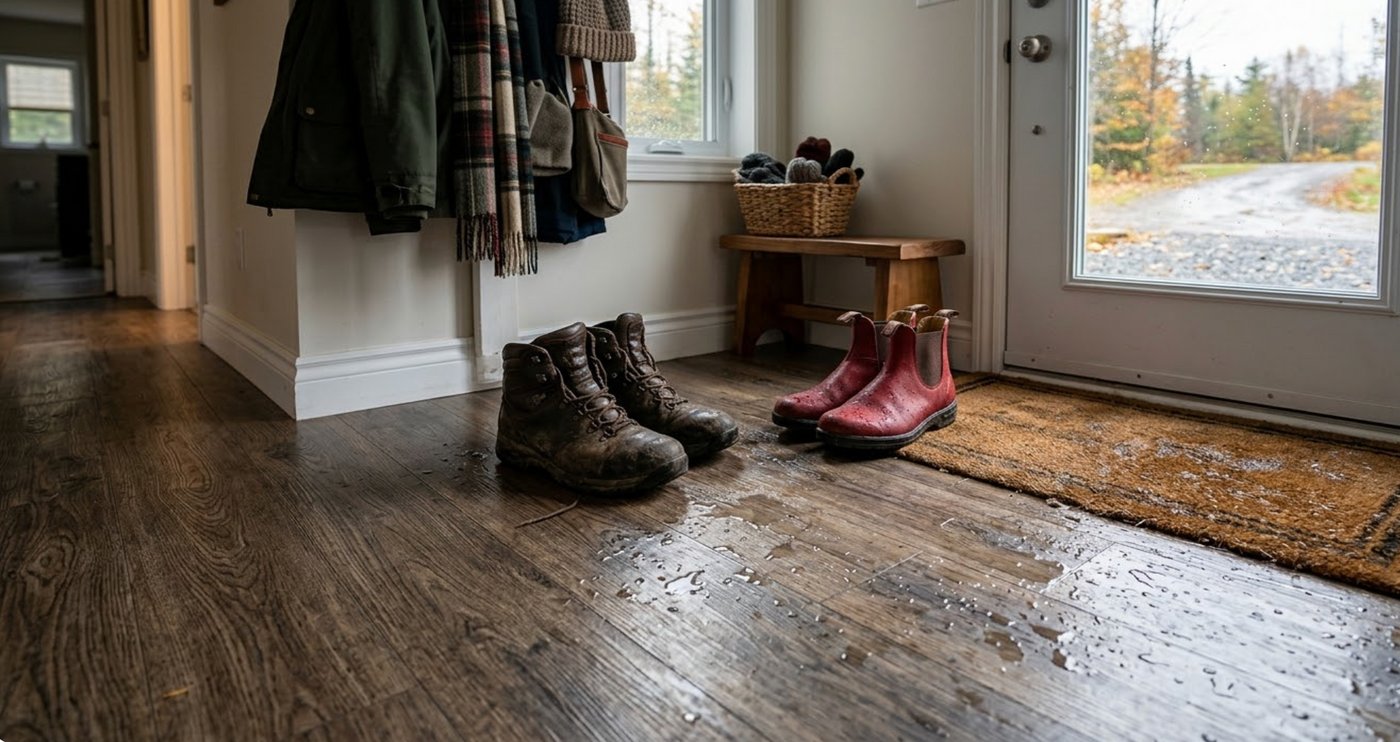
mudrooms
entry areas
homes with pets, spills, or frequent wet traffic
That does not mean engineered hardwood cannot work in those environments. It can, in the right conditions. But vinyl usually asks less of the room and less of the homeowner.
That is its strength. It tends to remove some of the tension from the decision.

Concrete Does Not Automatically Mean Vinyl Is Better
This is worth saying clearly because people oversimplify it all the time.
Just because a subfloor is concrete does not automatically mean vinyl is the better choice. Engineered hardwood can perform very well over concrete when the slab is properly tested, properly prepared, and installed with the right moisture-control system.
So the real issue is not concrete by itself. The real issue is slab condition, moisture testing, and installation quality.
If those things are handled correctly, engineered hardwood over concrete can be an excellent result. If they are not, vinyl may be the safer answer.
That is a much more accurate way to frame it than saying concrete equals vinyl.
If You Care Most About Real Wood, Engineered Hardwood Wins
This is where the answer becomes simple again.
If what you want is real wood, vinyl cannot give it to you. It can imitate the look. Some premium products do that surprisingly well. But it is still not the same as living with a genuine wood surface, real grain movement, and the visual depth that only wood brings.
For some buyers, that difference matters a lot. Not in a theoretical way. In a lived-in way. It changes how the room feels.
If that matters to you, engineered hardwood is the category worth taking seriously.
Engineered Hardwood Usually Feels More Premium
A good engineered hardwood floor usually feels more elevated than vinyl. It tends to carry more visual authority, more natural richness, and a stronger sense of material quality.
That does not mean engineered hardwood is always the right answer. It means the premium people feel when they are drawn to it is often based on something real.
Vinyl can be practical. Engineered hardwood can be beautiful in a deeper way. Those are not identical goals.
Vinyl Is Usually Easier to Live With
This is one of vinyl’s biggest strengths, and it should not be minimized.
Vinyl is often easier.
It tends to be more forgiving in imperfect households. It creates fewer daily worries. It is often the floor people choose when they want their home to function well without constantly thinking about what the flooring can and cannot tolerate.
That is a big reason vinyl works so well for:
busy families
pet owners
rental properties
lower levels
high-traffic areas
A lot of smart flooring decisions are really decisions about how much management the floor will require. On that front, vinyl often makes a strong case.

Long-Term Value Depends on What You Mean by Value
This is where people often talk past each other.
If by value you mean:
easier ownership
more moisture tolerance
fewer worries
better fit for tougher spaces
then vinyl often wins.
If by value you mean:
real wood
stronger visual depth
more premium material quality
better long-term satisfaction in the right room
then engineered hardwood may win.
That is why sticker price alone does not settle the question. A cheaper floor can be the smarter purchase. A more expensive floor can also be the smarter purchase. It depends on what you are actually buying the floor to do.
Which One Makes More Sense for Families and Pets?
For many busy households, vinyl has the easier case to make.
If dogs are tearing through the house, kids are tracking in weather, and the floor is going to take daily punishment, vinyl is usually the more forgiving choice. That does not mean engineered hardwood cannot work in a family home. It can. But it usually asks for a more suitable room and a more realistic ownership mindset.
A lot of buyers already know this in their gut. They want the beauty of wood, but they know their house functions more like a vinyl house. That instinct is often right.

Which One Is Better for Resale?
There is no automatic winner.
Engineered hardwood usually carries a more premium perception because it is real wood. That can help. But the wrong wood floor in the wrong room is not automatically an asset. If it feels risky, stressed, or poorly matched to the space, the premium can evaporate quickly.
Vinyl, on the other hand, can make a lot of sense for the next buyer if it is in the right room and fits the lifestyle of the home.
So resale is not just about the material. It is about whether the floor feels like the right decision in that specific part of the house.
Choose Engineered Hardwood If…
Engineered hardwood usually makes more sense if:
you want real wood, not a wood look
the room is dry and well suited to wood
material authenticity matters to you
you are willing to pay more for a more premium floor
you understand and accept the product’s limits
Choose Vinyl If…
Vinyl usually makes more sense if:
moisture is part of the room’s story
you want a more forgiving floor
the home is busy, messy, or hard on surfaces
the floor is going over concrete in a higher-risk setting
practicality matters more than real wood feel
Questions to Ask Before You Decide
What is this room actually asking for?
That is the first question. Not “which floor sounds best,” but “what does this room need?”
How much moisture risk is really present?
Be honest about the room, not optimistic about the category.
Do I want real wood, or do I want the easiest floor to live with?
Those are not always the same answer.
Would a premium WPC vinyl product bridge enough of the gap?
For some buyers, the answer is yes.
Frequently Asked Questions
Is vinyl better than engineered hardwood?
Not always. Vinyl is often better for moisture-prone, high-stress environments. Engineered hardwood is often better when real wood and a more premium material experience matter most.
Is engineered hardwood more expensive than vinyl?
Often, yes. Especially when you compare better-built engineered hardwood to standard vinyl. Premium WPC vinyl can narrow that gap.
Is vinyl better over concrete?
Not automatically. Engineered hardwood can perform very well over concrete when the slab is properly tested, properly prepared, and the right moisture barrier and installation system are used. In higher-risk moisture conditions, vinyl is often the safer option.
Which one feels more premium?
Engineered hardwood usually feels more premium because it is real wood. Premium WPC vinyl can narrow the gap, but it does not fully replace that material difference.
Final Thought
Vinyl and engineered hardwood are both strong flooring categories. The mistake is not choosing one over the other. The mistake is choosing the wrong one for the room.
If moisture, stress, and practicality are driving the decision, vinyl often makes more sense. If real wood, warmth, and a more premium material feel are driving the decision, engineered hardwood may be worth the extra cost.
And if you want something in between, premium WPC vinyl deserves a closer look than many buyers give it.
The smartest flooring decisions are usually less emotional than they feel in the moment. They come from matching the room, the lifestyle, and the risk level to the right product.
Visit a Caledon dealer. Click here to find the closest dealer to you.
For more help, read:
Can Engineered Hardwood Go Over Concrete?
Can Engineered Hardwood Be Refinished?
Explore Caledon’s WPC vinyl and engineered hardwood collections