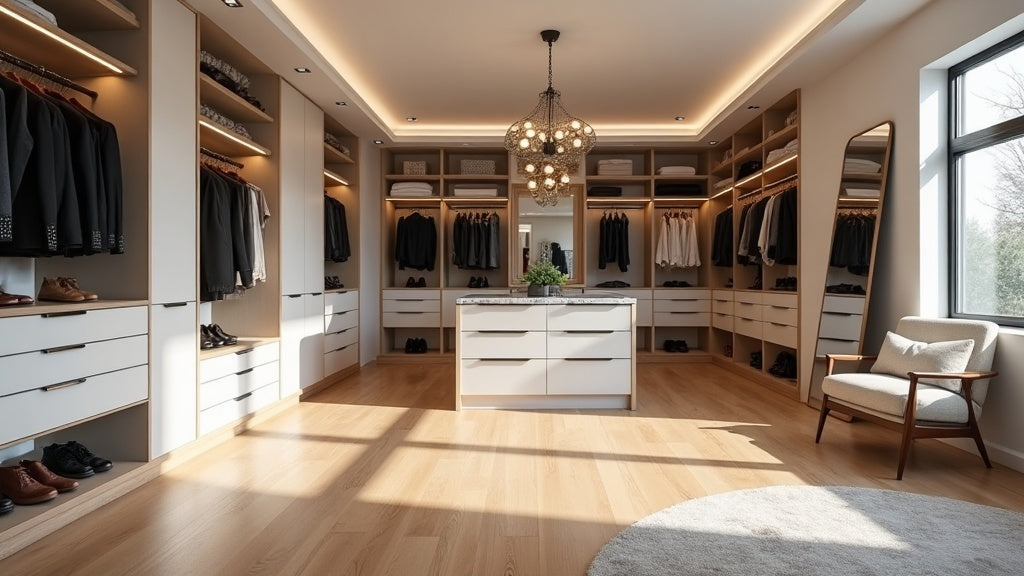
The best flooring for a walk-in closet or dressing room is usually a soft, warm surface that stays easy to keep clean, not the most durable material available. Walk-in closets and dressing rooms are barefoot spaces with light, occasional foot traffic, so the flooring decision comes down to comfort and finish first and heavy-duty performance second. The one exception worth planning for early is humidity, if the closet shares air or a doorway with a bathroom.
Why does a walk-in closet need different flooring than the rest of the house?
A walk-in closet sees a fraction of the daily foot traffic of a kitchen, hallway, or entryway, and almost all of it happens barefoot or in socks. There is no rolling office chair carving the same path for hours a day, no pet pacing back and forth, no dropped cookware or muddy boots coming in from outside.
That changes the calculus. In a high-traffic room, durability usually has to come first and comfort is a secondary bonus. In a walk-in closet or dressing room, the floor can prioritize how it feels underfoot and how it looks under closet lighting, because the physical demands on the material are genuinely lighter.
The exception is a larger dressing room with a seating bench, an island, or a vanity that gets used every single day. That kind of space sees more repeated, concentrated use in specific spots, so it is worth thinking about the floor the way you would a smaller, secondary living space rather than a simple storage closet.

Is carpet the right choice for a dressing room?
Carpet is the softest and warmest option, and it is a genuinely good choice for a closet that stays fully enclosed and dry. It muffles sound, feels good first thing in the morning, and never feels cold underfoot regardless of the season.
The honest trade-offs are worth knowing before choosing it. Carpet fibres trap dust and lint from clothing more than a hard surface does, and it does not clean up cosmetics, perfume, or shoe polish spills as easily as a wipeable floor. It also will not visually match a hard-surface floor used everywhere else on the same level of the home, which matters if the closet is open to the bedroom rather than closed off behind a door.
Carpet tends to work best in a smaller, purely storage-oriented closet with light use. A larger dressing room that functions as a daily styling space, with a bench, an island, or open shelving people touch constantly, usually benefits from an easier-to-maintain surface.
What is the best hard flooring for softness underfoot without carpet?
WPC vinyl flooring is the closest hard-surface answer to carpet's comfort. It is built with an attached comfort layer under the wear surface, which makes it noticeably warmer and more comfortable underfoot than a harder rigid vinyl, laminate, or tile floor, while still wiping clean like any other hard floor.
Engineered hardwood is the next step toward that same warmth, with a real wood surface that reads as a premium, quiet-luxury material well suited to a dressing room's aesthetic. It will always feel firmer underfoot than a WPC floor with its attached pad, even though it is warmer and less cold than tile or stone.
Rigid-core materials such as SPC vinyl, laminate, or tile sit at the other end of the comfort spectrum. They are the firmest and coolest underfoot of the group, and generally the most resistant to daily wear, which makes them a reasonable choice for a large dressing room that sees constant use, a walk-through path to another room, or a household that simply prefers a firmer floor. The trade-off is comfort: a harder rigid-core floor will never feel as comfortable as carpet or a WPC floor with an attached pad.
SPC vs WPC vinyl flooring: what is the difference and which is better goes deeper into that same comfort-versus-hardness trade-off for anyone weighing it across more than one room in the home.
Does a walk-in closet need waterproof flooring?
Generally, no. A closet is a dry space by design, and most walk-in closets never see standing water, splashes, or the humidity swings a bathroom or laundry room deals with regularly.
The real exception is a walk-through closet that connects directly to a primary bathroom, a layout that has become common in larger primary suites. Shower steam and everyday bathroom humidity can migrate into an adjoining closet more than people expect, especially without strong ventilation. In that specific case, a floor with a fully waterproof core, the same construction marketed as waterproof flooring, removes the guesswork, and a moisture-tolerant tile is a reasonable alternative if the aesthetic calls for it.
Outside of that walk-through scenario, waterproofing is not a meaningful factor in choosing closet flooring, and there is no reason to pay for a feature the room will not use. Moisture and vapor barriers: what Canadian homeowners actually need is worth reading if the closet sits near a bathroom, laundry area, or anywhere else humidity might realistically reach it.

What should closet flooring look like, not just feel like?
A dressing room is one of the few rooms in the house chosen almost entirely for how it makes a daily routine feel, so the visual decision deserves the same attention as comfort.
Lighter tones tend to work well in a windowless or low-light closet, since they reflect available light and render clothing colour more accurately than a dark floor under artificial lighting. A matte or satin finish generally reads calmer and more understated than high-gloss, which can look busy and reflective under closet lighting fixtures, and understated is usually the goal in a private styling space. Continuity with the room's millwork or cabinetry finish, rather than the floor competing with it, is what ties the whole space together visually.
Matte, satin, or glossy: how floor finish changes a room's feel covers this decision in more depth for anyone choosing a finish for the first time.
Walk-in closet and dressing room flooring at a glance
The trade-offs above come down to one table when comfort, sound, upkeep, and moisture are compared side by side.
| Flooring type | Comfort underfoot | Sound | Maintenance | Moisture tolerance | Aesthetic character |
|---|---|---|---|---|---|
| Carpet | Warmest and softest | Quietest option | Traps dust and lint; harder to clean spills | Poor; keep away from any moisture source | Cozy, blends naturally with a carpeted bedroom |
| WPC vinyl flooring | Warm and comfortable underfoot, the closest hard-surface match to carpet | Quiet; the attached pad dampens footsteps | Wipes clean easily; low daily upkeep | Fully waterproof core | Wide range of realistic wood-look finishes |
| Engineered hardwood | Firmer than vinyl, warmer than tile | Moderate | Wipes clean; avoid standing water | More moisture-reactive than vinyl or tile | Premium, authentic wood look |
| Rigid-core (SPC vinyl, laminate, or tile) | Firmest and coolest underfoot | Can carry more sound | Very easy to clean | Generally strong, though laminate is moisture-resistant rather than fully waterproof | Clean, durable, less warmth than the softer options |

Frequently asked questions
A few questions come up often when people are deciding how to floor a walk-in closet or dressing room.
Can I use a rug instead of full carpet in a walk-in closet?
Yes, and it is often the better compromise. Placing a rug where you actually stand most, in front of a mirror, an island, or a bench, adds the same softness as carpet in the spot that matters most, while the rest of the closet keeps an easy-to-clean hard surface. Area rugs and hard floors: an easy way to add warmth, colour, and comfort covers this layering approach in more detail.
Does a walk-in closet need a moisture barrier?
That depends on the subfloor, the specific product, and whether the closet connects to a bathroom or other humid space. It is worth confirming during planning with whoever is handling the installation rather than assuming either way, since the right answer varies by situation.
Should closet flooring match the bedroom floor?
Many homeowners continue the same floor from the bedroom into the closet for visual flow, especially when the closet is open rather than behind a door. A closet with its own door is also a private space that is never seen from the main living areas, so it is equally common to choose a different material or colour there. Neither approach is wrong; it comes down to personal preference rather than a functional requirement.
Does a small reach-in closet need different flooring than a large dressing room?
Generally, no. For a small reach-in closet, whatever is already installed in the adjoining room is almost always the practical and visually consistent choice. The comfort and aesthetic decisions covered above matter most for a larger, furnished dressing room used daily, since real time is actually spent standing there getting ready.
Whichever direction fits your closet or dressing room, matching softness underfoot, sound, and moisture tolerance to how the space is genuinely used will serve you better than choosing on looks alone.
If you have questions about flooring for a walk-in closet, dressing room, or any other room in your home, feel free to contact Caledon Floors.
To find waterproof vinyl flooring, click here for a Caledon Floors dealer near you.