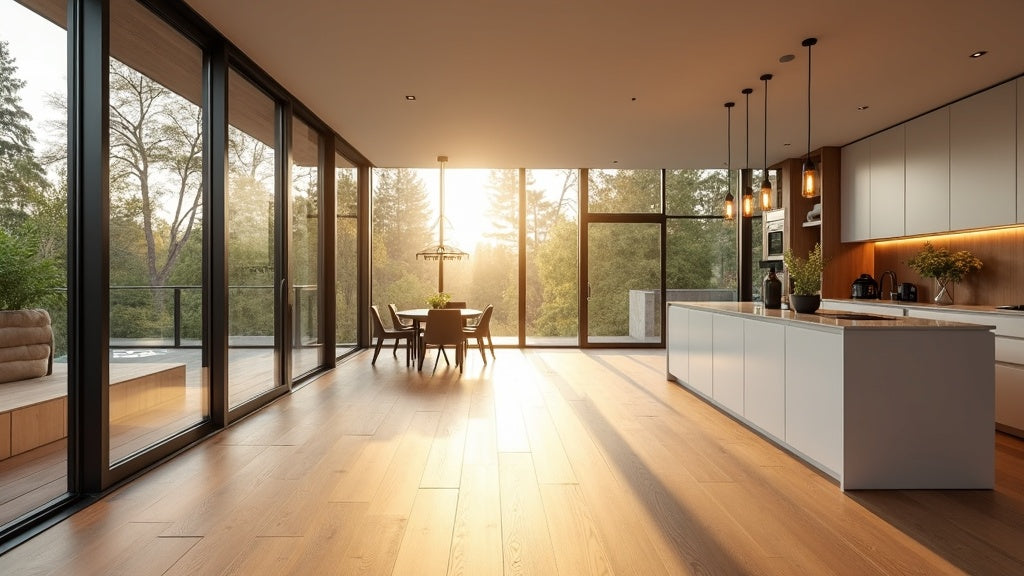
Floor finish is one of the quietest design decisions a homeowner makes, and one of the most lasting. The sheen level on your floor shifts the way light moves through a room, sets the emotional tone of a space, and determines whether every bit of dust and every scuff will announce itself or disappear into the background. Getting this right matters as much as the flooring species or colour you choose.
This guide breaks down what matte, satin, and glossy floor finishes actually look like in real homes, how each one wears over time, and which tends to work best in different rooms and lifestyles.

What Does "Floor Finish" Mean?
Floor finish refers to the sheen level on the top surface of a floor. On engineered hardwood, it is the clear protective coating applied over the wood veneer, typically a UV-cured aluminum oxide or polyurethane formula. On WPC vinyl flooring, it is the texture and reflectivity built into the wear layer itself.
In both cases, finish is measured by gloss level: how much light bounces off the surface and back to your eye. The industry generally divides this into three categories.
Matte is a flat, low-reflection finish. Satin sits in the middle, with a gentle warmth and a soft glow. Gloss (or high-gloss) is a mirror-like surface that reflects light strongly.
None of these is a "better" finish in the abstract. Each creates a different room and a different experience underfoot.
How Sheen Shapes the Feel of a Room
Light is architecture. A glossy floor amplifies natural light, bouncing it across the room and making the space feel open and energetic. That same quality can feel cold or busy in a room that already gets strong afternoon sun, or harsh under the pot lights common in modern kitchens.
A matte floor does the opposite. It absorbs light rather than reflecting it, grounding the room and giving it warmth and depth. Matte finishes tend to work especially well in rooms meant to feel calm: bedrooms, living rooms with soft textiles, and open-concept spaces where the floor anchors rather than performs.
Satin finish occupies a thoughtful middle ground. It reflects some light but not so much that it dominates. This is why satin is one of the most broadly used finishes in residential flooring. It adds life and brightness to a room without competing with the furniture, the rugs, or the architecture.
The colour of a floor also interacts with its finish. A light, blonde wood in matte feels Scandinavian and quiet. That same colour in gloss can feel clinical or dated depending on the room. A dark walnut-toned floor in matte reads as warm and grounded; in gloss it becomes dramatic and higher maintenance. Knowing the finish changes how a colour lands.
Matte Finish: The Calm, Low-Maintenance Look
Matte floors have grown significantly in popularity over the past decade, and there are practical reasons for it. A well-chosen matte finish can make a floor feel genuinely premium, especially on wide-plank formats where the texture and grain of the surface do the visual work.
From a practical standpoint, matte is the most forgiving finish in a working home. Because the surface does not reflect light strongly, small scuffs, light surface marks, and everyday dust are much harder to see. On a glossy floor, a smear from a damp sock catches the light and registers immediately. On a matte surface, the same smear blends into the texture and disappears between cleanings.
This makes matte especially well-suited to high-traffic zones: main-floor living areas, hallways, and entryways where salt and grit track in during the winter months. Busy households with children or pets will often find that matte or low-sheen finishes stay looking better between cleaning sessions because they do not broadcast the evidence of daily life.
The honest trade-off with matte is that it can sometimes feel heavy in rooms with limited natural light. In a space with good windows and exposure, this is rarely an issue. In a north-facing room or a basement suite with smaller windows, it is worth testing samples at different times of day before committing.
Satin Finish: The Most Broadly Useful Finish
Satin finish strikes a balance that suits most homes and most rooms. It has enough sheen to feel warm and refined without pushing into high-gloss territory.
In a well-lit room, satin adds a pleasant luminosity to the floor. In the evening under warm lighting, it reads as inviting. It captures the natural grain of wood or the texture of a vinyl plank without amplifying every surface mark the way gloss does.
From a maintenance standpoint, satin falls between matte and gloss. It shows more than matte but far less than high-gloss. A standard vacuum pass keeps a satin floor looking tidy in most households.
For homeowners who are unsure which direction to go, satin is almost always a safe starting point. It works across a wide range of room sizes, lighting conditions, and design styles, from traditional to contemporary interiors. It is a finish that tends to age well without feeling dated.
Glossy Finish: The High-Impact Option
A high-gloss floor is a statement. In the right room, it creates a dramatic, almost formal quality that elevates the entire space. Grand entryways, formal dining rooms, and contemporary open-concept spaces with high ceilings can carry gloss beautifully.
The honest trade-off is maintenance. A gloss finish shows dust, fingerprints, heel marks, and light surface marks readily because the reflective surface highlights any variation. In a home with children, dogs, or heavy foot traffic, a gloss floor will require more frequent attention to stay looking the way it is intended.
Gloss finishes also interact with directional lighting in ways that can work for or against a space. Under strong pot lights, a gloss floor can develop a quality that competes with the room rather than grounding it. Under softer ambient lighting, that same floor can feel sophisticated and expansive.
High-gloss vinyl flooring is less common in contemporary design than it once was, but it remains an option in certain WPC vinyl collections where the aesthetic fits the brief. On engineered hardwood with a premium veneer, high-gloss finishes tend to appear in specific design contexts: formal rooms, commercial applications, and spaces where drama is the point.

How Finish Affects the Way a Floor Wears Visually
This is one of the most practical questions to ask when choosing between sheen levels.
Gloss floors do not necessarily mark more than matte floors. What changes is how visible any surface mark becomes. A matte floor may develop just as many fine surface marks over years of use, but those marks are effectively camouflaged by the flat texture. A gloss floor catches light at an angle and makes the same marks far more visible.
The same principle applies to dust. Fine particles scatter across a reflective surface and become visible from across a room. On a matte or satin surface, the same dust sits in the texture and blends in until you clean it.
In climates where salt and sand track through entryways for several months of the year, this difference becomes meaningful. Pet owners, parents of young children, and households that see a lot of foot traffic will generally find that lower-sheen floors hold their appearance better between cleaning sessions. This is one of the reasons matte and satin finishes have become the dominant choice in new construction over the past several years.
Does Finish Work the Same Way on Vinyl and Hardwood?
Not exactly, but the principles are consistent.
On WPC vinyl flooring, the "finish" is built into the wear layer and the embossed surface texture that sits over the printed design layer. Vinyl flooring is manufactured with the sheen level as part of the product design, and that sheen stays consistent for the life of the floor as long as the wear layer itself remains intact. Most contemporary waterproof flooring and WPC vinyl collections are available in matte or satin profiles. True high-gloss vinyl is less common in current market offerings.
On engineered hardwood with a thick veneer, the finish is an applied coating over the wood. The quality of that coating, its thickness, and the aluminum oxide content all affect durability. The sheen level is set during the factory finishing process. Selecting between matte, satin, or gloss on engineered hardwood is a choice made at the product level. Unlike site-finished solid hardwood, a factory-finished engineered product arrives with its final appearance locked in.
Premium engineered hardwood with a 4mm veneer, like what you find in Select and Better grade collections, tends to carry a matte or low-satin finish well because the veneer is thick enough to show genuine wood grain and character. The finish becomes a frame for the wood rather than the primary feature. Wide planks in long lengths amplify this effect.
For more on how other design variables shape a floor's character, see How Engineered Hardwood Width and Length Change the Look of a Floor and How to Choose the Best Engineered Hardwood Colour for Your Home.
Finish vs Other Design Decisions: A Qualitative Comparison
Here is how the three finish levels compare across the dimensions that matter most to homeowners.
| Factor | Matte | Satin | Glossy |
|---|---|---|---|
| Room mood | Calm, grounded, warm | Balanced, inviting, versatile | Bold, formal, dramatic |
| Light behaviour | Absorbs and diffuses | Reflects softly | Reflects strongly |
| Dust visibility | Low | Moderate | High |
| Scuff visibility | Low | Moderate | High |
| Best-suited rooms | Living areas, bedrooms, busy halls | Most rooms, most lifestyles | Formal spaces, low-traffic areas |
| Contemporary relevance | Very high | High (always current) | Moderate (context-dependent) |
| Maintenance impression | Forgiving between cleans | Manageable | Requires regular attention |
| Works in lower-light rooms | Use with caution (lighter tones help) | Well suited | Can work (adds brightness) |
Which Finish Is Right for Your Home?
The right finish comes down to how a room is used and how you want it to feel.
If you have a busy main floor, children, pets, or simply dislike the look of dust between cleaning sessions, matte or low-satin is almost always the more practical choice. It holds its appearance well, reads as premium in contemporary design contexts, and pairs with a wide range of colour palettes. Oversized plank formats with a low-to-mid sheen profile are increasingly common across both WPC vinyl flooring and engineered hardwood, a combination that tends to read as premium regardless of species or material.
If you want warmth and a little visual lift without the upkeep of high-gloss, satin is the reliable answer. It has been the standard for residential hardwood and premium vinyl for decades with good reason.
If you are designing a statement space and understand the cleaning commitment involved, gloss is a genuine option. It rewards rooms where the floor is part of the design intention and where foot traffic is lower.
On the question of WPC vinyl flooring specifically, surface texture and sheen are worth examining together. A floor with an embossed-in-register texture and a matte finish reads as remarkably close to real wood underfoot and under changing light. That combination is where contemporary waterproof flooring has made its strongest gains against traditional hardwood in terms of design credibility.
For more on how flooring choices affect the overall feel of a home, see What Flooring Makes a Home Look More Expensive? and SPC vs WPC Vinyl Flooring: What Is the Difference and Which Is Better?.

FAQ: Floor Finish and Sheen
These are the questions homeowners most often ask when choosing between matte, satin, and glossy floor finishes.
Does a matte floor look cheap?
No. The association between gloss and "quality" is an older convention that has largely reversed in contemporary design. Matte finishes are common on premium engineered hardwood and high-end WPC vinyl collections precisely because they show the material's texture without the distraction of heavy reflection. A well-finished matte floor reads as refined and intentional, not budget.
Can I change the finish on my floor later?
On site-finished solid hardwood, a refinishing project can change the sheen level. On factory-finished engineered hardwood, the sheen is part of the product's finish layer. On vinyl flooring, the sheen is built into the material. For engineered hardwood and vinyl, the finish decision is made at the time of purchase, which is one more reason to test samples in the actual room before ordering.
Do matte floors stay cleaner?
Matte floors do not stay cleaner in terms of what lands on them, but they hide dust and surface marks more effectively between cleaning sessions. Fine particles are less visible on a matte or satin surface than on a gloss floor. This means a matte floor can look presentable longer between sweeps, even in a household that tracks in regular debris. In homes where boot grit, salt, and wet footprints are seasonal realities, this difference has real daily value.
Is satin or matte better for a basement suite?
In a basement with limited natural light, a matte finish can feel heavy, particularly in darker colour tones. A light-toned floor in satin can help reflect available artificial light and keep the space feeling open. In a basement with good egress windows or a walkout, matte works well. This is one case where satin may have a practical edge over matte in a lower-light environment.
Does finish choice affect sound or comfort underfoot?
Finish sheen does not directly affect how a floor feels underfoot or how sound transfers. Those qualities are shaped by the core construction, the attached underlayment, and the subfloor beneath. A WPC vinyl floor with an attached IXPE pad will feel softer and quieter underfoot whether it is matte or satin. The finish is a surface characteristic only.
How do I test finish samples effectively?
Bring samples home and observe them at different times of day. Look at them under your natural morning light, under afternoon sun if your room gets it, and under your evening lighting setup. Move the sample and watch how light hits it at different angles. What looks good in a showroom under fluorescent lighting may read very differently under a room's pot lights or beside a window. Give yourself at least 24 hours with a sample before deciding.
Floor finish is a design decision that tends to be under-discussed relative to species, colour, and plank size, yet it shapes the daily experience of a room as much as any of those choices. Taking the time to understand how sheen interacts with your light, your lifestyle, and your design intent will help you choose a floor that looks right not just on installation day but years into life in your home.
If you have questions about which finish profile works best for your space, our team is glad to help. Contact us here.
To find waterproof vinyl flooring, click here for a Caledon Floors dealer near you.