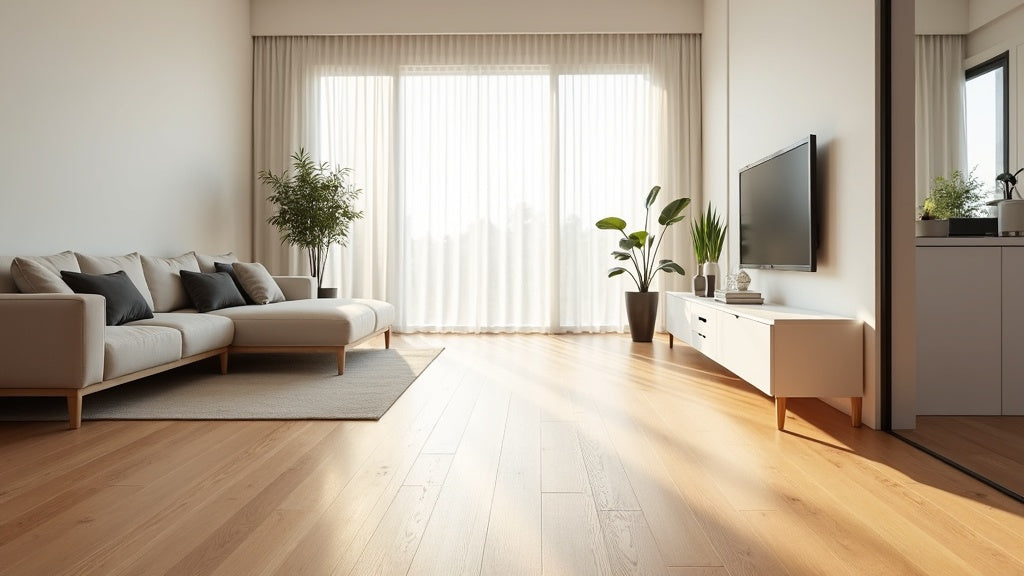
The habits that protect a hard floor have almost nothing to do with which material is underfoot. Grit at the door, the wrong cleaning chemistry, wide humidity swings, and unprotected furniture legs wear down vinyl, laminate, engineered hardwood, solid wood, and tile in slightly different ways, but the same six everyday habits reduce the damage on every one of them. None of it requires special products or a complicated routine. It is mostly about timing, consistency, and a few small changes near the door and under the furniture.

Why do entrance mats and a shoes-off habit matter for any hard floor?
Entrance mats and a shoes-off habit matter because most of the material that damages a floor never comes from inside the home. It walks in from outside, on the bottom of shoes.
Sand, grit, and small stones act like sandpaper the moment they get ground underfoot. On vinyl and laminate, that grinding action dulls the wear layer over time. On engineered or solid hardwood, it scratches through the finish and exposes bare wood. On tile, it wears grout lines and can dull glazed surfaces. A durable mat at every entry point, indoors and out, catches most of that grit before it ever reaches the floor. A simple shoes-off habit for the household removes the rest.
This matters most at the entryway itself, where foot traffic and grit exposure are highest. For a closer look at flooring choices built around that specific challenge, see best flooring for entryways and mudrooms.

Do felt pads under furniture legs actually make a difference?
Yes. Felt pads under furniture legs prevent two specific things: scuff marks when furniture is moved, and small dents or witness marks where a hard leg rests in one spot for a long time.
Wood, metal, and hard plastic furniture legs are rigid enough to scratch or press a mark into almost any hard-floor finish, whether that finish is a vinyl wear layer, a hardwood topcoat, or a sealed laminate surface. A felt pad adds a soft buffer between the leg and the floor, so the floor absorbs less direct pressure and slides rather than scrapes when the piece is shifted.
Check pads every few months and replace any that have worn thin, picked up grit, or fallen off. A worn-out pad with debris stuck to it can do more damage than no pad at all. This same principle, protecting a floor from everyday contact rather than relying on the material alone, comes up in what to really expect from pet-friendly floors, where claws create a similar kind of repeated surface contact.
Should you sweep or vacuum before mopping a hard floor?
Always sweep or vacuum before wet cleaning. Skipping this step is one of the most common ways homeowners unintentionally damage their own floors.
Wet mopping over loose grit does not just fail to clean it up. It turns dry, sharp particles into a wet abrasive slurry and drags that slurry across the finish with the mop head. The scratching happens during the very cleaning routine meant to protect the floor. A quick dry pass with a broom, dust mop, or vacuum (using a hard-floor or bare-floor setting, not a beater bar) removes that grit first, so the wet clean that follows is actually gentle.
What cleaners should be avoided on hard flooring?
Avoid oil-based soaps, ammonia or vinegar-based cleaners, and abrasive scouring pads on any hard floor. All three cause slow, cumulative damage rather than an obvious one-time problem, which is exactly why they are easy to keep using without noticing the effect.
Oil-based soaps leave a residue that builds up in thin layers, dulling the finish and attracting more dirt over time. Strongly acidic or alkaline cleaners, including many vinegar-based and ammonia-based products, can break down the protective finish on wood and laminate and dull a vinyl wear layer with repeated use. Abrasive pads and harsh scrubbing tools scratch a finish directly, defeating the purpose of the clean.
A general-purpose, pH-neutral cleaner made for hard flooring, used sparingly, is the safer everyday default across materials. It is also worth remembering that a waterproof flooring core protects against water damage, not against chemical damage. Waterproof and cleaner-proof are different properties, and even a fully waterproof material like WPC vinyl flooring benefits from the right cleaning chemistry. For a deeper breakdown of specific products to use and avoid, see how to clean vinyl plank flooring.
How does direct sunlight affect hard flooring over time?
Direct, sustained sunlight gradually changes the colour of almost every hard-flooring material, though not always in the same way or at the same rate.
Natural wood species and wood veneers tend to shift colour visibly over years of UV exposure, sometimes lightening, sometimes deepening, depending on the species and finish. Vinyl and laminate surfaces are generally more colourfast, but strong, unfiltered sun over a long period can still cause gradual fading, especially in one consistent sun-exposed patch such as beneath a large window or skylight.
The fix is simple and requires no special product: rotate area rugs and furniture periodically so the exposure pattern does not stay fixed in the same spot for years, and use sheer curtains, blinds, or UV-filtering window film during the sunniest parts of the day in rooms with large, direct-light windows. Even light management on a seasonal basis makes a visible difference over the long term.
What indoor humidity range is best for hard floors?
Most flooring manufacturers and industry associations recommend keeping indoor relative humidity in a stable range of roughly 35 to 55 percent, with the middle of that range being the safest target year-round.
Wood-based materials, including solid and engineered hardwood, are the most humidity-sensitive. They absorb and release moisture from the air, which is what causes visible gaps in dry conditions and cupping or crowning in overly humid ones. Laminate, built around a dense wood-fibre core, reacts to humidity swings as well, though generally less dramatically. Materials built around a fully waterproof core, such as WPC vinyl flooring, are far more dimensionally stable and far less reactive to humidity swings than any wood-based product.
Even so, a stable humidity range benefits an entire room, not just the flooring. Trim, cabinetry, doors, and the subfloor itself all respond to the same swings, so a basic humidifier in dry winter conditions and a dehumidifier or air conditioning in humid summer conditions is a reasonable habit regardless of which material is on the floor.
How these habits compare
Each habit protects against a different kind of everyday wear, and some matter more for certain materials than others. The table below is a quick reference.
| Habit | What It Guards Against | How Often | Matters Most For |
|---|---|---|---|
| Entrance mats and shoes off | Grit and sand that scratch finishes | Ongoing, every entry | Every hard-floor material equally |
| Felt pads under furniture legs | Scuffs and pressure marks | Check every few months | Any rigid furniture leg on any hard surface |
| Dry sweep or vacuum before mopping | Grit turning into an abrasive slurry when wet | Before every wet clean | Every hard-floor material equally |
| Avoiding harsh or oil-based cleaners | Dulling, residue buildup, finish breakdown | Every cleaning | Finished wood, laminate, and vinyl wear layers |
| Managing direct sunlight | Gradual colour change and fading | Ongoing, seasonal adjustment | Natural wood and wood veneers most, though all materials benefit |
| Keeping indoor humidity in range | Gapping, cupping, and surface stress | Year-round, monitored seasonally | Solid and engineered hardwood most, laminate somewhat, WPC vinyl least |

Frequently asked questions
These are the most common follow-up questions homeowners ask once the basic habits above are in place.
Do felt pads still matter if I already have area rugs?
Yes. Area rugs protect the section of floor underneath and around them, but most furniture legs sit at the edges of a rug or entirely off it. Felt pads cover the specific point of contact that a rug does not.
How often should entrance mats actually be cleaned?
Shake out or vacuum entrance mats weekly, and wash or deep-clean them monthly, more often during wet or muddy seasons. A mat that is saturated with trapped grit stops doing its job and can grind that grit into the floor underneath it.
Can indoor air be too dry, not just too humid?
Yes. Very dry indoor air, common in colder months with forced-air heating running constantly, pulls moisture out of wood-based flooring and can cause visible gaps between boards. Humidity management works in both directions, not just against excess moisture.
Does rearranging furniture undo the benefit of felt pads?
No, as long as new pads or the same pads are checked and reattached in the new position. The goal is to have a soft buffer under every leg wherever it currently sits, not to protect one fixed layout permanently.
Good daily habits are one of the simplest, most effective ways to get the most life out of any hard floor, regardless of which material is installed. For more on how material choice and everyday care combine to affect long-term performance, see how long vinyl plank flooring actually lasts.
If you have questions about caring for a specific type of flooring, contact us and we are happy to help.
To find waterproof vinyl flooring, click here for a Caledon Floors dealer near you.