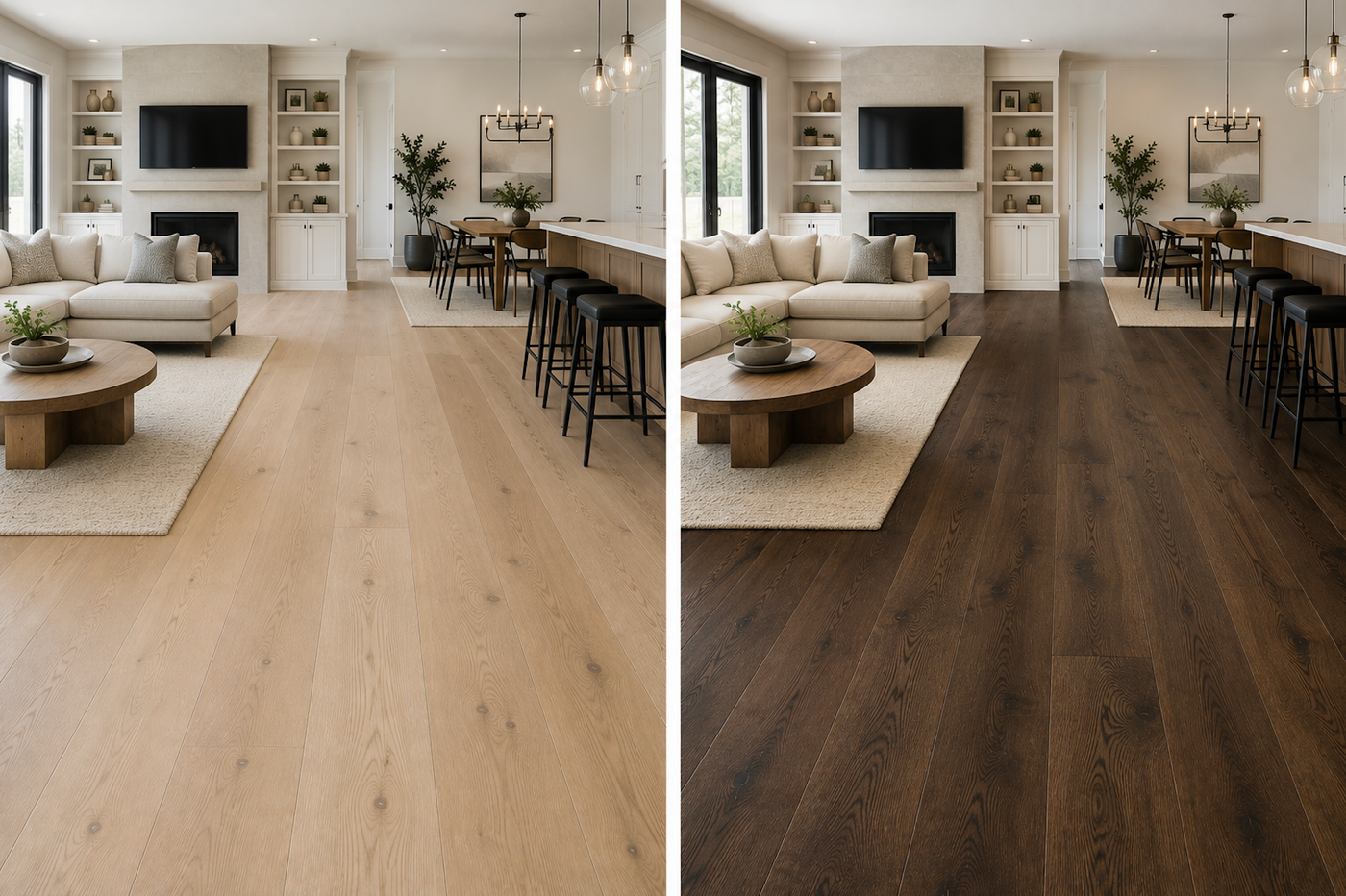
Choosing engineered hardwood colour is one of the biggest visual decisions in a flooring project. The colour affects how large the room feels, how bright the home looks, how formal or relaxed the space feels, and how much dust, pet hair, and everyday wear may show. A colour that looks beautiful on a sample board can feel very different once it is installed across a full main floor.
The short answer is this: light and natural engineered hardwood colours are usually the safest long-term choices for many Canadian homes because they feel bright, flexible, and easier to decorate around. Medium brown tones can add warmth and a more classic feel. Dark engineered hardwood can look dramatic and premium, but it usually shows dust, pet hair, and surface marks more easily. There is no single best colour: the right choice depends on the room, the natural light, the style of the home, the cabinets and wall colours, and how much visual maintenance the homeowner is willing to live with.

Quick Answer: Which Engineered Hardwood Colour Should You Choose?
| Homeowner priority | Best colour direction | Why |
|---|---|---|
| Safest long-term choice | Light or natural wood tones | Flexible, bright, and easier to decorate around |
| Warm classic look | Medium brown | Adds warmth and a more traditional feel |
| Dramatic design | Dark brown | Creates contrast, but shows more dust and marks |
| Busy family or pets | Light, natural, or balanced medium tones | Usually more forgiving than very dark floors |
| Resale flexibility | Natural oak or light neutral tones | Broad appeal and easier to pair with different interiors |
What Is the Best Engineered Hardwood Colour for Most Homes?
For most homes, a light natural or natural oak engineered hardwood colour is usually the safest choice. It keeps rooms feeling bright, works with many cabinet and wall colours, and tends to be easier to live with than very dark or heavily trend-driven colours. That does not mean natural oak is the only good choice: medium brown can be excellent in warmer or more traditional homes, and dark floors can look beautiful in the right design. But if the goal is long-term flexibility, light and natural wood tones are usually the safest starting point.
Why Engineered Hardwood Colour Matters So Much
Engineered hardwood covers a large visual surface. A sample may only be a few inches wide, but the finished floor may run through a living room, kitchen, hallway, dining area, and bedrooms. Once the colour is installed across that much space, it becomes one of the main design foundations of the home.
A lighter floor can make a room feel more open and relaxed. A natural oak colour can feel warm but still neutral. A medium brown floor can create a more traditional or established look. A dark floor can create contrast and drama, but it can also make maintenance more noticeable. The right colour should work with the house, not just with the sample board.
Are Light Engineered Hardwood Floors a Good Choice?
Light engineered hardwood is often a strong choice for homeowners who want a bright, calm, and flexible look. Light colours can help a space feel larger and more open, and they often work well in condos, smaller homes, modern interiors, and rooms where natural light is limited. They also tend to pair well with many cabinet colours, wall colours, and furniture styles.
Light floors are popular because they do not usually dominate the room: they create a neutral foundation that can work with different design choices over time. That is one reason light engineered hardwood can be a smart long-term choice. If the homeowner changes furniture, paint, rugs, or cabinet hardware later, the floor is less likely to fight the rest of the space.
Are Natural Oak Colours the Safest Choice?
Natural oak and soft natural wood tones are often among the safest engineered hardwood colour choices. They offer warmth without feeling too yellow, too orange, too grey, or too dark. A good natural tone can feel current without being overly trendy, and it can work in modern, transitional, Scandinavian, West Coast, and more traditional interiors.
Natural colours also tend to age well visually: they usually feel less tied to a short design trend than very grey floors, very dark floors, or heavily stained colours. For many homeowners, natural engineered hardwood is the middle ground: warm enough to feel like real wood, light enough to keep the room open, and neutral enough to work with many design styles.
When Do Medium Brown Floors Make Sense?
Medium brown engineered hardwood can make a home feel warm, grounded, and more traditional. This colour family often works well in homes with warmer cabinets, leather furniture, stone fireplaces, traditional trim, or a more classic design style. Medium brown floors can also make a room feel more established and comfortable.
The caution is undertone. Some brown floors can lean orange, red, or yellow, undertones that may look fine on a sample but feel dated or difficult to decorate around once installed across a large area. A good medium brown can be beautiful, but homeowners should look carefully at the undertone before choosing it.
Are Dark Engineered Hardwood Floors Practical?
Dark engineered hardwood can look beautiful, but it is usually less forgiving. Dark floors create contrast and can make a room feel dramatic, formal, and premium. In the right home (larger rooms with strong natural light, lighter walls, and a more intentional design plan) that can be a great look.
But the practical side matters. Dark floors usually show dust, pet hair, footprints, and surface marks more easily than lighter or natural colours. They can also make smaller rooms feel heavier if the space does not have enough natural light. That does not make dark engineered hardwood wrong: it means the homeowner should choose it with realistic expectations. If someone wants a lower-maintenance visual experience, dark floors are usually not the easiest choice.

Light vs Dark Engineered Hardwood Floors
| Question | Light or natural colours | Dark colours |
|---|---|---|
| Room brightness | Usually makes rooms feel brighter | Can make rooms feel more dramatic but heavier |
| Small rooms | Often a safer choice | Can feel more closed in |
| Dust and pet hair visibility | Usually more forgiving | Usually shows more |
| Surface marks | Often less obvious | Often more visible |
| Design style | Flexible, relaxed, modern, transitional | Dramatic, formal, high-contrast |
| Long-term safety | Usually safer for most homes | Best when the homeowner truly wants the look |
How Natural Light Changes the Colour
Natural light can change how engineered hardwood colour looks significantly. A floor that looks warm and balanced in a showroom can look lighter, darker, yellower, or greyer inside the home depending on the light. North-facing rooms, south-facing rooms, shaded homes, and bright open-concept spaces can all affect how a colour feels.
This is why homeowners should not choose colour from a small sample under showroom lighting alone. Samples should be viewed in the actual home when possible, at different times of day. The same floor can look different in morning light, afternoon light, and evening artificial light.
How Wall Colour and Cabinets Affect the Floor
Engineered hardwood colour should work with the rest of the home. Cabinets, walls, trim, countertops, furniture, and stair parts can all change how a floor reads. A colour that looks neutral by itself may look too warm next to cool white cabinets. A grey-toned floor may look flat beside warm cream walls. A dark brown floor may feel heavy beside dark cabinets.
The floor does not need to match everything; in fact, matching too closely can make a room feel flat. But the tones should work together. A useful rule is to compare undertones: warm floors with warm design elements, cooler floors with cooler design elements, and natural neutral floors when the home has a mix of finishes. Natural and light oak tones often work well because they are easier to blend with different materials.
What Colour Is Best for Busy Families and Pets?
For busy homes, lighter and natural colours are often more forgiving. This does not mean they hide everything: no floor colour removes wear, dust, or pet hair completely. But compared with dark floors, lighter and natural tones usually make everyday life less visually obvious.
That can matter in homes with kids, dogs, cats, frequent guests, open-concept living, and busy kitchens or entry areas. Dark floors can still work in family homes, but they usually require more tolerance for visible dust, hair, and surface marks. For many practical households, natural engineered hardwood colours are the safer choice.
What Colour Is Best for Resale?
For resale, the safest engineered hardwood colours are usually light, natural, and balanced medium tones. Most buyers respond well to floors that feel bright, neutral, and easy to decorate around. Very dark colours, very grey colours, very red tones, or very orange tones can be more polarizing.
That does not mean every home should choose the safest colour. If the homeowner loves a dramatic dark floor and the design supports it, that may still be the right choice. But if resale flexibility is a major priority, neutral natural tones usually have broader appeal.
Should You Follow Flooring Colour Trends?
Trends can be useful, but they should not control the decision. Flooring is not like a wall colour that can be changed in a weekend: it is a longer-term choice. That is why homeowners should be careful with colours that feel heavily trend-driven. Very grey floors, very dark espresso floors, and very warm orange-brown floors have all had moments of popularity. Some homes still suit those looks, but buyers should think carefully before choosing a colour that may feel tied to a specific trend cycle. A good engineered hardwood colour should still make sense years from now. For many homes, that means staying close to natural wood tones.
Engineered Hardwood Colour Comparison
| Colour family | Best for | Main caution |
|---|---|---|
| Light blonde | Bright, modern, airy spaces | Can feel pale if the room already lacks warmth |
| Natural oak | Flexible long-term design, resale, mixed interiors | Needs the right undertone to avoid feeling flat |
| Medium brown | Warm, classic, traditional homes | Can look dated if too orange, red, or yellow |
| Dark brown | Dramatic, formal, high-contrast interiors | Shows dust, pet hair, and marks more easily |
| Grey-toned | Certain modern interiors | Can feel trend-specific or cold in some homes |
How to Choose the Right Colour for Your Home
Start with the room, not the sample. Ask yourself: Is the room bright or dark? Is the space large or small? Are the cabinets warm, cool, white, wood, or painted? Do you want the floor to feel calm or dramatic? Do you have pets or kids? How much visible dust or pet hair are you willing to live with? Are you choosing for your personal taste or future resale? Will this colour still feel right in five to ten years?
Those questions usually lead to a better decision than simply picking the sample that looks best in the showroom.

What Homeowners Get Wrong About Floor Colour
The first mistake is choosing from a small sample without imagining the floor across a full room. The second mistake is ignoring undertones: a floor can be light but still feel yellow, grey, pink, or orange depending on the stain and wood. The third mistake is choosing a dark floor without understanding the maintenance side. The fourth mistake is following a trend too closely, since flooring needs to last longer than a design trend. The fifth mistake is trying to match every wood tone in the home: a floor should coordinate, not necessarily match perfectly.
FAQ: Choosing Engineered Hardwood Colour
What is the safest engineered hardwood colour?
Light natural wood tones are often the safest choice for many homes because they are bright, flexible, and easier to decorate around.
Are dark engineered hardwood floors a bad idea?
No. Dark floors can look beautiful in the right home, but they usually show dust, pet hair, and surface marks more easily.
Do light floors make a room look bigger?
Light floors can help a room feel larger and brighter, especially when paired with lighter walls and good natural light.
What colour engineered hardwood is best for resale?
Natural oak, light neutral wood tones, and balanced medium browns usually have broader resale appeal than more extreme colours.
Should engineered hardwood match kitchen cabinets?
Not exactly. The floor should coordinate with the cabinets, but it does not need to match them perfectly. Undertone matters more than an exact match.
Final Verdict
Choosing engineered hardwood colour is about more than personal taste. Light and natural colours are often the safest long-term choices because they feel bright, flexible, and easier to decorate around. Medium browns can add warmth and a more classic look. Dark colours can create drama, but they usually require more tolerance for visible dust, pet hair, and surface marks.
The best colour is the one that works with the home's light, layout, cabinets, furniture, and the way the homeowner actually lives. Do not choose engineered hardwood colour from a sample alone: think about the whole room, the full installation, and whether the colour will still feel right years from now. Contact us for help choosing a floor, or find a dealer near you who can show you how different colours look in your space before you decide.
Related Reading
These articles go deeper on engineered hardwood and what to look for: