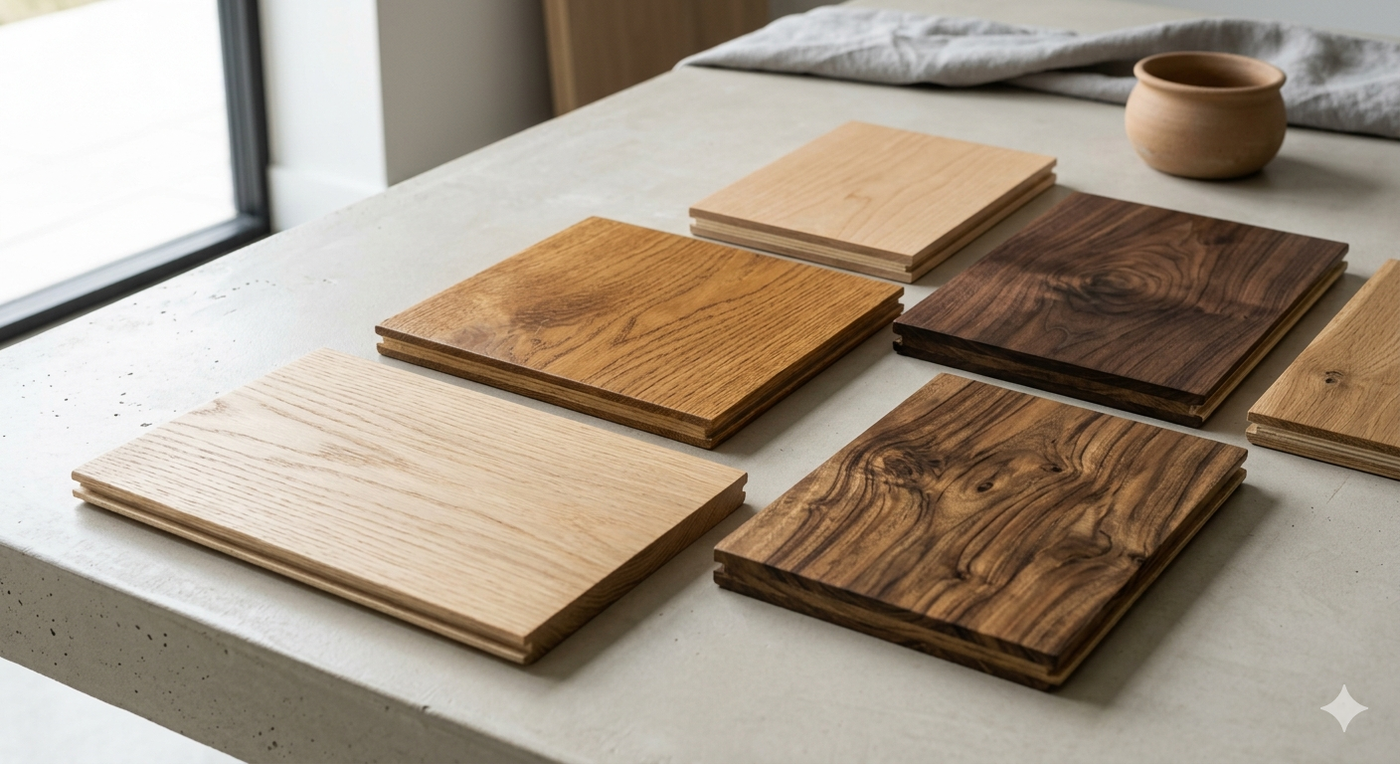
If you have ever looked at engineered hardwood and wondered why one floor is nearly double the price of another, you are asking the right question.
To most homeowners, the gap can seem irrational. Two products may look similar at first glance. Both are called engineered hardwood. Both may be in the same colour family. Yet one lands in a very different price bracket.
That difference is usually real.
Engineered hardwood is not priced by one feature. It is priced by a stack of decisions: how much real wood is on top, what grade of wood is being used, how that veneer was cut, what the core is made from, how thick the board is overall, what species is being used, how the floor is finished, how long the planks are, how precisely it is milled, and whether it meets higher certification standards.
That is why this category can confuse people. The name on the box does not tell you very much. The construction does.
The short answer
Some engineered hardwood costs far more because it is built from better raw material, cleaner wood, thicker veneer, stronger core construction, better finishes, longer planks, tighter tolerances, and more demanding quality standards.
It is not one thing. It is the accumulation of many things.
That is also why a cheaper engineered hardwood floor is not automatically a deal. In many cases, it is simply a very different product.
Start with the wear layer: more real wood costs more
One of the clearest cost drivers is the thickness of the real wood veneer on the surface.
This matters because the veneer is not decorative film. It is the actual hardwood you see and walk on.
A 4mm veneer costs more than 3mm. A 3mm veneer costs more than 2mm. That is not complicated. More real wood means more material cost. It also usually means better long-term value.
If you are comparing engineered hardwood floors seriously, this is one of the first things to look at.
A premium 4mm veneer is not in the same conversation as a thinner 2mm import trying to hit a price point. They may both be engineered hardwood, but they are not built to the same standard. A thicker veneer gives you more substance, more durability, and more long-term upside. It is one of the most legitimate reasons a floor costs more.

Grade changes the price quickly
Grade is another major cost driver, and buyers often underestimate it.
Cleaner grades cost more. That is because cleaner wood is harder to produce at scale. If you want a floor with fewer knots, fewer mineral streaks, less wild colour movement, and a more controlled visual, the manufacturer has to reject more raw material to get there.
That increases cost.
A clean Select & Better grade will usually cost a lot more than lower-grade material. On the other end of the market, many Chinese imports trying to hit an aggressive price point use ABC or ABCD grades. Those products often show more knots, more colour movement, and more natural defects. That does not automatically make them bad, but it absolutely affects how the floor looks and what it costs.
This is one of the hidden truths in hardwood pricing: sometimes you are paying not only for what is in the floor, but also for what had to be left out.

Veneer cut matters too
Not all face veneers are created the same way.
How the veneer is cut changes both appearance and cost. Rotary peeled veneer is generally cheaper and more efficient to produce, but it often gives a different visual result. Sliced and sawn veneers usually look more natural and more premium, but they cost more to produce.
That is another reason two engineered floors can carry the same species name and still be priced very differently. A better-looking face is often more expensive because it is more expensive to make.
Homeowners may not use the phrase veneer cut when they shop, but they notice the result. Some floors simply look more convincing and more refined than others. This is one of the reasons why.
Core construction is not visible, but it matters
A lot of what separates better engineered hardwood from cheaper engineered hardwood is hidden in the core.
Higher-quality core construction improves stability, strength, and overall performance. Better plywood-style multi-layer cores cost more than lower-end constructions designed mainly to hit a target price. And in engineered hardwood, the core is not a side issue. It is part of the product.
When people compare floors based only on the surface, they miss a big part of the story. Two products can have a similar colour and a similar width, but if one is built on a stronger, more stable core, that difference will show up in both price and performance.
Total board thickness adds cost
Total thickness and veneer thickness are not the same thing.
A thicker floor generally uses more material, may feel more substantial underfoot, and often signals a more premium build. A well-built, thicker engineered hardwood plank usually costs more because more is going into it.
This is one of those details that can seem small in a showroom and feel much bigger once the floor is actually installed.
Species changes the raw material cost
Species matters. A lot.
Oak is not priced the same as Chinese birch. Exotic hardwoods can be expensive. Reclaimed wood can be specialty material and very expensive. Even when the overall construction is similar, the wood itself can move the price significantly.
This is where buyers sometimes oversimplify things. They assume all engineered hardwood pricing comes from construction alone. It does not. Raw material cost is still very real.
A product made with better species, or more desirable species, often starts from a higher baseline before any other premium features are even added.

Finish systems can add meaningful cost
Finish is another category where better products separate themselves from cheaper ones.
Brand-name finish systems such as Klumpp and Treffert can cost more than non-branded finishes. That extra cost is not imaginary. Better finishes can improve scratch resistance, durability, and long-term appearance.
This is another example of why two floors can seem similar at first glance and still be priced very differently. One may simply have a more advanced, more expensive finish system on top.
Plank length matters more than many buyers realize
Long planks are more attractive. That is true visually, but it is also true economically.
A floor built with real 6-foot boards usually feels more premium than one made up of shorter 2-foot or 4-foot pieces. But the reason it costs more is not just manufacturing. It is also grading.
Long, clean boards are harder to get.
If you are making a Select & Better product, it is expensive to produce long pieces that still meet that grade. You cannot cut around knots, mineral streaks, or other natural defects as easily when the board has to stay long. The longer and cleaner the plank, the fewer pieces make the cut.
That reduces yield and increases cost.
So when you see a floor with multiple long, clean planks in a box, that is not a small detail. It is one of the clearest signs you are looking at a more valuable product.

Milling precision affects both installation and cost
Tighter milling costs more money.
A better-milled floor usually fits better, installs more cleanly, and looks more refined once it is down. That kind of precision requires better equipment, tighter process control, and stricter quality standards.
Cheap engineered hardwood often saves money here. Better engineered hardwood usually does not.
Certification adds cost too
Certification is not free.
If a product meets stronger health, emissions, or quality standards, there is usually testing, compliance, and manufacturing discipline behind it. That can increase cost. Again, not always visible in a sample board, but real.
Why this feels confusing to homeowners
The reason engineered hardwood pricing feels confusing is simple: many of the things that affect price are not obvious at a glance.
A showroom board tells you colour, texture, and broad style. It does not tell you much about veneer thickness, veneer cut, grade, core construction, plank length, finish system, milling precision, or certification.
So people compare two floors that look somewhat alike and assume the pricing gap must be inflated.
Sometimes it is not inflated at all. Sometimes the two products are simply built very differently.
The smarter way to compare engineered hardwood
Instead of asking, “Why is this one so expensive?” a better question is, “What am I actually getting for the extra money?”
That is the right lens.
Sometimes you are paying for:
· more real wood
· cleaner grade
· better species
· more attractive veneer cut
· stronger core construction
· thicker overall board
· better finish
· longer planks
· tighter milling
· stronger certifications
That does not mean the most expensive floor is automatically the best floor for every buyer. But it does mean price differences in engineered hardwood are often grounded in real differences.
The bottom line
Some engineered hardwood floors cost twice as much because they really are better built.
Not in a vague marketing sense. In a real construction sense.
More veneer. Better grade. Better species. Better cut. Better core. Better finish. Longer planks. Better precision.
That is what moves the price.
If you understand that, you stop shopping engineered hardwood as if it is one generic category. You start comparing it the way it should be compared: as a layered product where construction and material choices matter.
Visit a Caledon dealer. Click here to find the closest dealer to you.
For more help, keep reading Caledon content on wear layers, concrete installations, basements, and how to compare premium flooring properly.
FAQ
Why is one engineered hardwood floor so much more expensive than another?
Because the price is usually built from many stacked factors, including veneer thickness, grade, species, finish system, core construction, plank length, milling precision, and more.
Does a thicker veneer really matter?
Yes. A thicker veneer means more real wood on the surface, which increases both cost and long-term value.
Why do cleaner grades cost more?
Because cleaner-looking floors require more sorting and more rejected material, which reduces yield and raises cost.
Why do longer planks cost more?
Because long planks are harder to produce consistently, and long clean planks are harder to achieve at a high grade. That makes them more valuable and more expensive to produce.
Related Reading
These articles go deeper on topics covered in this guide: