"Select & Better" shows up on spec sheets as if it is self-explanatory, and it usually gets left there. The name has roots in a real, long-standing grading tradition, not an invented marketing phrase, and understanding where it actually comes from tells you more about a floor than the name alone ever will.
There Is No Official "A Grade" in Flooring
One thing worth clearing up first: you will sometimes see hardwood described as "A grade" or "AA grade." There is no official grading body that defines those terms for wood flooring. They are not meaningless, a seller using them may genuinely mean something specific, but they are not standardized, and two different sellers can use them to mean two different things.
"Select & Better" is different. The name comes from a real, long-published lumber grading system, though, as you will see below, that system was written for solid sawn lumber, and it does not carry over to engineered hardwood in quite the way many spec sheets imply.
Where the Term Actually Comes From
Hardwood lumber in North America is graded under rules published by the National Hardwood Lumber Association (NHLA), the same organization that has set solid hardwood lumber grading standards for the furniture, cabinetry, and flooring trades for over a century.
Under NHLA rules, solid hardwood lumber is graded by how much clear, defect-free wood a board contains. FAS, short for "First and Seconds," the two original top grades that were later combined into one, is the top grade, and Selects sits just below it. In practice, the flooring and lumber trade ships FAS and Selects together as one parcel and sells it as "Select and Better." Those grading rules were written to describe a solid board of hardwood, the same wood all the way through.
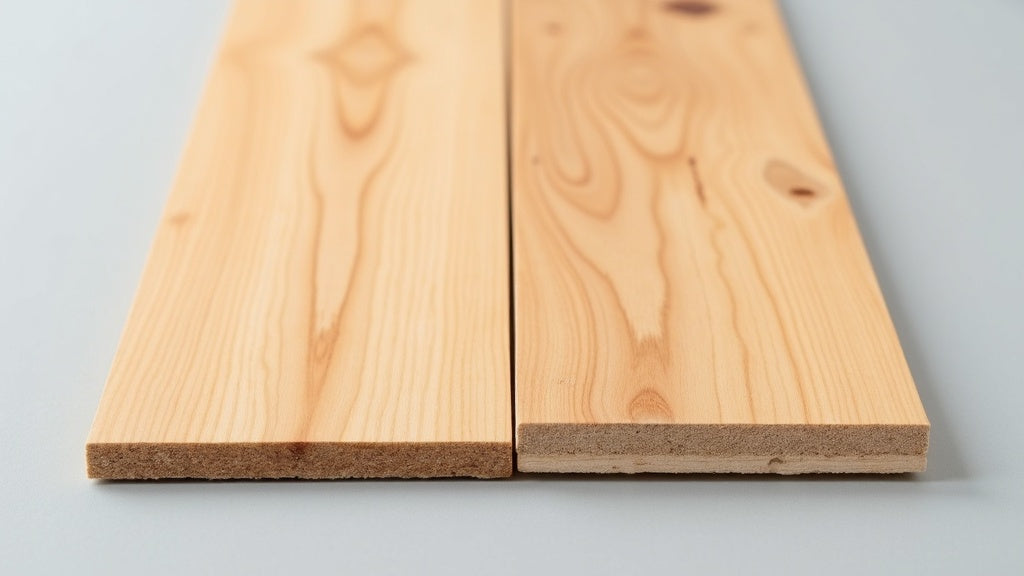
Engineered hardwood is not that kind of plank. It is a thin layer of real hardwood, the wear layer, bonded to a plywood or high-density fibreboard core. There is only one real-wood face to look at, the top veneer you actually see and walk on. There is no second wood face underneath to grade, and no board-size cutting yield to measure, because what is beneath the veneer is not solid hardwood at all.
So when a flooring brand calls an engineered floor "Select & Better," it has borrowed the name from that older lumber-grading tradition to describe something narrower: the visual clarity and uniformity of that single top veneer face. Because a bonded veneer face is not covered by NHLA's solid-lumber rules, there is no single regulated body setting exact cutoff percentages for it the way there is for solid lumber. "Select & Better" on an engineered product is an industry-convention term, and the exact line between grades can vary from one manufacturer to the next.

What This Actually Looks Like in a Floor
Grade is primarily about the wood's visual character, not its structural strength. On an engineered floor, a Select & Better veneer will generally show:
- Fewer and smaller knots
- Less colour variation board to board
- Minimal mineral streaks
- Little to no sapwood showing
- A calmer, more uniform overall look once installed
None of that is about durability. A lower grade is not a weaker floor. It simply carries more of the natural character (knots, streaks, colour variation) that the tree actually had. How engineered hardwood grade changes the look of a floor goes deeper into how that plays out room to room, and how width and length change the look of a floor covers the other side of that same visual-character question.

Select & Better vs. Character/Rustic Grades
This is a matter of taste, not a hierarchy of quality. Character or rustic grades embrace knots, mineral streaks, and colour variation as part of the look, a deliberate design choice for homeowners who want a floor that reads as more rustic or reclaimed. Select & Better is the choice for homeowners who want a cleaner, more consistent, more refined look from board to board.
Neither is the "correct" choice. They are different aesthetic answers to the same question, and the right one depends entirely on the room and the look you are going for. If you're still narrowing down species and colour, how to choose an engineered hardwood colour for your home is a useful next step.

Frequently Asked Questions
A few quick answers to the questions people ask most about Select & Better grading.
Is Select & Better the same as "A grade"?
Not exactly. "A grade" is not a standardized term at all; different sellers can mean different things by it. "Select & Better" at least borrows its name from a real, long-standing lumber grading tradition (NHLA's FAS and Selects grades), but on an engineered floor it describes the appearance of the single top veneer face rather than a two-sided lumber grading standard, and the exact definition can vary by manufacturer.
Does a higher grade mean a stronger or more durable floor?
No. Grade is about visual character, knots, colour variation, mineral streaks, not structural strength or wear resistance. A character-grade floor and a Select & Better floor of the same species and construction perform similarly; they simply look different.
Is Select & Better the best possible grade?
On an engineered floor, Select & Better is generally the cleanest, most uniform appearance tier a manufacturer offers for that veneer, the closest equivalent to the top end of the older NHLA lumber grades the name borrows from. Whether it is the "best" choice for a given home depends on the look you want; some homeowners specifically prefer the character in a lower grade.
To discuss your project or ask a question, contact Caledon Floors. To find waterproof vinyl flooring, click here for a Caledon Floors dealer near you.