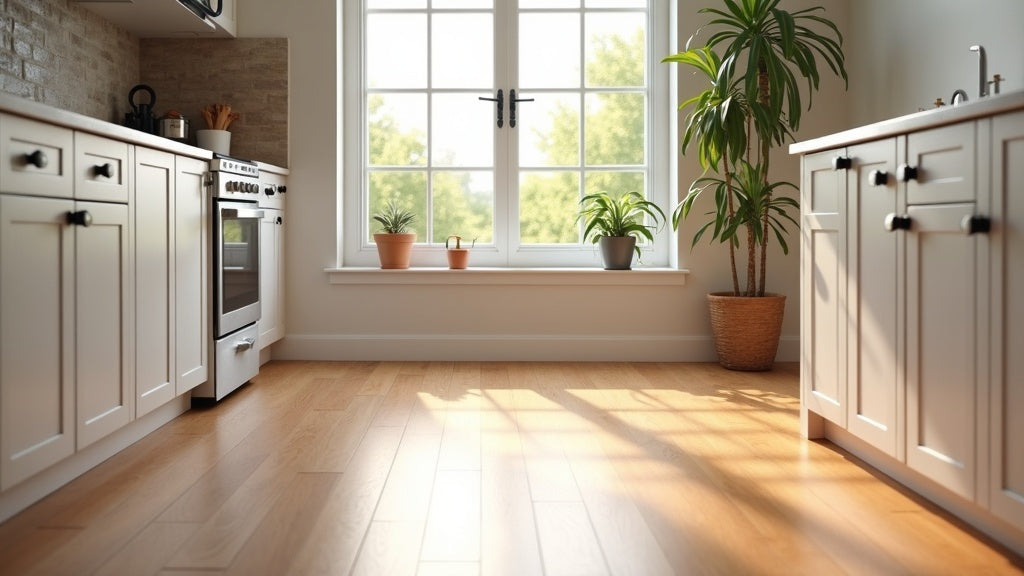
A floor feels warmer or softer underfoot based on three things: the core material's natural thermal properties, whether an underlayment or attached pad sits beneath the surface, and how much give the overall construction has when you stand or walk on it. Hard, dense materials like tile and stone feel cool and firm. Materials with an attached cushioning layer, like many WPC vinyl floors, feel noticeably warmer and softer.
Underfoot comfort rarely gets discussed the way colour or style does, but it is one of the most immediate, physical things a homeowner notices about a floor every single day. It is felt every morning getting out of bed, every hour standing at a kitchen counter, and every time bare feet meet the floor after a shower.
This guide explains what actually drives the difference in how a floor feels underfoot, and why two floors that look almost identical can feel completely different to stand on.
Why Do Some Floors Feel Cold and Others Feel Warm?
Temperature perception underfoot comes down to a material property called thermal conductivity, which describes how quickly a material pulls heat away from your skin on contact. Materials with high thermal conductivity, like ceramic tile, natural stone, and polished concrete, draw heat away from bare feet quickly, which is why they feel cold even when the room itself is a comfortable temperature.
Materials with lower thermal conductivity, including wood, cork, and most vinyl flooring, pull heat away more slowly, so the floor feels closer to body temperature and reads as warmer. This is a genuine physical property of the material, not a perception trick, and it holds true regardless of the actual room temperature.
An attached cushioning layer beneath a vinyl plank adds a further insulating buffer between the cold subfloor beneath and the surface you are standing on, which amplifies the warm-underfoot effect beyond what the wear layer material alone would provide.

Why Do Some Floors Feel Softer Than Others?
Softness underfoot comes primarily from whatever sits beneath the visible wear surface, not the wear surface itself. A vinyl plank with an attached underlayment pad, such as an IXPE or EVA foam layer bonded to the underside of the plank, has genuine give when you stand on it, distributing pressure and reducing the hard, direct-contact feeling of a rigid material.
Tile, stone, and any flooring installed directly over a rigid subfloor with no cushioning layer will feel firm regardless of how the surface itself is finished, since there is nothing between your foot and the structural floor beneath to absorb impact or add flex.
This is why two floors with a similar wood-look surface finish can feel completely different to stand on. The visible layer only tells part of the story. What is underneath does the rest of the work.
Does a Softer Floor Actually Matter, or Is It Just Comfort?
For most homeowners, it comes down to genuine daily comfort rather than a technical performance issue. Standing for extended periods, such as cooking, doing laundry, or working at a stand-up desk, is noticeably easier on a floor with some give than on a hard, unforgiving surface.
Softness underfoot also affects how a room sounds. A floor with an attached cushioning pad tends to feel and sound quieter underfoot than a hard surface, since the pad absorbs some of the impact noise created by footsteps, rather than transmitting that impact directly into the structure below.
How Does an Attached Pad Compare to a Separate Underlayment?
Many WPC vinyl floors come with a comfort pad already bonded to the underside of each plank, commonly IXPE or EVA foam, meaning the cushioning is built into the product itself rather than installed as a separate layer beneath it. This provides consistent softness and warmth across the entire floor without requiring an additional material to be sourced and matched to the flooring above it.
Products without an attached pad rely entirely on whatever underlayment, if any, is installed beneath them separately. The presence, thickness, and quality of that separate underlayment becomes the deciding factor in how warm and soft the finished floor feels, since the wear surface above it contributes comparatively little to the underfoot sensation.
For more on how underlayment functions and whether it is needed, see Do You Really Need Underlayment Under Vinyl Plank Flooring?.
Underfoot Comfort by Flooring Type: A Qualitative Comparison
| Flooring Type | Typical Warmth Underfoot | Typical Softness Underfoot | Why |
|---|---|---|---|
| WPC vinyl with attached pad | Warm | Soft, noticeable give | Composite core plus bonded IXPE or EVA cushioning |
| Engineered hardwood | Warm | Firm, slight give | Natural wood has low thermal conductivity but limited flex |
| Ceramic or porcelain tile | Cool | Firm, minimal give | High thermal conductivity, rigid installation |
| Natural stone | Cool to cold | Firm, no give | Very high thermal conductivity, dense and rigid |
| Vinyl without attached pad | Moderate | Firm, depends on underlayment | Warmth and softness depend entirely on any separate underlayment used |

Does Room Location Affect How Much Underfoot Comfort Matters?
Yes, meaningfully. Rooms where bare feet spend the most time, such as bathrooms, bedrooms, kitchens, and laundry rooms, are where underfoot warmth and softness are noticed most. Basements, which sit directly over cold concrete slabs in most homes, are another place where the difference between a cold, hard floor and a warm, cushioned one is especially pronounced, since the subfloor itself starts out cooler than an upper-level wood subfloor.
Formal spaces with lighter foot traffic, such as a dining room used mainly for gatherings, are places where underfoot comfort tends to matter less relative to appearance and durability. For more on how a basement's specific conditions affect flooring choice, see The Best Flooring for Canadian Basements.

Frequently Asked Questions
These are the questions homeowners most often ask about underfoot comfort.
Does thicker vinyl flooring automatically feel warmer or softer?
Not necessarily, and this is a common misunderstanding. Overall plank thickness includes the rigid core, which does not compress, and the attached cushioning pad, which does. Two floors of similar total thickness can feel quite different underfoot depending on how much of that thickness is dedicated to actual cushioning versus core material.
Is WPC vinyl flooring warmer underfoot than SPC vinyl flooring?
Generally, yes. WPC construction uses a composite core that tends to have somewhat better inherent thermal properties than the denser, harder core typical of SPC vinyl flooring, and WPC products commonly include a thicker attached pad as well. Both are waterproof flooring options, but they are not identical in underfoot feel.
Does underfoot comfort fade over time?
A quality attached underlayment pad is designed to hold its cushioning properties for the practical lifespan of the floor under normal residential use. Extreme or unusual loads over a long period could theoretically compress a pad's give slightly, but this is not a common concern in typical home use.
Can you add cushioning to a floor that does not already have it?
Where a separate underlayment product is compatible with a given flooring type, adding one beneath the flooring during installation can improve underfoot warmth and softness. This is a construction detail worth discussing at the planning stage of a flooring project, since it becomes far more difficult to change after installation is complete.
The Bottom Line
Underfoot warmth and softness come down to physics: how quickly a material conducts heat away from your skin, and whether anything beneath the surface has genuine give. WPC vinyl flooring with an attached comfort pad addresses both factors directly, which is why it has become a popular choice for whole-home comfort, particularly in basements, kitchens, and other rooms where bare feet spend real time. It is a quieter benefit than colour or style, but one that gets noticed every single day.
For more on how flooring choices shape the feel of a home, see Matte, Satin, or Glossy: How Floor Finish Changes a Room's Feel and SPC vs WPC Vinyl Flooring: What is the Difference and Which Is Better?.
If you have questions about comfort and construction across different flooring options, our team is glad to help. Contact us here.
To find waterproof vinyl flooring, click here for a Caledon Floors dealer near you.