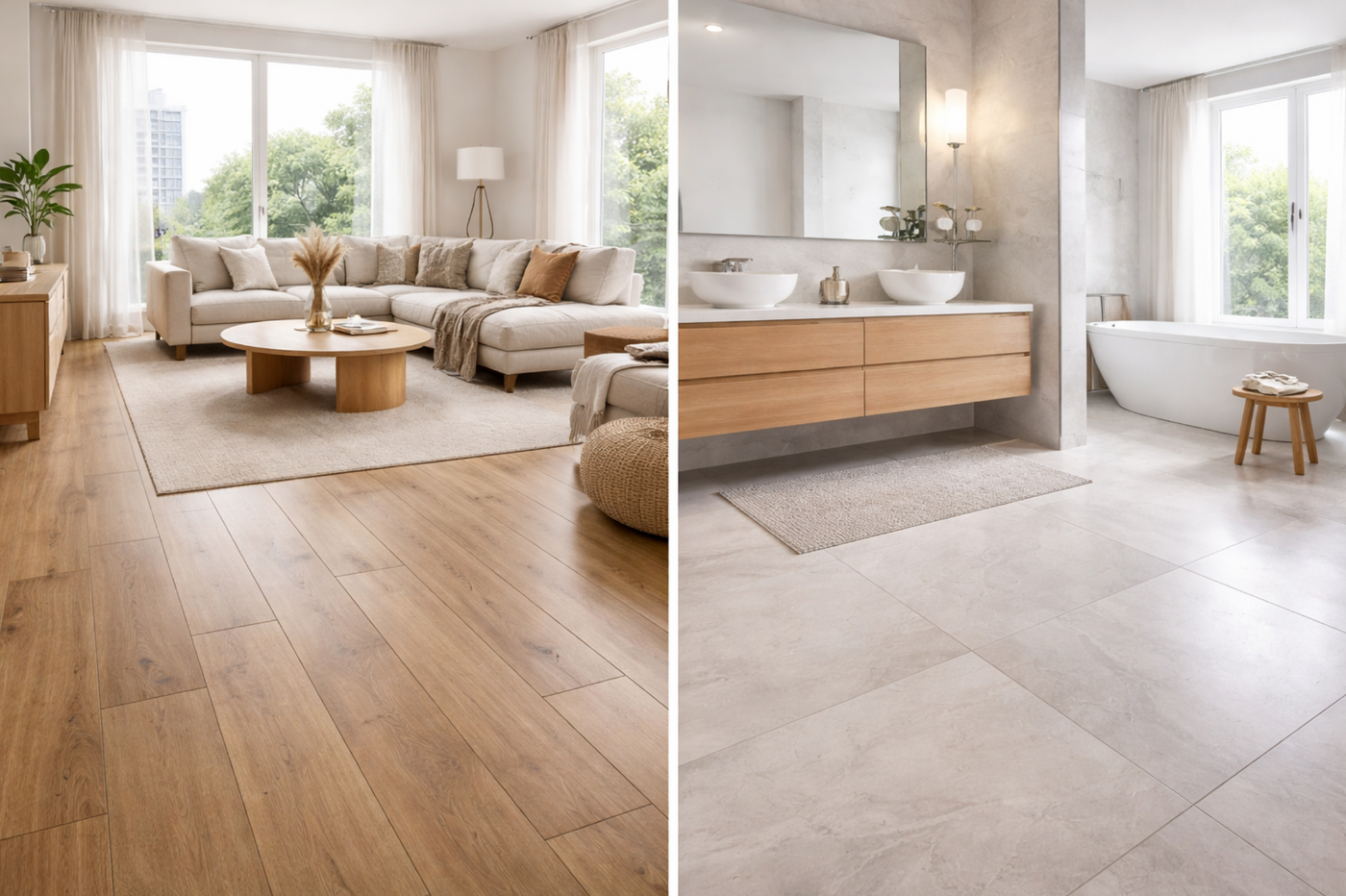
Buying flooring for a condo is different from buying flooring for a house.
The room may look the same. The square footage may be smaller. The design choices may even feel simpler. But condo flooring comes with a layer of reality that changes the decision completely: sound rules, strata rules, neighbours below, tighter installation conditions, and less room for error.
That is why condo flooring decisions go wrong so often.
People choose based on appearance first, then discover the product does not meet building requirements, does not feel right underfoot, or was the wrong choice for how the space is actually used. In a house, that can be annoying. In a condo, it can become a problem.
The best flooring for condos in Canada is not just about style.
It is about finding a floor that looks right, sounds right, performs well, and does not create headaches later.

Why condo flooring is different
A condo floor has to do more than look good.
In many buildings, sound transmission matters almost as much as durability. That changes the decision immediately. A floor that might work perfectly well in a detached house can become the wrong choice in a condo if it creates too much impact noise or does not meet strata requirements.
Then there is the way condo spaces are actually lived in.
Many condos use one continuous floor through the kitchen, living area, hallway, and bedrooms. That means one product often has to handle several different environments at once. It has to feel comfortable in the living room, hold up in the kitchen, work within the building’s rules, and still make the space feel cohesive.
That is where many floors start to fall apart as a decision.
A product may work well in one room. That does not mean it works well across the whole unit.
What matters most in a condo floor
In a condo, the right flooring decision usually comes down to four things: sound, moisture resistance, comfort, and forgiveness.
Sound is the obvious one.
Nobody wants to spend money on a new floor and then find out it creates noise complaints or fails to meet the building’s requirements. In condo living, sound is not a side issue. It is part of the product.
Moisture matters too, especially if the same floor will run through kitchens, entry areas, and the main living space. Condo owners often want one clean, continuous look. That only works if the product can handle more than one type of environment.
Comfort is where many people underestimate the difference.
A condo is not just a floor plan. It is where people live closely and feel everything more directly. A floor that feels hard, loud, or cold is more noticeable in a compact space because there is less separation between rooms and fewer places for discomfort to disappear.
And then there is forgiveness.
The best condo floor is usually the one that creates the fewest problems. It holds up well, works with the building, and does not demand constant thought once it is installed.
That matters.
Because in condo living, a floor that is technically acceptable but irritating every day is still the wrong floor.

What flooring usually works best in Canadian condos
For most condos in Canada, vinyl flooring is usually the strongest all-around option.
That is not because it wins every category. It does not.
It is because it solves the most condo problems at once.
High-quality vinyl flooring tends to offer strong sound performance, good moisture resistance, easier maintenance, and a more forgiving feel day to day. That makes it especially compelling when one floor needs to run through the main living area, kitchen, entry, and possibly even the bedrooms.
That versatility is a major advantage.
A condo owner often wants one consistent surface across the whole space. Vinyl makes that easier than many other categories because it can handle more demanding zones without forcing an awkward material change at the kitchen or entry.
Within vinyl, the feel matters.
Thicker WPC vinyl tends to be softer, warmer, and easier on the body. In a condo, that can be a real advantage. It usually feels quieter and more comfortable than harder surfaces, which is exactly what many condo owners want in a space they live on every day.
SPC vinyl can also work, but it tends to be denser and harder underfoot. In some buildings and some applications, that is perfectly fine. In others, the softer feel of WPC makes more sense.
The category is strong. The product choice within it still matters.
Where laminate fits in
Laminate still deserves to be taken seriously.
A good laminate offers strong value, solid scratch resistance, and a clean, attractive wood-look surface. It is also easy to install and, with the right underlay, can perform well acoustically.
That makes it attractive for condo owners who want a floor that looks good, feels substantial, and stays within budget.
It is a legitimate option, especially in dry interior spaces.
The limitation is moisture.
Modern laminate is much better than older laminate, particularly with lower-swell cores and improved water resistance. But it is still less forgiving than vinyl when water becomes part of daily life. That matters in condos where the same floor may run through the kitchen, entry, and main living area.
So laminate can absolutely be the right choice.
It is just not as broad a solution as vinyl when one floor needs to solve more than one problem at once.

What about tile in a condo?
Tile still has a place, but usually a smaller one.
In condo bathrooms, laundry areas, and some entry spaces, tile can make sense. It is durable, fully waterproof, and visually established. In the right design, it can look excellent.
But outside those areas, tile usually becomes harder to justify.
It is colder underfoot. It is harder on the body. It is more expensive and more difficult to install properly. And in condo living, where comfort and sound matter a great deal, those trade-offs become more noticeable.
Tile is rarely the best whole-condo flooring solution.
It tends to work better as a targeted material than as the main floor across the unit.
What condo owners often get wrong
The first mistake is choosing the product before checking the building rules.
That is backwards.
Before getting attached to any floor, condo owners need to understand the building’s sound requirements, underlay rules, and installation restrictions. A beautiful floor that does not comply is not a real option.
The second mistake is underestimating how the floor will feel in everyday life.
A product may look great on a sample board and still be the wrong choice once it is installed wall to wall. Harder, louder, colder floors become more noticeable in condos because there is less space to absorb the downside.
The third mistake is choosing a floor that works in one room but not the rest of the unit.
That is where continuity matters. The best condo floor is often the one that works well enough everywhere, not the one that is perfect in only one area.
Sound matters more than most people think
Condo flooring is not just about what happens in your unit. It is also about what happens below it.
That is why sound changes the entire decision.
A floor that looks great but sounds hard and noisy underfoot is a bad condo floor. It does not matter how good it looked in the store.
This is one reason thicker floors with the right sound-rated underlay often feel more appropriate in condo settings. The floor is not acting alone. It is part of a full assembly, and that full assembly determines whether the finished result feels quiet and solid or loud and irritating.
For condo owners, that is not a technical detail.
It is part of the product.
So what is the best flooring for condos in Canada?
For most condo owners, the best flooring is the one that balances sound, comfort, durability, and moisture resistance without forcing too many compromises.
That is why vinyl flooring is usually the strongest overall answer.
It works across more rooms. It handles moisture more safely. It is typically easier to live on every day. And it is often the simplest way to create one clean, continuous floor across the unit.
Laminate can still be a strong option, especially when budget, appearance, and dry interior use are the priority.
Tile still has a role in specific spaces.
But if the question is which flooring category usually makes the most sense for the widest range of condos in Canada, vinyl flooring is often the safest and most practical choice.
That does not make it the only answer.
It makes it the one that solves the most condo problems at once.

FAQ
Is vinyl flooring best for condos in Canada?
In many cases, yes. Vinyl flooring usually offers one of the best mixes of sound performance, moisture resistance, comfort, and day-to-day practicality for condo living.
What is the best flooring for condo soundproofing?
The best answer depends on the full floor and underlay system, not just the surface product. In general, sound-rated vinyl or laminate systems with the right underlay tend to perform well.
Is laminate a good condo flooring option?
Yes, especially in dry interior spaces where budget and sound performance matter. It is often a good value option, but it is less forgiving than vinyl in moisture-prone areas.
Should you put tile throughout a condo?
Usually no. Tile works well in bathrooms, laundry rooms, and some entry areas, but it is rarely the best choice for the entire condo because it is colder, harder, and less comfortable for everyday living.
Additional flooring content for Home Buyers:
Condo sound rating rules and ratings in Canada
How much does Engineered Hardwood Cost?
Contact us for help choosing a floor