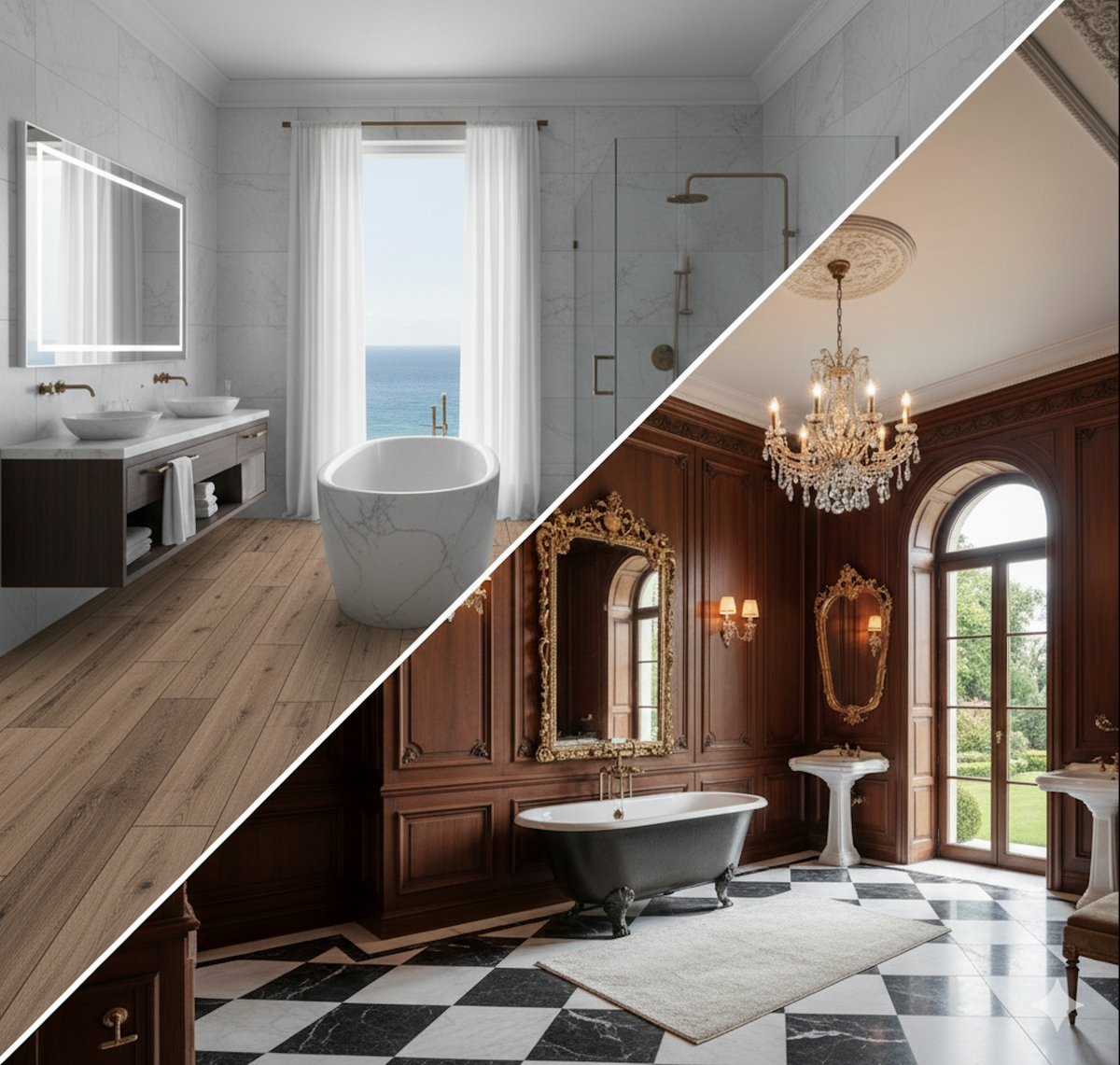
Most people compare vinyl flooring and tile as if the decision comes down to style.
It doesn’t.
Both can look good. Both can work in kitchens, bathrooms, and busy homes. But once you move past the showroom and into real life, the decision becomes less about appearance and more about comfort, maintenance, installation, and how the space actually gets used.
That is where vinyl flooring and tile start to separate.
A floor is not just something you look at. It is something you stand on, walk on, clean, and live with every day. The wrong floor can still look right on day one. The problem shows up later, when the room has been lived in for a while and the trade-offs stop being theoretical.
If you are deciding between vinyl flooring and tile, the better question is not which one looks more premium on a sample board. It is which one makes more sense for the room, the climate, and the way you want the floor to feel once it is installed.

What is the real difference between vinyl flooring and tile?
Vinyl flooring is designed to be forgiving.
Tile is designed to be hard, stable, and extremely durable.
That difference sounds simple, but it affects almost everything else.
High-quality vinyl flooring, especially waterproof vinyl flooring, is warmer underfoot, easier on the body, quieter to live on, and more adaptable in everyday spaces. Tile is harder, colder, and far less forgiving, but it is also fully waterproof and exceptionally durable when installed properly. For a full breakdown of what actually separates one vinyl plank from another, core type, wear layer thickness, and certifications, see our complete vinyl plank flooring buyer's guide.
In Canada, that matters.
Floors here do not live in one season. They deal with wet boots, tracked-in grit, cold mornings, and long winters where comfort underfoot is not a small detail. A floor that feels fine in a warm showroom can feel very different in a real home in January.
That is one of the biggest reasons this comparison matters more in Canada than it might in a milder climate.

Which one looks better?
That depends on what kind of look you want.
Tile still has a visual strength that vinyl cannot completely replace. Large-format tile can feel clean, architectural, and high-end. In the right space, especially a contemporary bathroom or a minimalist kitchen, tile can look sharp and permanent in a way few other materials can.
But vinyl flooring has improved dramatically.
Large plank vinyl with strong colour work, a realistic EIR surface, and a matte finish can look extremely good. In many residential interiors, especially where the goal is a warm wood-look floor, vinyl will usually look better than tile simply because it feels more natural, more inviting, and more livable.
This is really two visual directions, not one universal winner.
If you want a warm, residential floor with a softer visual, vinyl usually makes more sense. If you want a stone, concrete, or minimalist look with a harder architectural edge, tile may have the visual advantage.
Where vinyl flooring usually wins
Vinyl flooring tends to win in spaces where comfort and day-to-day livability matter just as much as waterproof performance.
That is why it has become such a strong option in Canadian kitchens, bathrooms, basements, and family homes.
It is warmer underfoot. It is quieter. It is easier on the body. It is typically easier to install. And it removes a lot of the stress that comes with living on a surface that feels cold and unforgiving every day.
That matters more than people expect.
In homes with kids, pets, or a lot of day-to-day activity, that softer, lower-stress feel becomes a real advantage.

Where tile still has the advantage
Tile still wins in some very real ways.
It is exceptionally durable. It is fully waterproof. It handles moisture, heat, and heavy use without much concern. In bathrooms, laundry areas, and certain entry spaces, tile has a long history for a reason.
It also brings a sense of permanence that some homeowners still want.
A properly installed tile floor can last a very long time. It is not unusual for tile to outlast several design cycles, even if the look eventually dates before the material fails.
That said, the strengths of tile usually come with trade-offs.
It is harder on the body. It is colder. It is more difficult and more expensive to install properly. And once grout enters the picture, maintenance becomes part of the conversation in a way many people underestimate. Tile itself is durable. The grout is usually where the annoyance starts.
So tile absolutely has strengths. It just asks more from the homeowner in return.
What about kitchens in Canada?
This is one of the clearest decision points.
Vinyl flooring is usually the better kitchen floor for most Canadian homes.
That is not because tile cannot work. Tile can work very well in a kitchen. But the daily experience is very different.
Kitchens are repetitive-use spaces. You are standing there, moving chairs, dropping things, cleaning up spills, and walking back and forth constantly. In that environment, the softer and warmer feel of vinyl flooring is a real advantage.
This matters even more for an aging population. Tile is unforgiving underfoot. It is hard on joints, hips, knees, and backs, especially in a room where people stand for long periods. Thick WPC vinyl is warmer underfoot and noticeably easier on the body, which makes a difference people feel every day.
Tile also comes with a very different installation burden. It is difficult for most DIY installers to do well, and it becomes expensive quickly in larger spaces. That does not make it a bad product, but it does make it a harder one to justify for many kitchens.
Tile handles water very well, but it can feel hard, cold, and unforgiving in a room people use constantly. For some homeowners, that trade-off is worth it. For many, it is not.
So this is not a case of tile being wrong. It is a case of vinyl usually being easier to live with.
What about bathrooms?
Bathrooms are more split.
Tile still has a strong case in bathrooms because it is fully waterproof, visually established, and often feels like the expected choice. In smaller bathrooms, especially those with a more polished or higher-end design goal, tile can make a lot of sense.
Vinyl flooring, though, has become a very legitimate bathroom option.
If the product is good, the installation is done properly, and the visual suits the space, vinyl can deliver the waterproof performance most people want while being warmer and more comfortable underfoot.
That is why bathrooms are no longer automatically tile-only rooms.
The better choice depends on whether your priority is the classic tile look and feel, or a warmer, easier-to-live-with surface that still handles moisture well.

Which one is better for basements?
Vinyl flooring is usually the stronger choice.
Basements in Canada tend to run cooler and carry more moisture risk than upper floors. That alone makes a harder, colder material like tile less appealing in many lower-level living spaces.
Tile can still work in basement bathrooms, utility areas, and laundry rooms. But for full basement coverage, family rooms, suites, gyms, or multi-use spaces, vinyl flooring usually makes more practical sense.
It feels better, handles moisture well, and tends to create a more comfortable finished-basement environment.
That is one of the reasons vinyl has become such a common recommendation in Canadian basements.
What about maintenance?
This is another area where category labels can be misleading.
Tile is often described as low-maintenance, and the tile itself generally is. The issue is grout.
That is where maintenance tends to collect.
Grout can stain, discolour, and require more attention than people expect, especially in kitchens and bathrooms. The tile may be durable, but the floor as a whole is not always as carefree as people imagine.
Vinyl flooring is simpler.
It generally cleans easily, does not involve grout lines across the whole floor, and tends to be lower-stress day to day. That does not make it indestructible, but it does make it easier for many households to live with.
Which one is better for resale or long-term value?
This depends on the home and the room.
Tile still carries a certain perception of permanence and traditional value, especially in bathrooms and some entry areas. In the right design, it can absolutely feel like the more established finish.
But high-quality vinyl flooring has moved well beyond the cheap-alternative category.
In many homes, it now reads as a practical, modern choice rather than a compromise. That is especially true when the product is visually strong and the installation is clean.
So the real answer is not that one always adds more value.
It is that value depends on whether the material feels right for the space.
Bad tile does not beat good vinyl just because it is tile. And cheap vinyl does not automatically beat a beautifully executed tile floor because it is easier to live with.
So what should you actually do?
Choose vinyl flooring when comfort, warmth, easier maintenance, and everyday livability matter most.
Choose tile when you want maximum hardness, classic bathroom or utility-room performance, or a more architectural look that suits the space.
That is the more honest answer.
Vinyl flooring is usually the better all-around choice for more Canadian homes because it solves more practical problems while still looking strong. Tile still has an important role, but it is a narrower one.
The right choice depends on what you want the floor to do after it is installed, not just what you want it to look like on a sample board.
FAQ
Is vinyl flooring better than tile in Canada?
For many homes, yes. Vinyl flooring is often warmer, quieter, easier on the body, and more comfortable for daily use. Tile still has strengths, especially in bathrooms and utility areas.
What is better for kitchens: vinyl flooring or tile?
Vinyl flooring is usually the better kitchen choice for most Canadian homes because it is easier to live on every day. Tile can still work well, but it is harder, colder, and more unforgiving.
What is better for bathrooms: vinyl flooring or tile?
Both can work. Tile remains a strong bathroom choice, but high-quality waterproof vinyl flooring is now a very legitimate option if warmth and comfort matter more.
Is tile more durable than vinyl flooring?
In terms of hardness and long-term material durability, tile usually has the edge. But durability is only part of the decision. Vinyl often wins on comfort and practical daily use.
Additional content to help with Tile vs Vinyl flooring decision
Best Bathroom flooring in Canada
Ceramic Tile vs Vinyl for Bathroom which is better?
Contact us for help choosing a floor