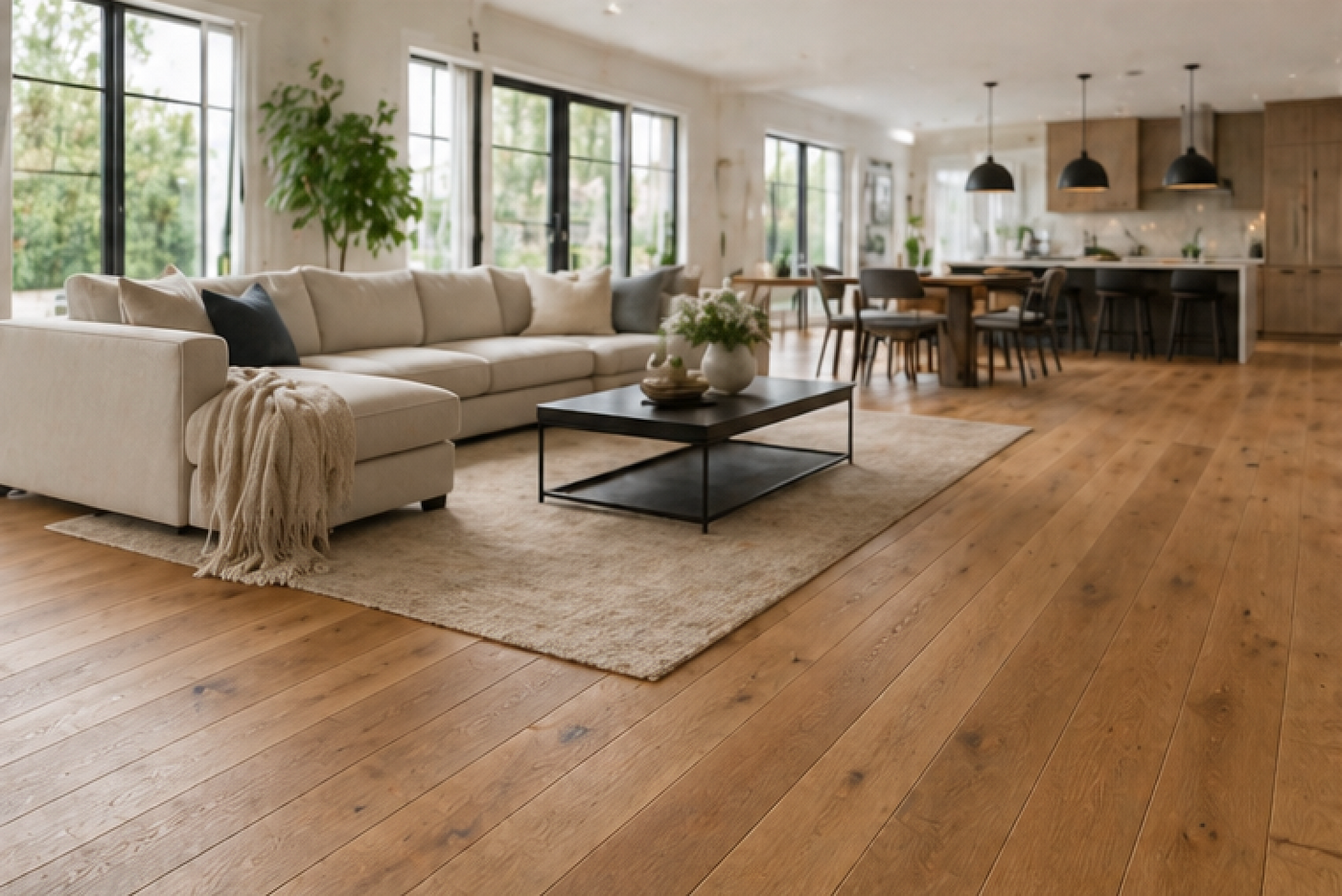
The best flooring for a main floor renovation in Canada is the flooring that works across the whole space, not just one room. A main floor usually includes the kitchen, living room, dining room, entryway, hallway, stairs, and sometimes a powder room. These areas are connected visually and functionally, so the flooring decision needs to be planned as one complete design choice.
For most Canadian homes, the strongest main floor options are engineered hardwood and high-quality vinyl flooring, especially WPC vinyl flooring when waterproof performance, comfort, and everyday practicality matter. Tile can also be useful in specific areas like entries, mudrooms, bathrooms, and laundry rooms, but tile can interrupt the flow of a main floor if transitions are not planned carefully.
The right main floor flooring should make the home feel larger, calmer, more connected, and more finished. It also needs to handle real life: wet shoes, pets, kids, cooking, furniture, stairs, cleaning, and daily traffic. A main floor renovation is not just about choosing a floor: it is about choosing how the home will feel.

What is the best flooring for a main floor renovation?
The best flooring for a main floor renovation is usually engineered hardwood or WPC vinyl flooring, depending on whether the homeowner values real wood beauty or waterproof practicality more. Engineered hardwood creates the most natural premium look. WPC vinyl flooring offers a strong combination of waterproof performance, comfort, and whole-home practicality.
Tile, laminate, and other flooring types can also work, but they need to be used carefully. A main floor is usually viewed as one connected space. If the flooring changes too often, the home can feel chopped up.
A strong main floor flooring plan should answer: Does the floor work in the kitchen? Does the floor look right in the living room? Can the floor handle the entryway? Will the stairs match or coordinate? Do transitions land in natural places? Does the floor make the home feel larger and more connected? Is the floor realistic for the household? The best answer depends on the home, but the decision should always start with the full main floor, not one room at a time.
Why main floor flooring should be planned as one connected space
Main floor flooring should be planned as one connected space because the kitchen, living room, dining room, entryway, and stairs are often seen together. A floor that works in one room but clashes with the next room can make the whole renovation feel less polished.
This is especially true in open-concept homes. When someone walks in the front door, they may see the entry, stairs, living room, dining area, and kitchen in one view. If each area has a different floor, the home can feel smaller and less intentional.
The best main floor renovations usually have a clear flooring strategy: either one continuous floor throughout the main level, or carefully planned transitions where another material makes sense. A transition should feel like part of the design, not like a problem solved at the last minute.
Engineered hardwood for main floors
Engineered hardwood is one of the strongest choices for a main floor renovation when the goal is a premium, natural, real wood look. It brings warmth, depth, and character that wood-look products try to imitate.
Engineered hardwood works especially well in living rooms, dining rooms, hallways, bedrooms connected to the main level, stairs, open-concept main floors, premium renovations, and homes where resale impression matters.
The main reason homeowners choose engineered hardwood is the finished look. A quality engineered hardwood floor can make the entire main floor feel more elevated. It can also create strong visual flow when the same floor continues from the living room into the dining area and hallway.
The quality details matter. A premium engineered hardwood floor should be judged by more than colour: veneer thickness, grade, plank length, plank width, finish, and colour variation all affect the finished result. A thicker veneer gives the floor a stronger real wood story. A cleaner grade creates a calmer, more refined appearance. Longer planks reduce visual breaks and help the main floor feel more spacious.
The trade-off is moisture. Engineered hardwood is still real wood. It can work beautifully on a main floor, including many kitchens, but it needs reasonable care around spills, appliance leaks, pet bowls, and indoor humidity. Engineered hardwood is the choice for homeowners who want the main floor to feel natural, warm, and premium.

WPC vinyl flooring for main floors
WPC vinyl flooring is a strong main floor choice when homeowners want waterproof flooring with more comfort underfoot than many thinner, harder products. It is especially practical for busy Canadian homes where the main floor has to handle kitchens, entries, pets, kids, and daily traffic.
WPC vinyl flooring works well across kitchens, living rooms, dining areas, hallways, entryways, basements, condos, family homes, rental suites, and any home where waterproof performance matters.
The strength of WPC vinyl flooring is that it can run through connected spaces while offering waterproof performance and a more comfortable feel. This matters because the main floor is not only a design space: it is also where life happens. People cook, clean, walk in with wet shoes, move furniture, host guests, and live with pets. A floor that looks good but creates constant worry may not be the right floor for the household.
The 2026 trend toward thicker vinyl flooring also matters here. Many homeowners are moving beyond basic waterproof claims and asking how the floor feels. Thicker WPC vinyl flooring can feel warmer, quieter, and more substantial than many thinner SPC products. That does not mean WPC is always the right answer: it means WPC deserves serious consideration when the homeowner wants waterproof practicality without giving up comfort and a premium underfoot feel.
Tile for main floors
Tile can be a very good main floor material in specific areas, but tile needs to be used with care. Tile is durable, water-resistant, and well suited for entries, mudrooms, bathrooms, laundry rooms, and some kitchens.
The challenge is flow. A tile entry beside a wood or vinyl main floor can work well if the transition lands naturally. A tile kitchen inside an open-concept main floor can also work when the layout supports it. But tile can make the home feel visually divided if the transition cuts across an open space without a clear reason.
Tile is also cold and hard underfoot, fine in a bathroom or mudroom, but less comfortable in a kitchen or living area where people stand or walk for long periods. In many Canadian homes, the best use of tile is strategic: use tile where water, durability, or design calls for it, but do not use tile automatically just because an area is a kitchen or entryway.

Laminate for main floors
Laminate can be a practical main floor option when homeowners want value, good visuals, and improved scratch resistance compared with some other categories. Modern laminate can look much better than older laminate products, and some laminate floors offer strong durability.
The limitation is moisture. Laminate is generally not the same as waterproof vinyl flooring, even when it has water-resistant features. Kitchens, entries, and wet shoes can create more concern depending on the product and installation.
For a full main floor renovation, laminate should be compared carefully against engineered hardwood and WPC vinyl flooring. It may be the right choice for some budgets and households, but the homeowner should understand the trade-offs before choosing it for the entire main level.
What flooring is best for the kitchen and living room together?
The best flooring for a kitchen and living room together is often one continuous floor that handles the kitchen while still looking right in the living area. Engineered hardwood and WPC vinyl flooring are two of the strongest options for this situation.
In an open-concept main floor, the kitchen and living room are not separate design decisions: they are viewed together. The floor has to work beside cabinets, an island, dining furniture, sofas, rugs, stairs, and natural light.
Engineered hardwood gives the most premium natural look. It can make the kitchen feel like part of the home rather than a separate utility space, though it needs care around moisture. WPC vinyl flooring gives homeowners more forgiveness around spills, cooking, pet bowls, and wet traffic, and it can continue through the living room, dining room, hallway, and entry without creating a hard transition.
Tile can work in a kitchen, but in open-concept homes, a tile-to-wood or tile-to-vinyl transition must be planned carefully. If the transition lands awkwardly, the main floor can feel less connected. The best kitchen and living room floor is the one that balances appearance, moisture, comfort, and flow.

What flooring is best for entryways?
The best flooring for entryways is flooring that can handle wet shoes, grit, winter moisture, and heavy traffic while still connecting well to the rest of the main floor. Tile, WPC vinyl flooring, and some engineered hardwood installations can all work, depending on the home.
Canadian entryways work hard. Rain, snow, salt, gravel, and wet boots are part of real life. The entry floor needs to be durable and easy to clean.
Tile is a strong entryway option because it handles surface moisture well, though a small or awkwardly shaped tile area can make the transition into the rest of the main floor feel choppy. WPC vinyl flooring can be a very practical choice because it can continue from the entry into the hallway, kitchen, and living area while offering waterproof performance, making the home feel more connected. Engineered hardwood can look beautiful in an entry when it is part of a premium main floor design, but mats, quick cleanup, and moisture control matter.
The entryway should not be treated as an afterthought. It is the first flooring impression people see when they enter the home.
What flooring works best for stairs?
The best flooring for stairs is flooring that creates a clean, safe, and finished connection between levels. Stairs are one of the most visible design details in a home, so the flooring choice should be planned early.
Engineered hardwood is often one of the strongest stair options because it provides a real wood look and can be coordinated with matching or complementary stair nosings. When done well, hardwood stairs can make the home feel more custom and more expensive. Vinyl flooring can also work on stairs when the stair nosings are properly designed, colour-matched, and installed, though poor nosings or mismatched stair pieces can reduce the quality of the entire renovation.
Carpet still has a place on stairs for homeowners who want softness, sound reduction, and traction, but it changes the visual flow and may not match the main floor design. For main floor renovations, stairs should be planned with the flooring from the beginning. A beautiful main floor can lose impact if the stairs look disconnected.
Should the main floor use one flooring throughout?
A main floor often looks more expensive when one flooring runs through most of the connected spaces. Continuous flooring can make the home feel larger, calmer, and more thoughtfully designed, especially when the kitchen, dining room, living room, hallway, and entry are all visible from one another.
That does not mean one floor must be used everywhere. A powder room may use tile. A mudroom may need a more water-focused material. A stairway may require special nosings or a coordinated product. The rule is not "one floor no matter what": the rule is fewer random changes. Use one floor where continuity improves the home. Use transitions only where the home naturally calls for them.

Can area rugs help define spaces on a main floor?
Area rugs are one of the best ways to add warmth, comfort, and personality to a main floor without changing the flooring material. This is especially useful in open-concept homes where one continuous floor runs through the kitchen, dining room, living room, and hallway.
A continuous floor helps the main level feel larger and more connected. Area rugs let homeowners soften specific spaces without breaking that visual flow. This works especially well in TV rooms, hosting areas, family rooms, and living rooms where people want the space to feel warmer and more comfortable. A rug can define the seating area, reduce echo, add texture, and make the room feel more finished.
For many homes, this is the best of both worlds: one clean flooring direction across the main level, with area rugs used to bring comfort and design interest where needed. Area rugs are also easy to change over time; flooring is a long-term decision, and rugs give homeowners flexibility as furniture, colours, and design preferences evolve.
Where should flooring transitions happen?
Flooring transitions should happen where the home naturally changes. Good transition points include doorways, hallway breaks, stair edges, powder room entrances, mudroom thresholds, and clear architectural separations.
Poor transition points are usually random lines across open spaces. These transitions draw attention to the floor in the wrong way and can make the layout feel patched together instead of planned.
When planning a main floor renovation, homeowners should decide transition points before ordering flooring. The installer should know where each material starts and stops, how the transition will be finished, and how the transition looks from the main sightlines of the home. A transition is not just a technical detail: it is a design detail.
Best main floor flooring by area
| Main floor area | Strong flooring choices | What matters most |
|---|---|---|
| Kitchen | WPC vinyl flooring, engineered hardwood, tile | Moisture, cleaning, comfort, visual flow |
| Living room | Engineered hardwood, WPC vinyl flooring | Warmth, appearance, comfort, continuity |
| Dining room | Engineered hardwood, WPC vinyl flooring | Chair movement, visual connection, cleaning |
| Entryway | Tile, WPC vinyl flooring, engineered hardwood with care | Wet shoes, grit, durability, transition planning |
| Hallway | Engineered hardwood, WPC vinyl flooring | Long sightlines, plank length, durability |
| Stairs | Engineered hardwood, coordinated vinyl stair system, carpet | Nosings, safety, appearance, continuity |
| Powder room | Tile, WPC vinyl flooring, carefully selected wood | Moisture, transitions, maintenance |
The best main floor flooring plan is not based on one area alone. The floor should work across all the connected spaces.
Engineered hardwood vs WPC vinyl flooring for a main floor
Engineered hardwood and WPC vinyl flooring are two of the strongest main floor choices, but they solve different problems.
| Category | Engineered hardwood | WPC vinyl flooring |
|---|---|---|
| Look | Most natural premium appearance | Realistic wood-look visuals |
| Feel | Warm, real wood surface | Softer, warmer, more comfortable than many thinner rigid products |
| Water resistance | Needs care around moisture | Waterproof flooring performance |
| Best for | Premium design, resale impression, real wood buyers | Busy homes, pets, kids, kitchens, entries, lower-stress maintenance |
| Stairs | Strong option with proper nosings | Works when stair system is well planned |
| Maintenance | Normal hardwood care | Easy everyday cleaning |
| Main trade-off | Not waterproof | Not real wood |
Choose engineered hardwood when the main goal is a real wood floor with the strongest natural premium impression. Choose WPC vinyl flooring when the main goal is waterproof performance, comfort, and practical whole-home living.

What flooring makes a main floor look more expensive?
A main floor looks more expensive when the flooring feels intentional, connected, and well-proportioned. The material matters, but the design details matter just as much.
A more premium main floor usually has fewer random flooring changes, clean transitions, warmer natural tones, wider planks, longer plank visuals, low colour variation, coordinated stairs, proper installation, and flooring that works with the cabinets and furniture.
Engineered hardwood can create the strongest premium impression because it is real wood. A cleaner grade, thicker veneer, longer board, and natural colour can make a main floor feel more elevated. WPC vinyl flooring can also create a strong impression when the product has realistic visuals, good proportions, and a substantial feel. A thicker, warmer, more comfortable vinyl floor usually feels more premium than a thin, hard, flat-looking product.
A main floor does not look expensive because one product label says it is expensive. It looks expensive when all the design choices work together.
What flooring is best for families, pets, and busy homes?
For families, pets, and busy homes, WPC vinyl flooring is often one of the most practical main floor choices. It offers waterproof performance, comfort underfoot, and easier everyday maintenance.
This matters in homes with kids, pets, wet shoes, frequent cooking, busy entryways, rental use, basement access, large family rooms, and open-concept kitchens. Engineered hardwood can still work beautifully for families, but the household needs to be comfortable with normal wood-floor care: pet water bowls, spills, chair legs, and wet footwear all need attention. For many busy homes, the best main floor flooring is the floor that reduces worry without making the home feel less designed, and this is where high-quality WPC vinyl flooring can be very strong.
What flooring is best for resale value?
The best flooring for resale value is usually flooring that looks current, neutral, durable, and broadly appealing. Engineered hardwood often supports a strong resale impression because many buyers value real wood. High-quality vinyl flooring can also appeal to buyers who want waterproof practicality.
For resale, avoid highly specific colours, awkward transitions, and flooring choices that make the home feel dated. Warm natural wood tones, low colour variation, and good whole-home flow are usually safer than extreme design choices. A buyer may not know every flooring specification, but they will notice whether the main floor feels calm, current, and well finished. A good main floor renovation should make the home feel move-in ready.
What should Canadian homeowners consider before choosing main floor flooring?
Canadian homeowners should consider moisture, climate, lifestyle, layout, stairs, transitions, and long-term design. Canada adds real flooring challenges: wet winters, dry indoor heating, pets, boots, basements, condos, and seasonal humidity changes all affect flooring decisions.
Before choosing flooring, homeowners should ask: Is the main floor open-concept or divided into rooms? How much wet traffic enters from outside? Are pets or kids part of the household? Is the kitchen connected visually to the living room? Are stairs visible from the main floor? Does the home need sound-rated flooring or underlayment? Is waterproof flooring important? Is real wood more important than low-maintenance living? Where should transitions happen? Will the floor still look current in five to ten years? Would area rugs help define comfort zones while keeping one continuous floor?
The best main floor flooring is not chosen from one sample. It is chosen by thinking through how the home actually functions.
Common main floor flooring mistakes
The most common main floor flooring mistakes happen when homeowners choose products room by room instead of planning the main level as one connected space.
| Mistake | Why it hurts the renovation |
|---|---|
| Too many flooring types | Makes the main floor feel smaller and less connected |
| Poor transition placement | Draws attention to layout problems |
| Ignoring stairs | Makes the renovation feel unfinished |
| Choosing colour from a small sample only | Can look very different across a full room |
| Choosing tile automatically for kitchens | Can interrupt open-concept flow |
| Choosing thin vinyl only by price | May reduce comfort and perceived quality |
| Ignoring entryway traffic | Can create maintenance problems |
| Forgetting lighting | Flooring colour changes in natural and artificial light |
| Not planning nosings | Stairs can look mismatched or bulky |
| Using flooring changes to define rooms | Area rugs often create warmth and definition without breaking floor continuity |
Good flooring planning avoids these problems before installation starts. A main floor renovation should feel like one decision, not ten separate decisions.
Best flooring for a main floor renovation: quick recommendations
| Homeowner priority | Best direction |
|---|---|
| Most premium natural look | Engineered hardwood |
| Waterproof performance | WPC vinyl flooring or tile in specific wet zones |
| Busy family home | WPC vinyl flooring |
| Open-concept flow | One continuous floor through main spaces |
| Warm TV or hosting room | Continuous flooring with a well-chosen area rug |
| Strong resale impression | Engineered hardwood or high-quality realistic vinyl |
| Best entryway durability | Tile or WPC vinyl flooring |
| Best stair appearance | Engineered hardwood or a well-coordinated stair system |
| Modern design | Warm natural tones, wider planks, low variation |
| Lower-stress maintenance | WPC vinyl flooring |
These are not absolute rules: they are practical starting points. The right floor should match the home's design and the household's lifestyle.
How Caledon Floors fits main floor renovations
Caledon Floors focuses on flooring that helps Canadian homes feel more elevated, more comfortable, and more practical.
For homeowners who want a premium real wood main floor, the Origins engineered hardwood collection offers a strong story: 4mm veneer, Select & Better grade, long 74" plank format, and a cleaner, more refined visual. Origins is built for homeowners who want real hardwood with a more substantial, higher-end look.
For homeowners who want waterproof performance with comfort, Goliath and Artimis WPC vinyl flooring offer a strong whole-home option, supporting the move toward thicker, warmer, more comfortable waterproof flooring that can work across kitchens, living rooms, hallways, and busy family spaces. The best main floor flooring is not only about product type. It is about choosing a floor that fits the home, supports the design, and performs in real life. That is where Caledon Floors is focused.
Final thoughts: choosing the best flooring for a main floor renovation
The best flooring for a main floor renovation in Canada is the floor that makes the whole level feel connected.
Engineered hardwood is the strongest choice when homeowners want real wood beauty, premium design, and a natural high-end impression. WPC vinyl flooring is the strongest choice when homeowners want waterproof performance, comfort, easy maintenance, and whole-home practicality. Tile can be excellent in specific wet zones, but tile should be used where it improves the home, not where it interrupts the flow.
Area rugs can then add warmth, softness, and personality to TV rooms, hosting areas, and living spaces without breaking the visual continuity of the main floor. The main floor should be planned as one complete space: the kitchen, living room, dining room, entryway, stairs, and hallway all need to work together. When the flooring is chosen well, the home feels calmer, larger, warmer, and more finished. Contact us for help choosing a floor, or find a dealer near you.
Related reading
- Should You Use the Same Flooring Throughout the House?
- Best Flooring for Stairs: Nosings, Safety, and Why Stairs Cost More
- Best Flooring for Entryways and Mudrooms in Canada
- Is Engineered Hardwood Worth It vs Vinyl Plank Over 10 to 15 Years?
- How Much Flooring Do I Need? A Canadian Buyer’s Guide to Measuring and Waste