Last updated: July 2026.
A complete resource to help homeowners choose the right vinyl flooring for a home, an investment property, or a commercial space.
Vinyl flooring has taken Canada by storm, and for good reason. It is stylish, waterproof, affordable, and durable enough to handle everything from kids and pets to cold basements and busy entryways. Whether you live in a downtown condo, a suburban family home, or a cottage, vinyl flooring is one of the smartest flooring upgrades you can make right now.
This guide walks through everything you need to know to make a confident vinyl flooring decision. It is not a sales pitch, just real, useful information from people who work with flooring every day.
What Is Vinyl Flooring?
Vinyl flooring is a synthetic floor covering made from multiple layers of plastic (PVC) and other stabilizing materials. It is engineered to be water-resistant or fully waterproof, durable, and stylish, and it comes in a wide range of colours, textures, and formats that mimic the look of hardwood, tile, and stone.
The most common vinyl flooring formats are:
- Luxury Vinyl Plank (LVP): resembles hardwood planks
- Luxury Vinyl Tile (LVT): mimics natural stone or ceramic tile
- Sheet Vinyl: installed in rolls and glued down, best for large areas on a tight budget
Types of Vinyl Flooring
Understanding the different formats and core structures matters, since each type serves a different purpose depending on where it is installed, how it will be used, and your budget.
1. Dry Back Vinyl (2mm to 3mm, glue-down)
- Thin, flexible vinyl
- Glued directly to a perfectly level subfloor
- Common in large commercial jobs, such as hospitals and retail chains
- Rarely used in residential homes
2. LooseLay Vinyl (typically 5mm)
- Thicker vinyl that lays loose or is lightly glued down
- More comfortable and quieter underfoot than rigid vinyl
- Used in both residential and light commercial settings
- Often preferred over thin SPC for the added comfort and warmth
3. SPC Vinyl (Stone Plastic Composite)
- Dense core made of stone powder and plastic polymers
- Extremely rigid, waterproof, and durable
- A strong fit for rental units, kitchens, and budget-focused homes
- Click-lock installation
4. WPC Vinyl
WPC refers to the core of the plank, a stable, moisture-resistant composite that gives the floor warmth and waterproof protection. See our full breakdown of what WPC vinyl flooring is and how it is built for more detail.
Homeowners choose WPC for:
- A thicker, warmer feel underfoot
- Built-in underlay
- Realistic wood textures, often EIR (Embossed in Register)
WPC is widely considered a premium vinyl product, generally offering more comfort than SPC and stronger long-term residential performance than standard LVP.
5. Peel-and-Stick Vinyl / Click Sheet Vinyl
- Budget-friendly
- Easy to install as a DIY project
- Not suitable for long-term use or high-moisture areas

Wear Layer: What It Is and Why It Matters
The wear layer is the clear top coating that protects your vinyl floor from scratches, scuffs, and daily wear. It plays a major role in how long a floor lasts and where it can be installed. For a deeper look at matching a wear layer rating to your household, see our guide to choosing the right wear layer.
- 12 mil wear layer: suitable for most residential homes
- 20 mil wear layer: a common choice for rental properties, high-traffic homes, and light commercial use
- 28+ mil wear layer: used in heavy commercial environments such as offices and hospitals
WPC, SPC, and LooseLay vinyl can generally be used in light or medium commercial spaces when paired with a 20 mil wear layer or greater.
WPC vs. SPC: A Closer Look
Both are waterproof, rigid-core vinyl categories, but they trade off comfort against density in different ways. Our full SPC vs. WPC comparison goes deeper into the construction differences.
WPC
- Warmer and thicker underfoot
- Feels closer to natural wood
- A comfortable, quieter feel underfoot
- Generally more expensive than SPC
SPC (Stone Plastic Composite)
- Denser and more rigid
- Better suited to high-traffic areas or heavy furniture
- Can be louder and colder underfoot without a quality underlayment
- Budget-friendly and a strong fit for rentals
Bottom line: if comfort and quiet matter most, WPC is generally the better fit. If durability and price are the top priorities, SPC is worth a close look.
Where to Use Vinyl Flooring, Room by Room
Basements: waterproof WPC or SPC. LooseLay is also a strong option here.
Kitchens and bathrooms: dry back glue-down and LooseLay both work well here. SPC and WPC work too, but since they are floating floors, factor that in, especially in bathrooms. Water can get under the planks and become trapped, which can eventually cause issues like mould. Talk to a professional installer about the right option for your specific bathroom.
Living rooms and bedrooms: WPC and LooseLay vinyl planks provide the warmth and acoustic benefits most homeowners want in these spaces. SPC vinyl works fine too if budget is the bigger factor.
Rental properties: SPC with a 20 mil wear layer is a strong fit for most budget-focused rental portfolios. LooseLay and dry back vinyl are also worth considering since individual damaged planks can be easier to replace.
Retail, offices, or light commercial: WPC, SPC, or LooseLay vinyl, provided the wear layer is rated 20 mil or higher.
Vinyl vs. Laminate vs. Hardwood
Vinyl flooring:
- Waterproof, budget-friendly, versatile
- Available in click-lock and glue-down formats
Laminate flooring:
- Water-resistant but not waterproof
- More rigid and traditionally wood-based
- Often louder and colder underfoot than vinyl
Hardwood flooring:
- Natural beauty and strong resale value
- More expensive and more vulnerable to moisture
- Requires professional installation and ongoing maintenance
Vinyl offers a balance of durability and price that makes it a practical fit for most modern homes.

Subfloor and Climate Considerations
- Vinyl works well over concrete, OSB, and plywood
- LooseLay and WPC offer thermal benefits in cold basements
- Confirm the subfloor is dry, clean, and level before installation
In colder regions, vinyl is a strong solution where freezing temperatures and basement humidity are common concerns.
Installation Tips: DIY vs. Professional
- Most click-lock vinyl can be installed by a handy homeowner
- Dry back and LooseLay typically call for professional installation
- Always use the recommended moisture barriers and follow the manufacturer's instructions
- Let the flooring acclimate for roughly 48 to 72 hours, sometimes up to a week, per the manufacturer's guidance
- The subfloor has to be level. This is the step DIY installers skip most often, and it is the one most responsible for a successful installation
Vinyl Maintenance and Cleaning
- Sweep or vacuum regularly to avoid grit buildup
- Use a damp mop and a vinyl-safe cleaner
- Avoid bleach, ammonia, and steam mops
- Place felt pads under furniture
- Use walk-off mats at entryways

Common Myths About Vinyl Flooring
Myth 1: Vinyl looks fake. Not anymore. EIR (Embossed in Register) surfaces are remarkably realistic up close.
Myth 2: Vinyl flooring is cheap. There are budget lines, but premium WPC and SPC products are installed in high-end homes at every price point above entry-level.
Myth 3: It is not durable. With a proper wear layer, vinyl flooring can last 20 or more years.
Vinyl Flooring Trends
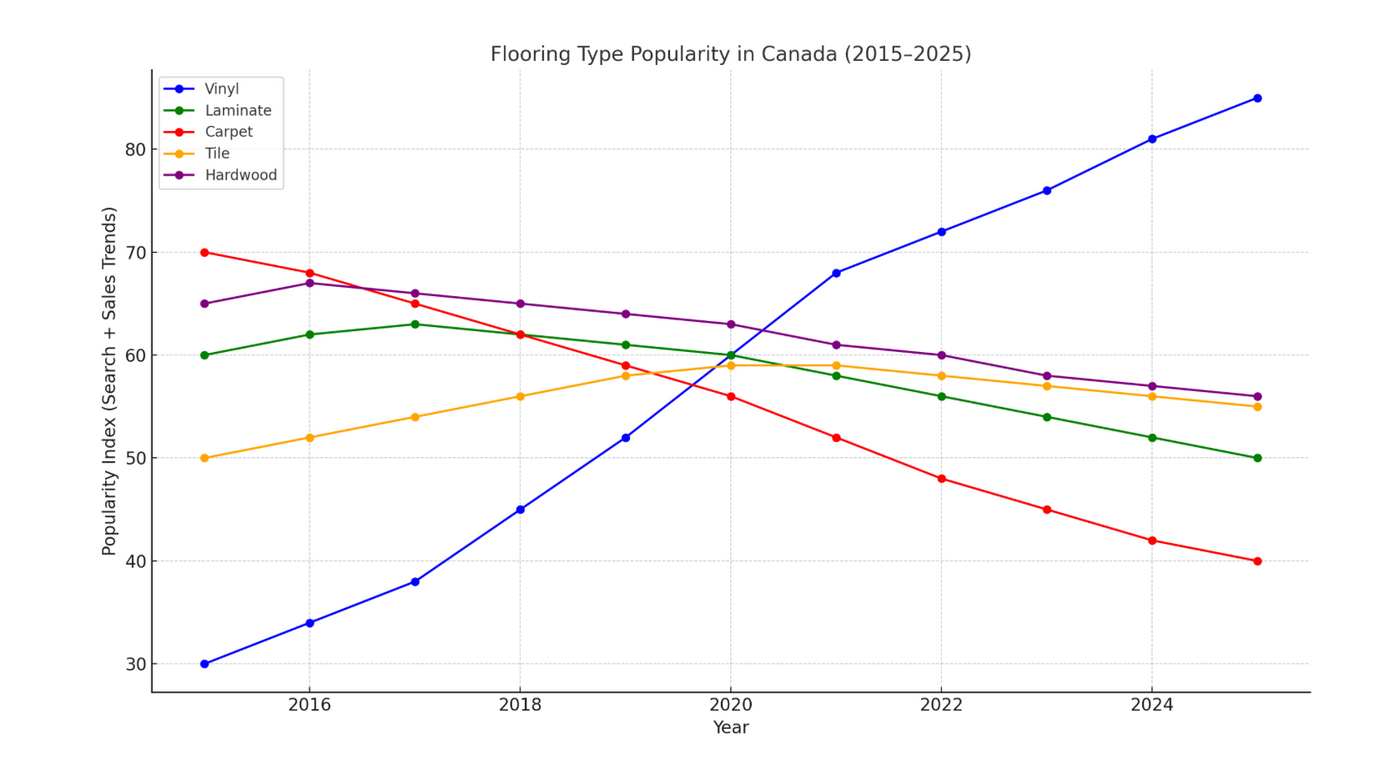
Vinyl has gone from a budget afterthought to one of the fastest-growing flooring categories in the country. Here is what the search interest and market data show.
Search Interest Growth (2015 to 2024)
- Search interest in "vinyl flooring" grew significantly in Canada over this period
- Laminate and carpet saw steady declines
- SPC and WPC search interest surged
Market Size Growth (Statista, 2023 to 2026)
| Year | Market Size (CAD) |
|---|---|
| 2023 | $1.47B |
| 2024 | $1.56B |
| 2025 | $1.64B |
| 2026 | $1.73B |
Advanced Insights: Vinyl Flooring and Resale Value
Vinyl has traditionally been considered a budget-friendly option, but the landscape has changed. In today's real estate market, high-end vinyl flooring, especially WPC and premium SPC, is increasingly seen as a smart, attractive upgrade rather than a compromise.
- Buyers respond well to waterproof features
- Landlords value durability and low maintenance
- Designers appreciate the wider range of natural textures and matte finishes now available
Vinyl can increase the appeal of a home without the upfront cost of hardwood.

Vinyl Flooring in Multi-Family and Commercial Builds
Builders are increasingly specifying SPC and WPC vinyl for:
- Apartment units
- Student housing
- Townhomes and row houses
- Small retail and office units
The reasons are consistent across projects: fast click-lock installation, fewer callbacks for damage or moisture issues, and aesthetic consistency across large footprints. Many developers now specify WPC in premium units and SPC in base units, balancing cost control against comfort.
Designer Perspectives: Current Colour and Style Trends
Designers are reporting these dominant trends in vinyl flooring right now:
- Wide planks (7 to 9 inches) and long lengths (60 to 72 inches)
- Matte finishes with low sheen
- Neutral and warm tones: beige, natural oak, honey, and ash
- EIR textures that follow the wood grain
- Minimal knots for a cleaner look
Vinyl no longer means compromise. Top WPC and SPC collections are visually difficult to distinguish from engineered hardwood.
Vinyl vs. Other Waterproof Floors: Tile and Laminate
How does vinyl compare to other popular waterproof flooring options? For a deeper look specifically at kitchens and bathrooms, see our waterproof flooring comparison guide.
| Feature | Vinyl (WPC/SPC) | Tile | Waterproof Laminate |
|---|---|---|---|
| Waterproof | Yes | Yes | Yes |
| DIY-friendly | Yes | No | Yes |
| Soft or comfortable underfoot | Yes (WPC) | No | Yes |
| Cold to the touch | No | Yes | No |
| Relative cost | $$ | $$$ | $$ |
| Installation speed | Fast | Slow | Medium |
Vinyl stands out for its balance of comfort, waterproofing, and installation speed.
Real-World Scenarios
The scenarios below are common, illustrative examples of how homeowners typically use vinyl flooring. They are not direct customer testimonials.
The condo upgrade: a homeowner switching from engineered hardwood to 8mm WPC in a downtown condo commonly reports fewer squeaks, easier cleaning, and a warmer feel underfoot in winter.
The rental portfolio: landlords running multiple rental units often standardize on SPC with a strong wear layer for its low cost and its ability to hold up to tenant wear and tear.
The family basement: families finishing a basement or bedroom level often choose LooseLay for the quieter, softer underfoot feel compared with a rigid click-lock floor.

Final Thoughts
Vinyl flooring offers an excellent mix of performance, comfort, and value. With options like WPC for comfort, SPC for durability, and LooseLay for flexibility, there is a fit for nearly every room, climate, and budget.
Contact us and we will connect you with a Caledon Floors dealer in your region.
To find vinyl flooring, click here for a Caledon Floors dealer near you.