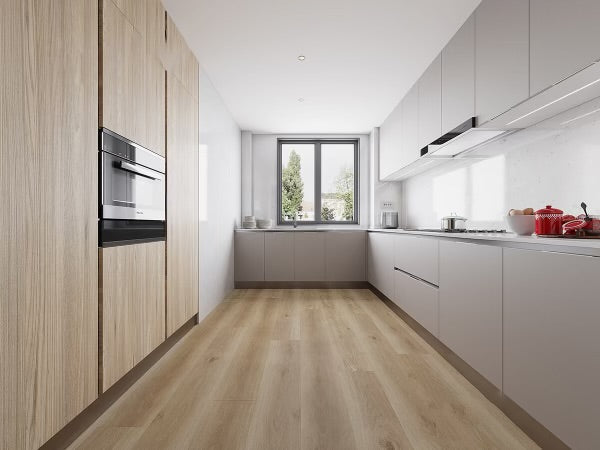
Last updated: August 2026.
Few flooring decisions matter more than the choice you make for a kitchen or a bathroom. These are the two rooms in a home that see water every single day: spills at the sink, steam off a hot shower, a dishwasher that leaks before anyone notices. The right floor shrugs that off. The wrong one warps, buckles, or grows mould behind the baseboards within a year. This guide walks through the waterproof and water-resistant flooring options worth considering, compares their real trade-offs, and gives you a room-by-room shortlist so you are not guessing.
Why Waterproof Flooring Matters in Kitchens and Bathrooms
Moisture is the enemy of most flooring materials. Kitchens have sinks, dishwashers, boiling pots, and the occasional dropped glass of water. Bathrooms are worse: hot showers, tubs, and wet feet put water on the floor multiple times a day. Flooring that is not built for that exposure eventually warps, buckles, stains, or traps moisture that grows mould underneath the surface.
Homeowners in humid coastal regions and homeowners in provinces with dry, cold winters face different versions of the same problem: materials that move with temperature and humidity swings. A genuinely waterproof core removes that risk regardless of climate.

Top Waterproof Flooring Options
Four materials genuinely hold up to daily water exposure in a kitchen or bathroom, each with a different balance of cost, comfort, and durability. Here is how they compare.
1. WPC Vinyl Flooring
WPC (Wood Plastic Composite) vinyl uses a rigid, wood-free core built for full water resistance. It does not swell, expand, or degrade when exposed to standing water, which makes it a strong fit for wet rooms. For a full breakdown of how the core is built and where WPC fits against other vinyl types, see what WPC vinyl flooring actually is.
WPC vinyl is built from a rigid waterproof core, a printed decorative layer, and a wear layer on top that resists scuffs and daily traffic.
Pros:
- Fully waterproof, wood-free core construction
- Warmer and more comfortable underfoot than denser vinyl cores
- Thicker planks generally mean a stronger locking system and quieter footsteps
- Reduced sound transmission, useful in multi-level homes
- Wide range of realistic wood-look finishes
- Rated for use over hydronic (hot-water) in-floor heating systems, when the specific product is rated for it
Cons:
- Typically costs more than SPC or laminate
- Its comfort-focused core is softer than SPC's specifically, though that difference is a comfort benefit, not a durability gap; it holds up to normal kitchen and bathroom furniture without denting
One note worth being precise about: WPC vinyl rated for radiant heat is generally fine over a hydronic (hot-water pipe) system. Vinyl flooring over an electric in-floor heating system is a different situation. Electric systems can develop hot spots if an element fails, and that concentrated heat can damage vinyl, so most manufacturers do not cover it under warranty. Always confirm with the flooring manufacturer and the heating installer before you install any vinyl over electric in-floor heat.

2. SPC Vinyl Flooring
SPC (Stone Plastic Composite) vinyl shares the same waterproof-core idea as WPC, but the core is denser and more rigid. It is fully waterproof, dimensionally stable through temperature swings, and generally the more budget-friendly of the two. See the full SPC vs. WPC comparison for the complete trade-off picture.
Pros:
- Fully waterproof
- Dent-resistant, rigid core
- Generally more affordable than WPC
- A strong fit for condos and basements
- Easy to maintain
Cons:
- Less cushioned underfoot than WPC
- Can feel cooler to the touch
- Can sound hollow underfoot without a quality underlayment
SPC is a strong fit for rental units, laundry rooms, or any high-traffic space where performance matters more than underfoot feel.
3. Water-Resistant Laminate Flooring
Water-resistant laminate is a budget-friendly way to get a hardwood look with added moisture protection. Newer laminate technologies can resist surface spills for 24 to 72 hours before moisture reaches the core, though the exact window depends on the specific product, so check the manufacturer's rating rather than assuming.
This is not the same thing as waterproof. It is usually sufficient for kitchens and powder rooms as long as spills get cleaned up promptly and the installation uses the recommended underlayment.
Pros:
- Cost-effective
- Available in wide, current plank styles
- Strong scratch resistance, especially on AC4-rated products
- Easy to install over most subfloors
Cons:
- Not suitable for standing water or a full bathroom
- Seam edges can swell if moisture works its way underneath
4. Ceramic and Porcelain Tile
Tile remains the traditional standard for bathroom flooring. It is naturally waterproof and extremely durable, but it can feel cold and hard underfoot, especially without radiant heat beneath it.
Pros:
- Fully waterproof
- Highly resistant to stains and scratches
- Long lifespan
- Wide range of classic and modern styles
Cons:
- Requires grout, which needs ongoing maintenance
- Cold underfoot without radiant heating
- Higher installation and repair costs than vinyl
That is the shortlist for wet rooms specifically. If you want the fuller picture on vinyl plank flooring generally, including cost per square foot and how installation actually works, see our complete buyer's guide to vinyl plank flooring.
Waterproof Flooring at a Glance: How the Options Compare
Before you narrow down a choice, here is how the four options stack up side by side on the factors that matter most for a kitchen or bathroom.
| Material | Waterproof core | Comfort underfoot | Cost tier | Best for |
|---|---|---|---|---|
| WPC vinyl | Yes, wood-free composite core | Warmest, most cushioned | Mid to higher | Full kitchens and bathrooms, homes with pets |
| SPC vinyl | Yes, dense stone-composite core | Firm, can feel cooler | Most affordable of the fully waterproof options | Basements, condos, rentals, high-traffic rooms |
| Water-resistant laminate | No, water-resistant only, not waterproof | Warm, wood-like feel | Most affordable overall | Kitchens and powder rooms without standing water |
| Ceramic or porcelain tile | Yes, fully waterproof material | Hard and cold without radiant heat | Higher installed cost | Full bathrooms, wet-prone entryways |
Flooring by Room: What to Use Where
A quick reference for matching flooring type to the room, based on moisture exposure and how the space actually gets used.
| Room | Best fit |
|---|---|
| Kitchen | WPC vinyl or water-resistant laminate |
| Full bathroom | WPC vinyl or porcelain tile |
| Powder room | SPC or WPC vinyl |
| Laundry room | SPC or WPC vinyl |
| Basement | SPC vinyl, especially over concrete |
| Condo | SPC or WPC vinyl, both height-efficient and stable |
What to Look for When Shopping
A few specifics separate a genuinely durable waterproof floor from one that only looks the part on the showroom sample.
- A waterproof core material: WPC or SPC, not a water-resistant coating on a porous core
- Plank thickness in the 8 to 12mm range for better comfort and sound performance
- A wear layer rating suited to the room's traffic, commonly 20 mil for heavier daily use. See our guide to choosing the right wear layer for how to match the rating to your household.
- A trusted locking system, since a weak lock is often where floating floors fail first. Our click-lock installation guide covers how these systems actually hold up over time.
- Certifications like GreenGuard Gold if indoor air quality matters to your household; see our low-VOC flooring guide for what that certification actually verifies
FAQs: Waterproof Flooring for Kitchens and Bathrooms
Straight answers to the questions that come up most often when homeowners are comparing options.
Is vinyl flooring truly waterproof?
Yes, when it is WPC or SPC vinyl with a genuinely waterproof core. Both are safe for kitchens, bathrooms, and basements. Keep in mind these are floating, click-lock installations, so while the plank itself will not be damaged by water, moisture can still get trapped underneath the planks if a spill sits too long. Clean up standing water promptly regardless of which waterproof product you choose.
Can I use laminate in a bathroom?
Only if it is specifically labelled water-resistant, and only in a room without standing water. Wipe up spills quickly and confirm the manufacturer's installation guidance for wet areas.
Which waterproof flooring is the most comfortable underfoot?
WPC vinyl generally offers the best combination of comfort, warmth, and durability among the fully waterproof options.
Is tile the best waterproof flooring?
Tile is arguably the most waterproof option and does not carry the same trapped-moisture risk a floating floor does, since it is bonded directly to the subfloor rather than floating above it. That makes it a strong choice for a bathroom, though it is harder and colder underfoot than vinyl.
What is the best waterproof floor for homes with pets?
WPC or SPC vinyl both hold up well against scratches, water, and the occasional pet accident. The same rule applies here as everywhere else: clean up accidents promptly so moisture does not sit between the plank and the subfloor.
Is engineered hardwood a good choice for a kitchen or bathroom?
Not as the primary floor in a room that sees water daily. Even a quality engineered hardwood has a real wood veneer on top, and real wood carries a meaningfully higher chance of an adverse moisture reaction, swelling, cupping, or discolouring, than a genuinely waterproof core does under the same exposure. If you like the look of wood for a kitchen, a WPC vinyl plank with a wood-look finish gets you that aesthetic with a core that is actually built for water. For the fuller, more nuanced picture on where engineered hardwood does and does not hold up around moisture, see our dedicated guide, Is Engineered Hardwood Waterproof?
Invest in Floors Built to Last
The right waterproof flooring does more than prevent damage. It makes the rooms you use every day easier to live in, whether you are cooking, getting ready in the morning, or walking in with wet boots. For a broader look at what is trending in Canadian homes this year, see our flooring trends guide, and if moisture control below the surface is part of your renovation plan, our guide to moisture vapour barriers covers what happens beneath the flooring itself.
Contact us and we will connect you with a Caledon Floors dealer in your region.
To find waterproof vinyl flooring, click here for a Caledon Floors dealer near you.