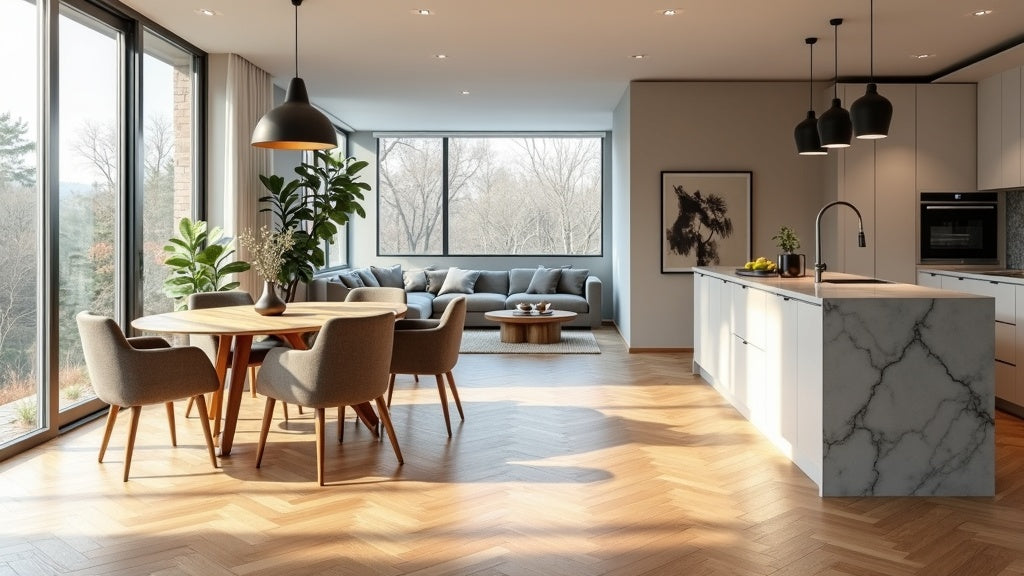
Herringbone and chevron are two of the most requested flooring patterns in Canada right now. Both create a bold geometric effect that straight-plank floors cannot match. They share a family resemblance, but they produce very different results in a room, and understanding that difference helps you choose the one that actually fits your space.
This guide covers the look and feeling each pattern creates, where they work best, how room size and plank proportions shape the result, and what material choices are worth knowing about. No installation instructions here. Just the design side, which is where the real decision lives.

What Is the Difference Between Herringbone and Chevron Flooring?
Both patterns arrange planks at angles to create a V-shaped or zigzag motif. The difference is in how the planks meet.
In a herringbone pattern, rectangular planks are laid in alternating perpendicular directions. Each plank meets the next at a right angle, which creates a broken-arrow or staggered-Z repeat. Look closely at a herringbone floor and you will see that the rows offset from one another. That stagger is part of the character of the pattern.
In a chevron pattern, the planks are cut with angled ends so they meet at a perfect point. The result is a clean, continuous V pointing in one direction. There is no stagger. The repeat is sharper, more geometric, and more deliberate.
One way to keep them apart: herringbone looks like the skeleton of a fish (the name comes from exactly this); chevron looks like a military rank stripe or an architectural arrow pointing down a hall.
What Feeling Does Each Pattern Create in a Room?
This is where the two patterns diverge most meaningfully.
Herringbone has a classic, layered energy. It reads as traditional without feeling old-fashioned, and it sits comfortably across a wide range of interior styles: French-country kitchens, mid-century modern living rooms, contemporary Scandinavian spaces, and nearly everything in between. The staggered repeat adds movement but also warmth. It feels curated rather than loud.
Chevron is more graphic and contemporary. The continuous arrow creates visual momentum, a sense of direction across the floor. In a long hallway, this is especially striking. In a formal dining room or a primary bedroom, it reads as intentional and refined. Chevron suits spaces where the floor is part of a deliberate design statement rather than a background choice.
Neither pattern is more beautiful than the other. They answer different questions. Herringbone says "this space has character." Chevron says "this space has direction."
Which Rooms Suit These Patterns Best?
Both patterns work in almost any room, but certain applications showcase them particularly well.
Herringbone shines in kitchens, entryways, and open-concept living areas. It handles the visual complexity of busy rooms without competing with cabinetry, furniture, or fixtures. The staggered repeat layers naturally under an open floor plan where the pattern flows from one zone to the next. In a Canadian mudroom, where you want something that looks purposeful and holds up visually even when the space is full of gear, herringbone tends to land well.
Chevron's directional arrow does well in rooms with a clear visual axis: a long living room, a wide hallway, a formal dining room. Pointing the arrow toward the main wall makes the room feel deeper and more deliberate. In a bedroom, chevron adds a quiet luxury without needing much else to complete the look.
Both patterns carry real presence in entryways. A front-entry floor is one of the first design impressions a home makes, and a patterned floor in either style makes that impression immediately. Herringbone at the entry is a classic across Canadian and European homes. Chevron reads as a more contemporary take on the same idea.
Does Room Size Affect Which Pattern to Choose?
Room size matters less than most people assume. Both patterns create a visual expansion effect by drawing the eye diagonally across the floor rather than straight toward the walls. A diagonal line reads as longer than a horizontal one, so patterned floors often make a space feel larger than the same floor installed in a straight lay.
What matters more is the scale of the pattern relative to the room. In a very small room, a tightly repeating herringbone or chevron can read as visually busy. A slightly wider plank keeps the repeat calmer and the overall effect more refined. In a large open-concept space, both patterns work at full scale. Herringbone is particularly effective when it needs to flow across multiple zones without a hard stop at a transition.
The practical note here is that the room does not need to be large to carry either pattern. Small-to-medium Canadian homes use both successfully. The key is matching the plank width to the space, which the next section covers in more depth.
How Do Plank Width and Length Change the Look of the Pattern?
Plank proportions are one of the most important variables in how either pattern reads in a real room. This is what designers mean when they talk about the "scale" of a patterned floor. How Engineered Hardwood Width and Length Change the Look of a Floor explores this in more depth for hardwood specifically, and the principles apply equally to herringbone and chevron in any material.
Narrow planks (roughly 3 inches wide and under) produce many more V-repetitions per square metre. The pattern is denser and more intricate. In small to medium rooms this reads as richly detailed. In very large rooms, very narrow planks can make the floor feel closer to a mosaic than to a bold architectural statement.
Wide planks (5 inches and above) create fewer repetitions and a calmer, more structural feel. A wide-plank chevron in a great room reads less like surface decoration and more like a design decision built into the architecture of the space. Wide-plank herringbone in a living area has a similar grounding quality.
For most Canadian residential projects, a plank width between 3.5 and 5 inches delivers enough pattern to read clearly without becoming the dominant feature of the room. Length matters too: a longer plank produces fewer joints in the pattern, which makes the repeat feel more open and less frenetic.

Herringbone and Chevron in Different Flooring Materials
Both patterns are available in engineered hardwood and WPC vinyl flooring. The material you choose shapes both the look and the practical character of the floor in different ways.
| Engineered Hardwood | WPC Vinyl Flooring | |
|---|---|---|
| Visual depth | Natural wood grain running at multiple angles adds visual richness | Consistent print across each plank; good visual depth without grain variation |
| Pattern clarity | The grain direction in each plank is legible at an angle, adding complexity | Clean, uniform appearance; pattern reads very clearly |
| Best rooms | Above-grade spaces with stable humidity | Any room, including kitchens, mudrooms, and basements |
| Moisture profile | Moisture-sensitive; not recommended for wet areas | 100% waterproof core |
| Canadian sweet spot | Main floor, formal living areas, primary bedrooms | Basement renovations, kitchens, entryways, families with kids or pets |
Engineered hardwood in a herringbone or chevron pattern has a particular depth that comes from real wood grain running at angles simultaneously. The visual effect is harder to replicate. Origins engineered hardwood, with its 4mm veneer and Select & Better grade, shows the pattern especially well because the cleaner grain and lower colour variation let the geometry of the floor read without distraction.
WPC vinyl flooring in these patterns has grown significantly in popularity across Canada, and it makes sense. A completely waterproof flooring in a herringbone layout means you can have the look in a basement or mudroom without the moisture compromise. In British Columbia and prairie provinces alike, where humidity ranges from coastal damp to very dry winters, a waterproof flooring option in a bold pattern is a practical combination rather than a style concession.
For more on choosing between these two material categories for your home overall, WPC Vinyl or Engineered Hardwood: Which Is Right for Your Home? goes deeper on the trade-offs.
Is One Pattern More Versatile Than the Other?
Herringbone is the broader choice in terms of versatility. It fits more interior styles naturally, works across more room types, and layers easily with both modern and traditional furnishing. The staggered repeat is forgiving.
Chevron is more of a signature choice. It announces itself. Done well and at the right scale, it elevates a space. Used in the wrong context or at a mismatched scale, it can feel forced rather than intentional.
A useful mental test: if you imagine the room without the floor pattern, does the space still have a clear design direction? If yes, either pattern will add to it. If the room is still searching for its identity, herringbone tends to be the safer choice because it supports the room rather than competing with it.
Neither pattern dates quickly. Both have long track records in European and North American residential design. Right now, patterned flooring is firmly part of the Canadian design conversation, as Canada Flooring Trends 2026 covers in more detail. And when done at the right scale and in the right material, a herringbone or chevron floor is among the most reliable ways to make a home look more expensive without anything else changing in the room.

Frequently Asked Questions About Herringbone and Chevron Flooring
These are the questions that come up most often when homeowners are weighing a patterned floor. The answers below reflect broad design consensus.
Can herringbone or chevron flooring flow through the whole house?
Yes. Both patterns can move through multiple rooms when the floor uses a consistent tone and plank width. Using the same herringbone from an open kitchen through a dining area and into a living room is a common and effective choice. The pattern creates visual continuity rather than a hard stop between zones.
Does a patterned floor require more of a specific colour tone to look good?
Lighter tones tend to let the geometry of the pattern read most clearly, because the joint lines and the angle of each plank stand out more against a lighter background. Darker tones work well with wider planks, where there are fewer repetitions and the joints are less busy. Choosing the right floor colour applies the same logic to the broader colour decision.
Does the pattern affect everyday use or cleaning?
No. The pattern is only a layout choice. Daily cleaning, durability, and maintenance are determined by the material and its finish, not by how the planks are arranged.
Can these patterns work in a Canadian basement?
Engineered hardwood in a herringbone or chevron pattern can work below grade in basements with stable, controlled humidity. WPC vinyl flooring is fully waterproof and rated for below-grade applications, making it the lower-risk choice for Canadian basements where moisture levels can shift seasonally.
Which pattern do most Canadian flooring designers specify?
Herringbone is more commonly specified because it is available in a wider range of product formats and suits more room types without requiring a strong directional axis. Chevron has a devoted following in higher-end residential projects and commercial spaces where the pattern is a deliberate centerpiece.
Questions about whether herringbone or chevron is the right fit for your project? Contact Caledon Floors for guidance.
To find waterproof vinyl flooring in Canada, click here for a Caledon Floors dealer near you.