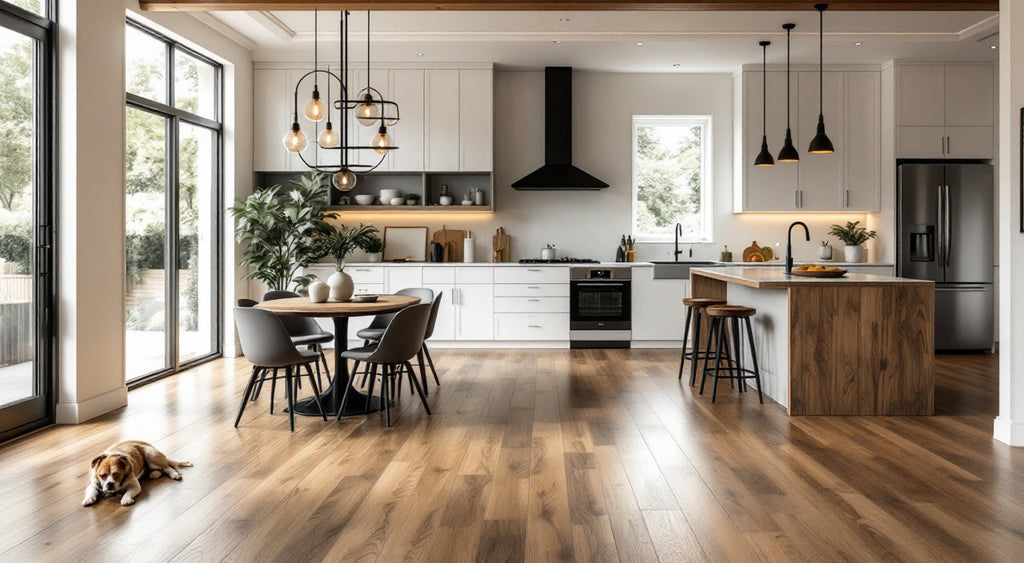
Yes, floor colour changes how warm or cozy a room feels, but not because it changes the room's actual temperature. The effect comes from two separate, well understood mechanics working at once: how much light a surface reflects back into the room, and the associations people attach to warm and cool hues. Knowing which mechanic is actually doing the work is what separates a floor colour choice that delivers the mood a homeowner wants from one that quietly works against it.
Does Floor Colour Actually Change How Warm a Room Feels?
Yes, and the effect is real, even though it is perceptual rather than physical. A darker floor absorbs more of the light hitting it and reflects less of it back into the room, which the eye reads as visual weight and enclosure, two qualities people consistently associate with coziness. A lighter floor reflects more of that light back out, which reads as openness and airiness, qualities associated with a fresher, cooler feeling space.
This is a separate question from how warm a floor feels underfoot, which depends on the material's thermal conductivity, not its colour. A dark tile floor still feels cold to bare feet, and a light coloured vinyl floor with an attached cushioning layer can still feel warm to stand on. Colour changes the visual and emotional read of a room. It does not change the physics of heat transfer at floor level.

Why Do Light and Dark Floors Change a Room's Perceived Temperature?
Two separate mechanics are doing the work, and understanding both is what makes the effect predictable instead of guesswork. The first is light reflectance: darker surfaces absorb more visible light and bounce less of it around the room, so a room with a dark floor generally reads as dimmer and more enclosed than the same room with a light floor, even under identical lighting.
The second is hue temperature, a convention that shows up across design, art, and everyday language. Colours toward the red, orange, and amber end of the spectrum are consistently perceived as warm, rooted in the association with fire and sunlight. Colours toward blue and grey are consistently perceived as cool, rooted in the association with water, ice, and overcast sky. A floor's undertone, meaning which of those two families it leans toward, triggers this association regardless of how light or dark the floor actually is.
These two levers, value and undertone, can reinforce each other or pull against each other. A deep, warm walnut tone combines low reflectance with a warm undertone, which is why it reads as the coziest option of all. A pale, cool grey combines high reflectance with a cool undertone, which is why it reads as the most open and the least cozy. A light warm oak or a dark cool charcoal each combine one warming factor with one cooling factor, which is why they land somewhere in between rather than at either extreme.

Does Dark Flooring Really Make a Room Feel Smaller?
Partly true, but it is not an absolute rule. A darker, lower reflectance floor makes the boundary where floor meets wall more visually defined, and more visual weight at floor level can read as more enclosed, which in a small, dim room can tip toward feeling smaller rather than simply cozier.
But the same dark floor in a room with high ceilings, ample natural light, and lighter walls above it usually reads as dramatic and intentional rather than cramped. Furniture density matters too. A dark floor in a sparsely furnished, well lit room carries very differently than the same floor in a small room packed with dark furniture and heavy curtains. The honest guidance is proportional, not absolute: in a genuinely small room with limited natural light, a lighter floor is the safer choice for keeping the space feeling open. In a larger room, or a room a homeowner specifically wants to feel intimate, such as a den or a formal dining room, a dark floor is a deliberate, legitimate choice rather than a mistake.
Does Light Flooring Always Feel Cold and Airy?
No. This is where undertone matters as much as value. A light floor with a warm undertone, such as honey or golden oak tones, still carries the warm hue association even though its reflectance is high, so it reads as light and inviting rather than light and cold. A light floor with a cool grey or ash undertone reads more sterile and crisp, because both its value and its undertone are working in the cool direction at once.
So the common shorthand of light floors feeling cold and dark floors feeling warm is an oversimplification. Undertone can override or soften what value alone would suggest, which is why two floors of nearly identical lightness can produce noticeably different moods in the same room.
What Is the Difference Between a Warm Floor Tone and a Cool Floor Tone?
A warm floor tone carries red, orange, amber, or gold undertones, while a cool floor tone carries grey, ash, taupe, or blue-grey undertones, and the difference shows up even between two floors that look similarly light or dark on the surface. Identifying which family a specific sample actually belongs to, and testing it under a room's real daylight and artificial light rather than showroom lighting, is its own detailed skill. Our guide to matching floor tone with cabinets, trim, and walls covers undertone identification and testing in full depth and is worth reading alongside this one before finalizing a colour.
Does Floor Colour Change a Room's Actual Physical Temperature?
No. This is worth stating plainly, because it is easy to blend two genuinely separate questions together. Floor colour changes how warm a room feels to the eye and to the emotions. It does not change the room's ambient air temperature, and it does not change how warm the floor itself feels against bare feet.
What actually changes a floor's physical warmth underfoot is the material's thermal conductivity and whether a cushioning layer sits beneath the surface, both of which have nothing to do with colour. A dark, cool-to-the-touch tile floor and a light, cool-to-the-touch tile floor feel identically cold, because the material, not the shade, is doing that work. The physical side of this question, including why some materials pull heat away from bare feet faster than others, is covered in why some floors feel warmer or softer underfoot than others. Treat that as the physical-comfort answer and this article as the visual-and-emotional-perception answer. They are related questions with entirely different mechanisms behind them.
How Floor Colour Affects Perceived Warmth and Size, at a Glance
Value (light versus dark) and undertone (warm versus cool) combine into four broad categories, each with a different honest trade-off.
| Floor type | Perceived warmth | Perceived room size | Best suited to |
|---|---|---|---|
| Light, warm undertone (honey oak, warm beige) | Warm and inviting | Reads open and airy | Small or dim rooms wanting coziness without feeling closed in |
| Light, cool undertone (grey, ash, driftwood) | Crisp, can read sterile | Reads the most open of the four | Bright rooms, minimal or modern aesthetics, small rooms prioritizing openness |
| Dark, warm undertone (walnut, espresso, aged amber) | Warmest and most enclosed of the four | Can read smaller in a dim room, dramatic in a bright one | Larger or well lit rooms, spaces meant to feel intimate, such as a den or dining room |
| Dark, cool undertone (charcoal, smoked grey) | Moody and bold, not necessarily cozy | Reads visually heavy, most likely to feel smaller if light is limited | Large, well lit rooms wanting a bold, modern statement |
None of these four combinations is objectively correct. Each one solves a different goal, and the honest answer depends on the room's actual size, light, and furnishing, not a universal rule about light versus dark.
How Should You Choose Floor Colour If Coziness Is the Goal?
Start with the room, not the sample. A room's actual size and how much natural light it receives through the day should decide the value (how light or dark) before undertone (warm or cool) gets chosen, since value is what governs the open-versus-enclosed trade-off discussed above. A small, north-facing room with limited daylight has less room to absorb a dark, low-reflectance floor without feeling closed in. A large, south-facing room with several windows can carry a much darker floor and still read as open.
Once value is settled, choose undertone based on the specific feeling wanted. A warm undertone reinforces coziness regardless of value. A cool undertone works against it, even on a dark floor, which is why a cool charcoal reads as bold and modern rather than cozy the way a dark walnut does. The same undertone identification and in-room daylight testing habits that matter when matching a floor to cabinetry apply directly here, and are covered step by step in the guide linked above.
This value-and-undertone effect holds across material categories. Whether the floor in question is engineered hardwood, laminate, or a wide-plank WPC vinyl flooring product, the same reflectance and hue-temperature rules apply regardless of what the plank is made from. Colour depth and finish sheen add a further layer on top of value and undertone. A deeper, richer colour with more visible variation reads as more expensive and more deliberate than a flat, uniform one, a distinction covered in more depth in why some vinyl plank colours look more expensive than others and in the broader look at what makes a home's flooring look more expensive. Finish sheen matters too, since a glossier finish reflects more light than a matte one regardless of the underlying colour, which is covered in how floor finish changes a room's feel. For homeowners leaning toward a pale, cool, minimal palette specifically, flooring's role in Scandinavian-inspired design shows how that light-and-airy effect gets used deliberately rather than by accident.
If a kitchen or bathroom is part of the project, waterproof flooring is usually the practical starting point for the material shortlist before colour ever enters the conversation, since moisture exposure narrows the options first. Once that shortlist exists, the same value and undertone choices covered here still apply within it.

Frequently Asked Questions
A few quick answers to the questions that come up most often once the value-versus-undertone basics are settled.
Does a Dark Floor Make a Small Room Feel Too Closed In?
It can, especially if the room also has limited natural light and dark or heavy furnishings. Balancing a dark floor with lighter walls, good lighting, and a less cluttered furniture layout reduces this risk considerably, but a genuinely small, dim room is still the case where a lighter floor is the safer default.
Can a Light Floor Feel Cozy, or Does It Always Feel Cold?
A light floor can absolutely feel cozy if it carries a warm undertone, such as honey or golden oak. It is a light, cool-toned floor, such as ash grey, that tends to read as crisp or sterile rather than cozy. Lightness alone does not decide the mood; undertone does at least as much of the work.
Does Floor Colour Affect a Room's Actual Temperature or Energy Use?
No. Floor colour changes how warm a room feels visually and emotionally, not its actual air temperature or the floor's physical warmth underfoot. Those depend on the material's thermal conductivity and whether a cushioning layer sits beneath it, not on colour.
Is a Warm or Cool Floor Undertone Better for a Room With Limited Natural Light?
A warm undertone is generally the safer choice for a room that gets limited daylight, such as a north-facing room, since it adds a sense of warmth the room's own lighting is not providing. A cool undertone in the same room can end up reading flat or grey rather than crisp, since it needs strong natural light to look its best.
Can Floor Colour Alone Make a Large Room Feel Cozier?
Yes, more effectively than in a small room, since a large room can absorb a deep, warm, low-reflectance floor without the enclosure risk a small room carries. A dark, warm undertone floor is one of the more reliable ways to add a sense of intimacy to an otherwise large, open space.
Floor colour genuinely changes how warm and cozy a room feels, through light reflectance and hue association working together, but it never changes the room's actual temperature or the floor's physical warmth underfoot. Getting the mood right comes down to choosing value based on the room's size and light, then choosing undertone based on the specific feeling wanted, rather than following a blanket rule about light versus dark.
Have questions about choosing a floor colour for a specific room, contact us and we can help.
To find waterproof vinyl flooring or premium engineered hardwood , click here for a Caledon Floors dealer near you.