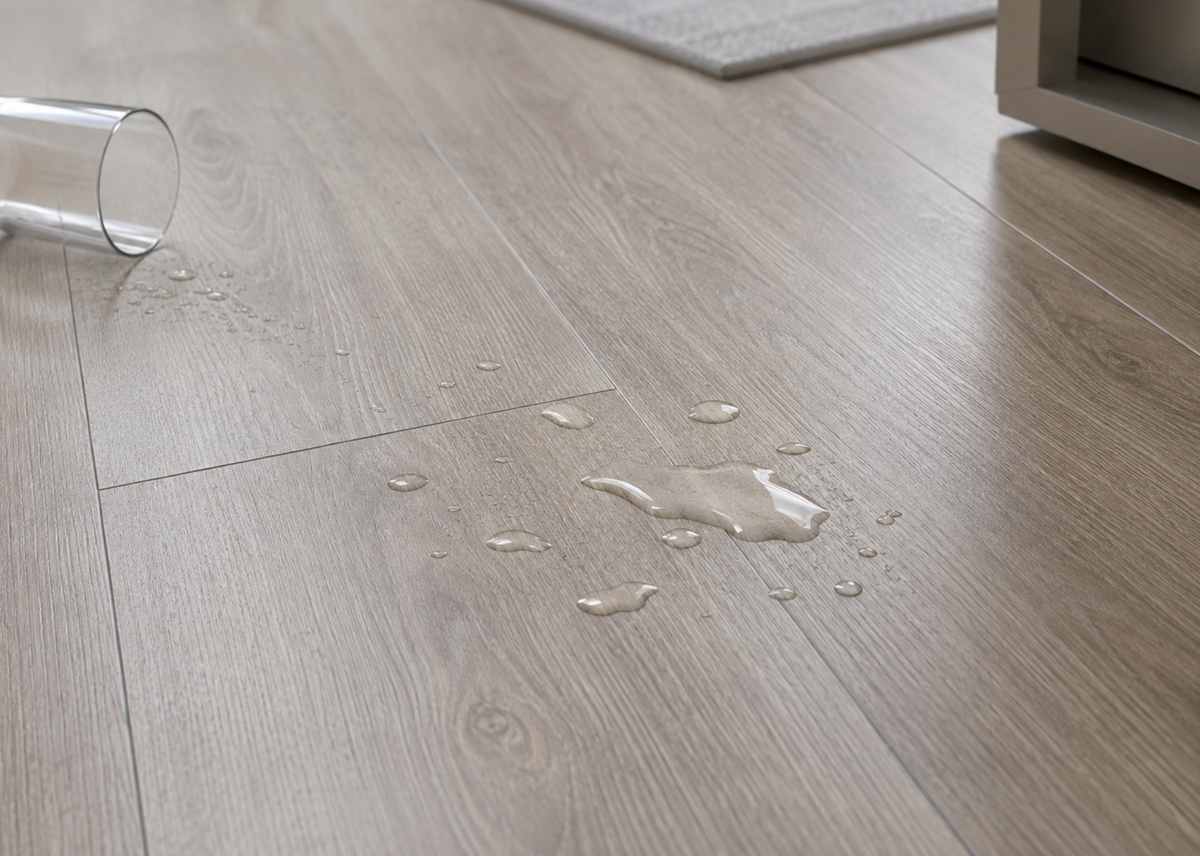
Waterproof flooring means the material itself, core and all, does not absorb, swell, or break down when it sits in standing water. That is a narrower definition than most shoppers assume, and it is the one that matters when a floor has to survive a dishwasher leak, a flooded basement, or a bathroom that sees water every single day. A lot of flooring gets marketed as "water friendly" without ever meeting that bar. This guide breaks down which materials genuinely qualify, which only resist water for a limited time, and how to match the right one to the room that actually needs it.
What Does "Waterproof" Actually Mean for Flooring?
A truly waterproof floor has a core material that is chemically inert to water. It will not swell, delaminate, or lose structural integrity no matter how long water sits on it or gets underneath it. That is different from "water-resistant," which describes a material that can handle water for a limited time or in limited amounts before damage starts.
The distinction matters because the two terms get used almost interchangeably in flooring marketing, and the difference is not cosmetic. A waterproof core survives a dishwasher supply line that fails overnight. A water-resistant surface might survive the same spill wiped up within an hour, and fail if the same leak goes unnoticed until morning. Confirming which category a product actually belongs in, not just reading the word "waterproof" on a sample board, is the first real buying decision.

Which Flooring Materials Are Genuinely Waterproof?
Three categories meet the true waterproof bar: WPC vinyl, SPC vinyl, and properly installed tile. Each gets there through a different construction, and each has a different feel underfoot.
WPC vinyl flooring uses a foamed composite core, typically a blend of stabilizers and mineral fillers. The foaming agent gives it a warmer, quieter feel underfoot, and because the core is a waterproof composite, it will not swell or rot even under sustained saturation. This is what makes WPC vinyl flooring one of the more comfortable waterproof options for whole-home use, not just wet rooms.
SPC vinyl (stone plastic composite) uses a denser core built from limestone powder, PVC, and stabilizers with no foaming agent. That makes it more rigid and dimensionally stable in humid or temperature-swinging conditions, at the cost of feeling firmer and cooler underfoot than WPC. SPC's rigidity also makes it a common choice for higher-traffic or commercial-adjacent spaces where dent resistance matters as much as moisture. For a full side-by-side of how the two cores compare beyond moisture, see SPC vs WPC vinyl flooring: what is the difference and which is better.
Tile is waterproof at the material level (fired ceramic or porcelain will not absorb water on its own), but the installed system is a different question. Tile itself being waterproof does not automatically make the assembly waterproof. Grout lines, transitions, and the substrate underneath all need to be sealed correctly, and any genuinely wet installation (a shower, a mudroom prone to standing water) should sit over a bonded, load-bearing waterproof membrane meeting ANSI A118.10, not just a mortar bed. Skip the membrane and water can migrate through the grout and subfloor even though the tile itself never absorbs a drop.
What About "Water-Resistant" Laminate and Engineered Hardwood?
Laminate and engineered hardwood both get marketed with water-related language, and neither one is waterproof. The honest picture is more nuanced, and it does not run the direction most people expect.
Modern water-resistant laminate genuinely outperforms engineered hardwood on moisture. Laminate's core is high-density fibreboard (HDF), a compressed wood-fibre product that will swell if it stays wet long enough. But many current laminate lines carry a certified surface water-resistance rating, tested under the North American Laminate Flooring Association's Surface Swell and Water Resistance standard at 24, 48, and up to 72 hours of standing water, often paired with wax-sealed edges and locking joints. That is a real, tested performance level, not a marketing phrase, and it means a spill left overnight on a certified line is unlikely to cause visible damage. It is still not a floor for a shower, a basement with flood risk, or anywhere water can pool for days.
Engineered hardwood should never be described as water-resistant, even loosely. Its wearing surface is a real wood veneer over a plywood or HDF core, and real wood reacts to moisture: it can swell, cup, or discolour with sustained exposure in a way no laminate or vinyl core will. In a direct comparison, laminate is the more moisture-tolerant material, and engineered hardwood's real advantages lie elsewhere: authentic wood grain and colour depth, the option to sand and refinish the surface over decades, and a premium look that vinyl and laminate are still trying to replicate. Choose engineered hardwood for what real wood does better, not for how it handles water. For the full breakdown of what engineered hardwood can and cannot handle around moisture, see is engineered hardwood waterproof, and for a complete side-by-side against laminate, see engineered hardwood vs laminate: an honest comparison.
Waterproof Flooring Comparison
| Material | Truly waterproof? | Core construction | Tested water performance | Best fit |
|---|---|---|---|---|
| WPC vinyl | Yes | Foamed composite core | Withstands prolonged standing water indefinitely | Kitchens, bathrooms, basements, whole-home comfort |
| SPC vinyl | Yes | Rigid limestone and PVC composite | Withstands prolonged standing water indefinitely | Wet rooms, high-traffic and commercial-adjacent spaces |
| Ceramic or porcelain tile | Yes, with a proper membrane | Fired clay or porcelain over a waterproofed substrate | Waterproof per ANSI A118.10 when the assembly includes a bonded membrane | Showers, full wet-area installations |
| Water-resistant laminate | No, resistant only | HDF (compressed wood fibre) core | NALFA-certified surface resistance up to roughly 72 hours on qualifying lines | Kitchens and living spaces with quick cleanup, not standing water |
| Engineered hardwood | No | Plywood or HDF core with a real wood veneer | Not rated for water resistance | Dry living spaces, bedrooms, formal rooms |
For a broader look at vinyl's full range of types, costs, and use cases beyond moisture alone, see the complete guide to vinyl flooring. For a narrower FAQ-style rundown of waterproof flooring basics, see waterproof flooring: what homeowners need to know.

Where Waterproof Flooring Actually Matters
Not every room needs a waterproof floor, and treating the whole house that way is overkill. Water exposure is genuinely central to a handful of rooms, and that is where the material choice deserves real scrutiny.
Kitchens see regular splashing, dishwasher and fridge line leaks, and spills that do not always get noticed right away. A waterproof core removes the risk of a slow leak under an appliance turning into swollen flooring before anyone spots it.
Bathrooms are the clearest case: standing water on the floor, humidity, and condensation are routine, not occasional. This is where a fully waterproof product, whether vinyl or a properly membraned tile installation, is worth insisting on rather than compromising toward. For a closer look at how kitchens and bathrooms compare on flooring choice, see best waterproof flooring for kitchens and bathrooms.
Basements combine below-grade humidity swings with genuine flood risk from groundwater, sump failures, or burst pipes. A rigid SPC core or a WPC core handles both the moisture and the temperature stability better than a wood-based product, and it is one of the few rooms where engineered hardwood is a real risk rather than a stylistic trade-off.
Laundry rooms carry the same appliance-leak risk as kitchens, concentrated into a smaller footprint where a supply line failure can pool quickly before it is noticed.
Entryways and mudrooms deal with tracked-in rain, snowmelt, and muddy footwear sitting directly on the floor. The exposure is more intermittent than a bathroom's, but it is frequent enough that a waterproof surface earns its keep.
Bedrooms, home offices, and formal living rooms do not carry meaningful water exposure as part of normal use, and there is no reason to over-engineer those rooms around a risk they do not actually face.
Does a Waterproof Core Mean the Whole Installed Floor Is Waterproof?
A waterproof core protects the plank or tile itself, but water finding its way underneath the flooring is a separate problem from water sitting on top of it. Seams, transitions, and perimeter edges are where an otherwise waterproof floor can still let moisture reach the subfloor if they are not installed and sealed correctly, and rising moisture from below (through a concrete slab, for instance) is a subfloor issue a waterproof top layer does not solve on its own. That is a job for the correct underlayment or vapor barrier at installation, planned for the specific subfloor and location, not assumed away because the flooring material itself is waterproof. See moisture and vapor barriers: what homeowners actually need for how that planning works in practice.

Frequently Asked Questions
These are the questions that come up most often once someone understands the difference between waterproof and water-resistant and starts applying it to their own home.
Is vinyl flooring 100 percent waterproof?
WPC and SPC vinyl are both genuinely waterproof at the core level. Neither will swell, warp, or deteriorate from standing water, which is why both are safe choices for kitchens, bathrooms, basements, and laundry rooms. The caveat is installation quality: seams and transitions still need to be fitted correctly so water cannot travel underneath the planks to the subfloor.
Is tile flooring waterproof or just water-resistant?
The tile itself is waterproof. Whether the installed floor is waterproof depends on the assembly underneath it. A shower or another genuinely wet installation needs a bonded, load-bearing waterproof membrane meeting ANSI A118.10 plus properly sealed grout. Skipping the membrane leaves the assembly vulnerable even though the tile itself never absorbs water.
Can water-resistant laminate handle a flooded basement?
No. A NALFA-certified surface rating of up to roughly 72 hours covers spills and standing puddles that get cleaned up in a reasonable window, not sustained flooding. A basement with any real flood risk calls for a genuinely waterproof material, WPC or SPC vinyl or a properly membraned tile installation, not water-resistant laminate.
Is engineered hardwood ever a good choice for a wet room?
Not for a room where water exposure is routine. Its real wood veneer can swell, cup, or discolour with sustained moisture, and it should never be marketed or chosen as water-resistant. Engineered hardwood belongs in dry living spaces where its authentic grain and refinishing potential are the actual selling point.
Does a waterproof floor need a moisture barrier underneath?
Often yes, depending on the subfloor. A waterproof top layer stops water from damaging the flooring material itself, but it does not address moisture rising up through a concrete slab or an unsealed subfloor. That is a separate planning question worth confirming for the specific installation before work begins.
Choosing the right waterproof flooring comes down to matching the material to what the room actually faces, not defaulting to whichever option looks familiar. Contact us with questions about matching a waterproof product to your space. To find waterproof vinyl flooring, click here for a Caledon Floors dealer near you.